
Unbiased headlines. Facts, not spin.
Every story is an unbiased news briefing written from 110+ sources across the spectrum — sources linked so you can verify it yourself.
 energy
Notable (6/10)
June 10, 2026 at 05:06 PM
energy
Notable (6/10)
June 10, 2026 at 05:06 PM
FERC Approves PJM Fast-Track Grid Interconnection for Large Power Projects as Demand Backlog Hits 1,570 GW
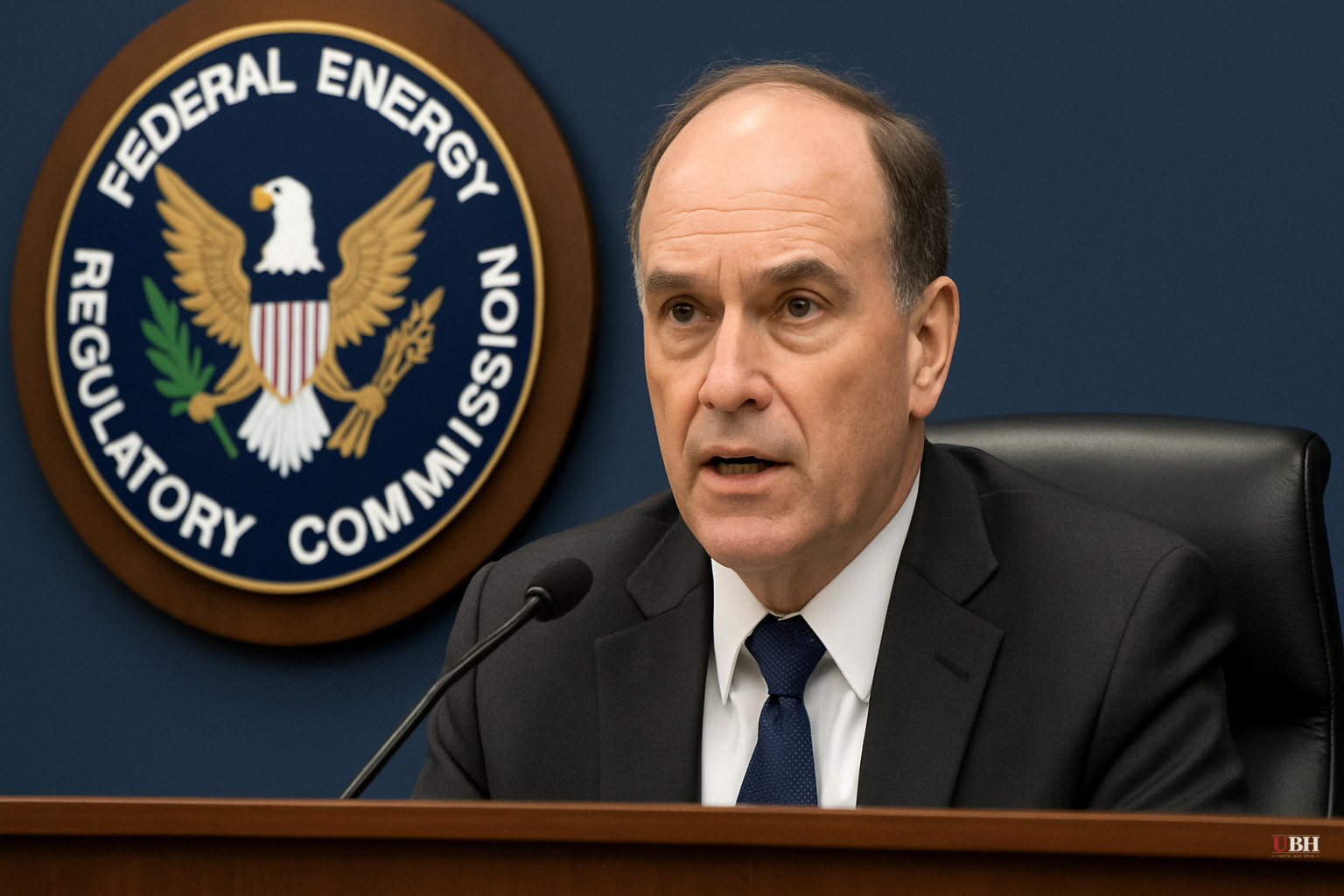
On June 9, 2026, FERC approved PJM Interconnection's proposal for an "expedited interconnection track" — a fast-lane review process for large generating projects, according to Utility Dive. The rule is narrow by design: it applies only to new or upgraded capacity resources of at least 250 MW that can be brought online within three years. PJM can accept up to 10 requests per year under this track, and the entire program expires at the end of 2027.
PJM estimates the process — from application to a signed interconnection agreement — takes roughly 10 months. That's meaningfully faster than the standard queue, which has stretched to years in many cases.
The Scale of the Problem
There are currently more than 12,000 active data center projects in the U.S. seeking grid interconnection, according to Industrial Info Resources cited by Power Engineering. Combined, they represent 1,570 GW of generator capacity and 1,030 GW of storage demand. For context, the entire U.S. grid's installed generating capacity is roughly 1,200 GW. The backlog exceeds the grid itself.
At least $100 billion in new data center announcements are being made every month, the bulk in North America, Power Engineering reports. Gas turbine manufacturers are already booked out, with delivery timelines stretching to the end of the decade in many cases.
A survey of energy industry stakeholders by Black & Veatch named lack of power as the top obstacle to getting data centers online. Not permitting. Not financing. Power.
Why the Fast-Track Rule Faces Pushback
FERC's approval drew protests before the commission ruled from a long list of parties, according to Utility Dive — including clean energy trade groups, Vistra (one of the largest independent power producers in the country), the Illinois Commerce Commission, LS Power, the New Jersey Bureau of Public Utilities, and multiple community organizations.
Critics argue that a fast-track process favoring projects of 250 MW or more — backed by a governor or primary siting authority — could prioritize politically connected, large fossil-fuel projects over smaller renewable competitors still fighting through the standard queue. When a governor's endorsement becomes the path to grid access, that creates a gatekeeping function with real political dimensions.
FERC rejected those protests and moved ahead. Whether the critics are right about the downstream distortions will depend on which projects actually apply and which governors champion them over the next 18 months.
The Upgrade Option
Beyond FERC's interconnection rule, existing gas turbines can be significantly upgraded right now, with no new interconnection required, Power Engineering reports.
Hanwha Power (formerly PSM) and Mee Industries are jointly offering retrofit solutions that can squeeze significantly more output from turbines already on the grid. Hanwha Power's FlameSheet combustion system can deliver up to a 30% increase in gas turbine load range while hitting single-digit NOx emissions as low as 5 ppm. Mee Industries' wet compression technology adds another 15% to 20% power boost per turbine. The FlameSheet system is compatible with widely deployed F-Class turbines from GE Vernova, Siemens Energy, and Mitsubishi Power, as well as GE Vernova's B- and E-Class units.
If a plant operator can add 20-30% more dispatchable output to an existing turbine without waiting in a five-year interconnection queue, the path avoids both the queue and the need for new builds. The upgrade pathway barely appears in major outlets, which tend to focus on the political fight over interconnection queues rather than the engineering options already available.
The Math
Most reporting on this story frames it as a binary: build more renewables fast, or rely on gas and coal. The 10-projects-per-year cap in PJM's new fast-track process is, at best, a rounding error against a 12,000-project backlog. Retrofit technology offers another avenue, but neither addresses a 1,570 GW structural capacity gap.
What This Means
If you pay an electric bill, you are already living with the consequences of this mismatch. Grid operators are warning about reserve margin tightening. Industrial and commercial customers are being told that power may not be available for new facilities in many regions.
The federal government approved a process that can move 10 large projects faster per year. The market is generating $100 billion in new demand every month.
Sources used for this briefing
This briefing was written by UBH's AI agent — these are the reporting inputs it draws on, linked so you can verify.


