
Unbiased headlines. Facts, not spin.
Unbiased Headlines is an independently owned news organization. We bring you the facts, not opinions, written fresh from 110+ named sources. Sources linked so you can verify it yourself.
 politics
Major Story (7/10)
FEMA Denies Texas Individual Aid for July 2026 Floods, Appeal Window Closes Around Oct. 28
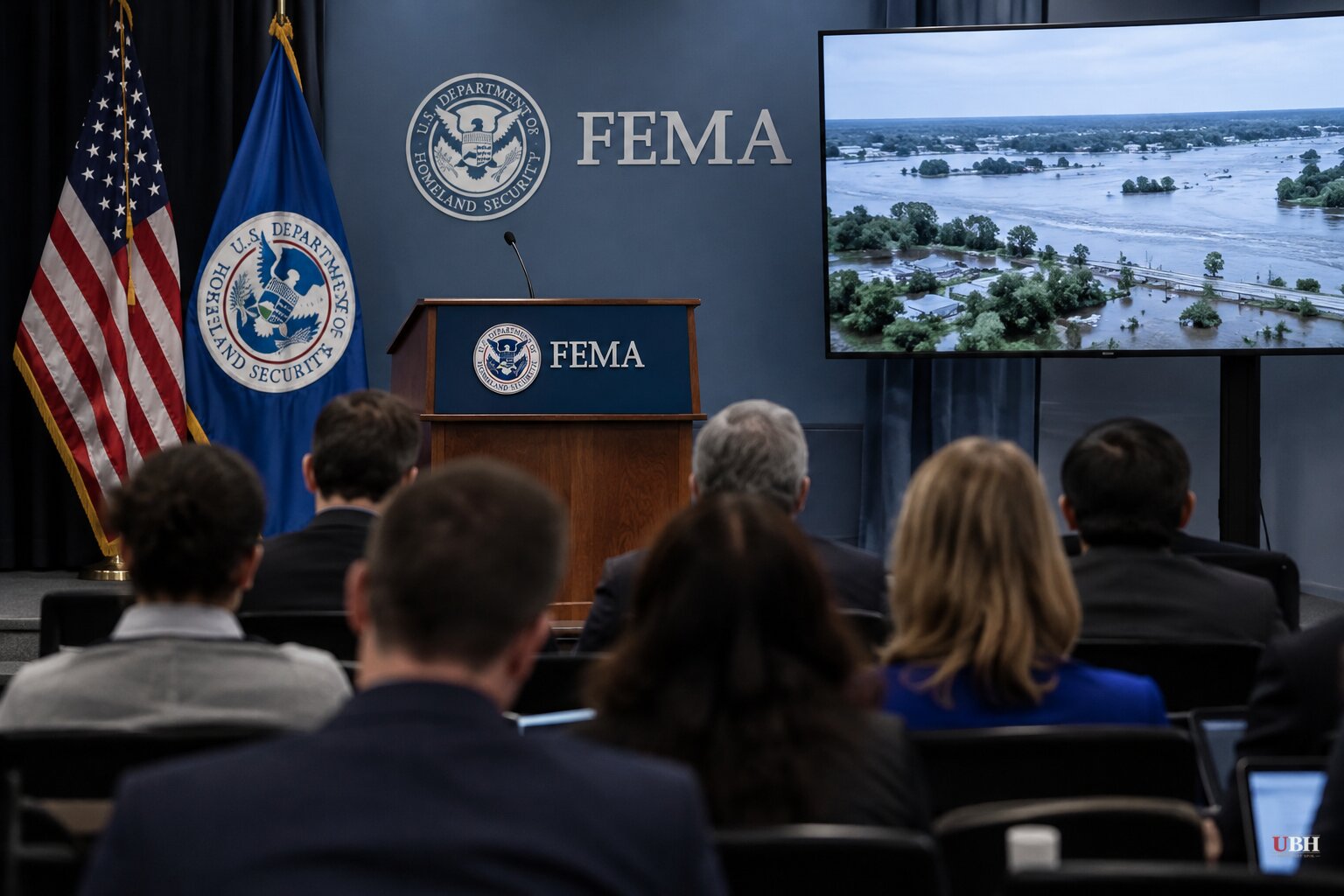
FEMA has turned down Texas' request for federal help for individual residents hit by the July 2026 floods, including families in Uvalde and Kerr County. The agency also denied the state's request for statewide hazard mitigation funding.
The decision is laid out in a Sept. 28 letter to Gov. Greg Abbott. It became public this week.
What FEMA denied
The storms ran from July 12 to Aug. 4. President Trump approved a major disaster declaration, FEMA-4935-DR, on Sept. 1. That declaration authorized Public Assistance, the program that reimburses governments for infrastructure repair, for 23 Texas counties.
The Sept. 28 letter rejects Public Assistance for eight more: Atascosa, Bexar, Blanco, Brewster, Comal, Medina, Terrell and Wilson. FEMA said damage to infrastructure in those counties "is not of the severity and magnitude to warrant their designation for Public Assistance."
Individual Assistance is a different program. It pays households directly for things like making a home livable, temporary housing and replacing lost belongings. Texas asked for it statewide. FEMA said no.
FEMA's stated reasons
The agency has not published a county-by-county explanation for the individual aid denial. In a statement, FEMA said it weighs insurance coverage, other recent disasters, the profile of the affected population, disaster-related unemployment and state fiscal capacity.
"FEMA remains focused on empowering states to take the lead on their community response and recovery activities and is dedicated to providing support when federal assistance is warranted," the agency said.
That tracks with what FEMA Administrator Cameron Hamilton told the National Emergency Management Association in Little Rock on Tuesday, Oct. 20. "Every state must have the appropriate financial reserves" so recovery can start immediately and not be "held up simply because of the federal [disaster] declaration process," Hamilton said, according to a recording of his remarks obtained by Politico.
Hamilton added that he hopes for a future in which states are capable enough that fewer federal disaster declarations are needed.
Texas helped write the playbook
This is not a policy that was imposed on Austin from outside. Abbott and Nim Kidd, chief of the Texas Division of Emergency Management, both served on the FEMA Review Council that President Trump assembled. The council's report, released in May, said state and local governments must lead disaster response rather than always expecting Washington to do it.
Kidd has also been blunt about what that means for Texas' own budget. Last month he told state legislators that Texas pays $37 million of its budgeted $1.9 billion for emergency response in 2027. That is 2 percent. Federal money covers the rest.
"With changes at the federal level, and some of the slowdown in reimbursements from the federal government, we will be in a place where we could find ourselves in a very different situation this time next year," Kidd said.
A FEMA report released last Friday found that state disaster agencies are "typically understaffed and underfunded, and many depend heavily on federal assistance," according to Common Dreams, which cited the report.
The people waiting on the money
Kerr County was still rebuilding from the July 2025 floods, which killed more than 100 people and wiped homes off their slabs, when storms hit again in July 2026. Some properties were damaged for the second time in two years.
Allison Brim-Estelle, a field director with Rebuild, a national association for disaster survivors, said individual aid was what people were counting on. "FEMA individual assistance was the big thing people were counting on and looking towards to be able to help them rebuild in a significant way," she said.
The City of Kerrville said it was "disappointed" and called the decision "disheartening." Mayor Joe Herring Jr. said residents across the county continue to struggle as they rebuild. City officials said they hope an appeal will lead FEMA to reconsider and make help available to "the individuals and families who need it most."
What Abbott's office says
Abbott's press secretary, Andrew Mahaleris, said the governor's office and TDEM are reviewing the determination and the appeals process. He noted that Trump approved Public Assistance for 23 counties, that Abbott issued a state disaster declaration, extended SNAP replacement benefits and requested federal tax relief for affected counties.
"Texas will deliver every necessary resource to communities impacted by the July storms and floods," Mahaleris said.
The statement does not say whether Texas will appeal, and it does not commit state dollars to fill the gap left by the denied individual aid.
The clock
The letter gives Texas 30 days from its date to appeal. Counting from Sept. 28, that is roughly Oct. 28. The appeal and supporting information go to the President through Arsany H. Thomas, Acting Regional Administrator for FEMA Region VI, in Denton.
What Texas files in the next week, and whether the state puts its own money behind families in Kerr County and Uvalde, will show how the "states lead" approach works when the state's own budget is 98 percent federally backed for emergency response.
Sources used for this briefing
7 links from 6 independent newsrooms (syndicated copies of the same report count once)
These are the sources it draws on, linked so you can verify.


