
Unbiased headlines. Facts, not spin.
Unbiased Headlines is an independently owned news organization. We bring you the facts, not opinions, written fresh from 110+ named sources. Sources linked so you can verify it yourself.
 politics
Major Story (7/10)
Supreme Court Refuses to Let Trump Administration Enforce Prison Limits on Transgender Treatment, Thomas and Alito Dissenting
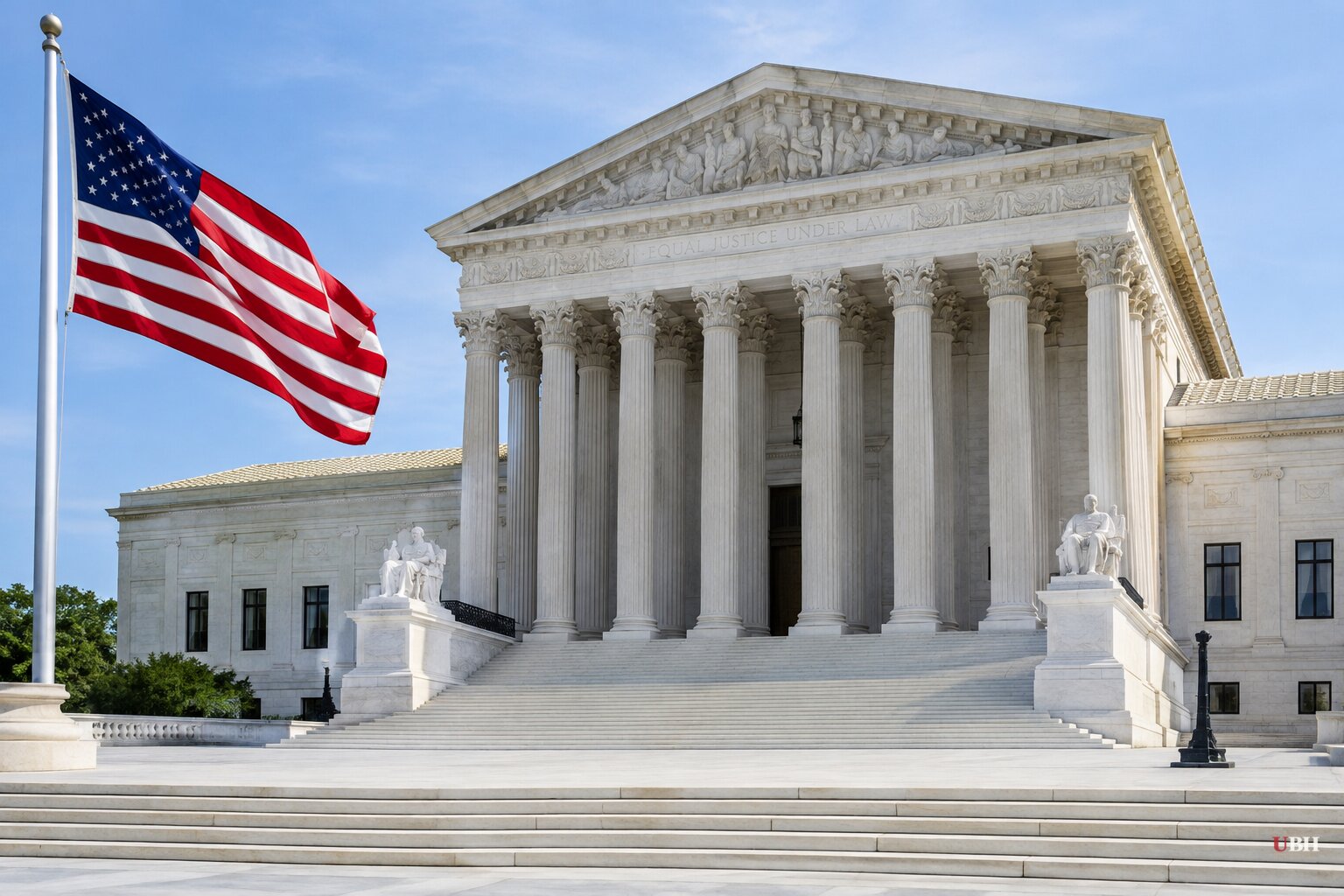
The Supreme Court on Wednesday, Oct. 21, refused to let the Trump administration enforce a Bureau of Prisons policy that would end hormone therapy, surgery and social accommodations for federal inmates with gender dysphoria.
The order was one line: "The application for stay presented to The Chief Justice and by him referred to the Court is denied." No reasoning. Justices Clarence Thomas and Samuel Alito said they would have granted the stay.
How the case got here
President Trump's January 2025 executive order directed the Bureau of Prisons to revise its medical policies so federal funds are not spent "for the purpose of conforming an inmate's appearance to that of the opposite sex." In February, the bureau issued a policy to that effect. It halts surgeries, tapers inmates off hormones and ends accommodations such as breast padding, binders, wigs and makeup. Mental health services would continue.
The bureau's memo said the change would "reflect treatment for gender dysphoria that is more aligned with the latest scientific information."
The ACLU sued on behalf of three inmates in federal prisons in New Jersey, Florida and Minnesota. In June, U.S. District Judge Royce Lamberth, a Reagan appointee, blocked the policy. He ruled under the Administrative Procedure Act, which bars arbitrary agency action. Lamberth wrote that the policy would "arbitrarily deprive inmates of medications and other lifestyle accommodations that its own medical staff have deemed to be medically appropriate."
Lamberth also said he would "not wade into the culture war being waged against transgender individuals." He found that the government lacked evidence or good reasons for abandoning a long-standing practice.
Last month the D.C. Circuit declined to pause his order, 2-1. Solicitor General D. John Sauer then went to the Supreme Court.
What each side argued
The administration said the care creates security risks. Its filing argued that inmates receiving treatment would become "targets for attacks" and that the care raises "fairness concerns" that would "breed resentment" among other inmates. It also questioned the standards of care set by the World Professional Association for Transgender Health.
Sauer pressed a deference argument: "If deference to prison administrators means anything, it means that courts cannot second-guess their eminently reasonable choice to treat the mental-health condition of gender dysphoria with psychotherapy rather than physical, sex-rejecting interventions."
The inmates' lawyers answered that the bureau has provided hormone treatment for gender dysphoria since 1992. They said the government has not detailed evidence of security problems linked to hormone therapy over roughly three decades. They also said the bureau "overrode its own medical providers' clinical judgment" and mandated an end to treatment for almost 1,000 people.
Li Nowlin-Sohl, the ACLU attorney in the case, said in a statement that "the denial of medically necessary health care, including gender-affirming health care, to people in prison is a violation of their fundamental constitutional rights." Lamberth's ruling rested on administrative law, not that constitutional claim.
The numbers are not settled
The headcount depends on who is counting. The bureau stopped publishing data on transgender inmates after Trump took office in 2025 and records only male or female. The ACLU estimates more than 2,000 federal inmates identify as transgender.
Kingdom v. Trump covers about 1,000 inmates with a gender dysphoria diagnosis, according to Nowlin-Sohl. She said about 800 of them have been prescribed hormones. The bureau said in court records that about 600 inmates were receiving hormone therapy in 2025.
The medical dispute is also open. The administration says these treatments have recently been called into question by medical professionals. Transgender rights groups heavily contest that. Lamberth found the evidence showed this care is the only effective treatment for gender dysphoria and that severe harm follows when it stops. That is a district court finding on the record before him. It is not a settled national medical consensus, and the administration disputes it.
What the order does and does not decide
The Supreme Court did not rule on whether the Constitution requires prisons to provide this care. It did not rule on whether the administration can ever change the policy. It declined, without explanation, to let the new policy take effect while the lawsuit proceeds.
The result stands out against the court's recent record on transgender policy. It has let the military service restriction and passport sex-marker rules move forward for now. It has also upheld Tennessee's ban on certain treatments for minors and allowed restrictions on transgender athletes in women's sports.
The narrow question in this case was whether the government had the evidence and reasoning to justify a sharp reversal of a decades-old practice. The court has often deferred to prison officials on inmate management. This time, on this record, it did not intervene.
The injunction remains in force. The bureau cannot taper hormones or cut off accommodations for the inmates covered by the case. The merits fight continues in the lower courts, and neither the Justice Department nor the White House has said how it will proceed.
Sources used for this briefing
6 links from 6 independent newsrooms (syndicated copies of the same report count once)
These are the sources it draws on, linked so you can verify.


