
Unbiased headlines. Facts, not spin.
Unbiased Headlines is an independently owned news organization. We bring you the facts, not opinions, written fresh from 110+ named sources. Sources linked so you can verify it yourself.
 politics
Notable (6/10)
Kagan Says Court's Conservative Majority Has Weakened Democracy, Two Weeks Before Midterms
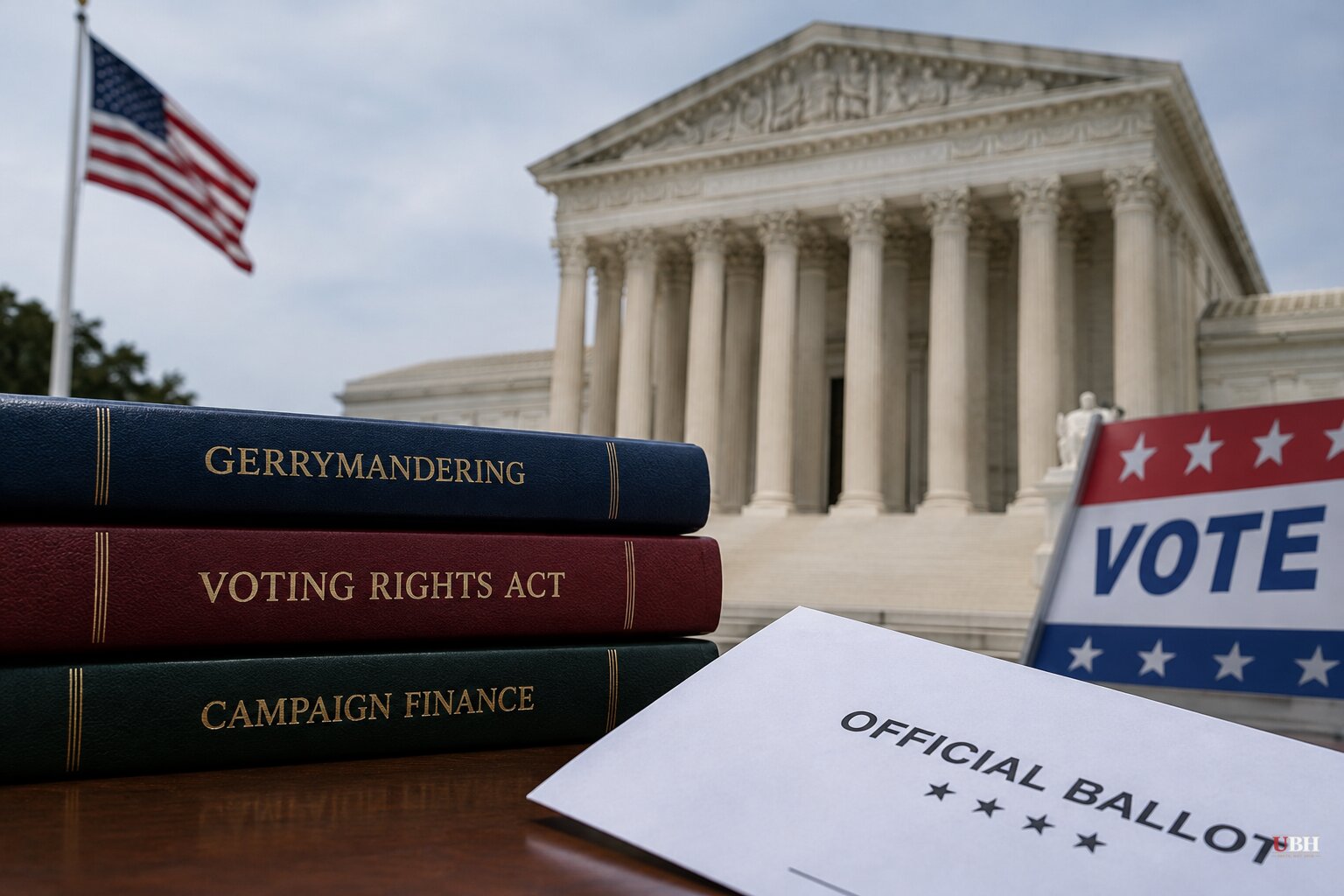
Justice Elena Kagan used a speech at Catholic University's law school in Washington on Tuesday, Oct. 20, to accuse the Supreme Court's conservative majority of making American democracy work worse. She spoke to students and professors, two weeks before the Nov. 3 midterm elections.
"The court has kind of blinded itself to the very deleterious effect of their rulings on how the political system works and has created a democracy that does not work as well as it should," she said.
Kagan dissented in every line of cases she criticized.
The rulings she targeted
She pointed first to the 2019 decision holding that federal courts cannot step in to limit extreme partisan gerrymandering. In her telling, that ruling set off a bipartisan scramble.
"Over the last couple of years especially, both political parties have been engaged in a race to the bottom in terms of doing these partisan gerrymanders," she said. She called the country "too polarized" already and said the maps make it worse.
She argued that lopsided districts deny voters "their rights to voting equality." They also push politicians "toward the extremes," she said, because candidates in safe seats only have to worry about winning a primary.
She also cited the Court's narrowing of the 1965 Voting Rights Act, which she called an "evisceration." A ruling this year led Republican-led states to eliminate majority Black districts. And she cited campaign finance, where the Court has repeatedly struck down restrictions, most recently in June.
"The people of America look around and think that all this money chasing all these political candidates is a nightmare, and they're right," she said.
On why the Court got these cases wrong, she said: "Part of the reason why the court got it wrong was a kind of lack of the appropriate concern or understanding of the consequences of their decisions."
The majority's stated position
Kagan's view is a dissenter's view. The majority held in 2019 that drawing districts for maximum partisan advantage is a political dispute, and that federal courts have no role in resolving it.
On campaign finance, the conservative justices have ruled that key restrictions violate the First Amendment's guarantee of free speech. On the Voting Rights Act, the majority this year narrowed the protections that had helped increase minority representation.
Those are the Court's own stated grounds. Kagan's argument is about consequences, and the majority's is about the limits of what federal judges are permitted to decide.
Maps drawn on both sides
The redistricting wave she described is real, and it is not confined to one party. Texas started it at President Donald Trump's urging. Other states followed, including California.
Trump is trying to hold onto Republicans' slim House majorities. Several states have redrawn congressional lines to maximize the number of seats the majority party in that state can win, and the result has been fewer competitive districts.
Kagan herself did not exempt either party. She said both have been racing to the bottom.
Not a rubber stamp for Trump
Kagan also rejected the idea that the conservative majority simply does the president's bidding. She said it is unfair to claim the majority reflexively supports him.
She pointed to areas where the Court has pushed back against Trump: tariffs, birthright citizenship and mail ballots.
A justice who dissents from the majority on election law is also saying the same majority has ruled against the sitting president on high-profile questions.
What happens next
Nothing in the speech changes the maps. The 2019 ruling remains the law, and Kagan said the Court's failure to act on partisan gerrymandering is "making what I think is unfortunately a too polarized country even more so."
Voters in the states that redrew their lines will cast ballots on Nov. 3 in districts drawn under those rules. Whether Congress or the states themselves restrict gerrymandering, since the federal courts have said they will not, is a question no one in the speech answered.
Sources used for this briefing
8 links from 8 independent newsrooms (syndicated copies of the same report count once)
These are the sources it draws on, linked so you can verify.


