
Unbiased headlines. Facts, not spin.
Unbiased Headlines is an independently owned news organization. We bring you the facts, not opinions, written fresh from 110+ named sources. Sources linked so you can verify it yourself.
 politics
Major Story (8/10)
Event date: October 14, 2026 ·
DOJ Charges 28 Green Card Holders Over Voting as Lawsuits Challenge Trump Voter-Data Push, 13 Days Before Midterms
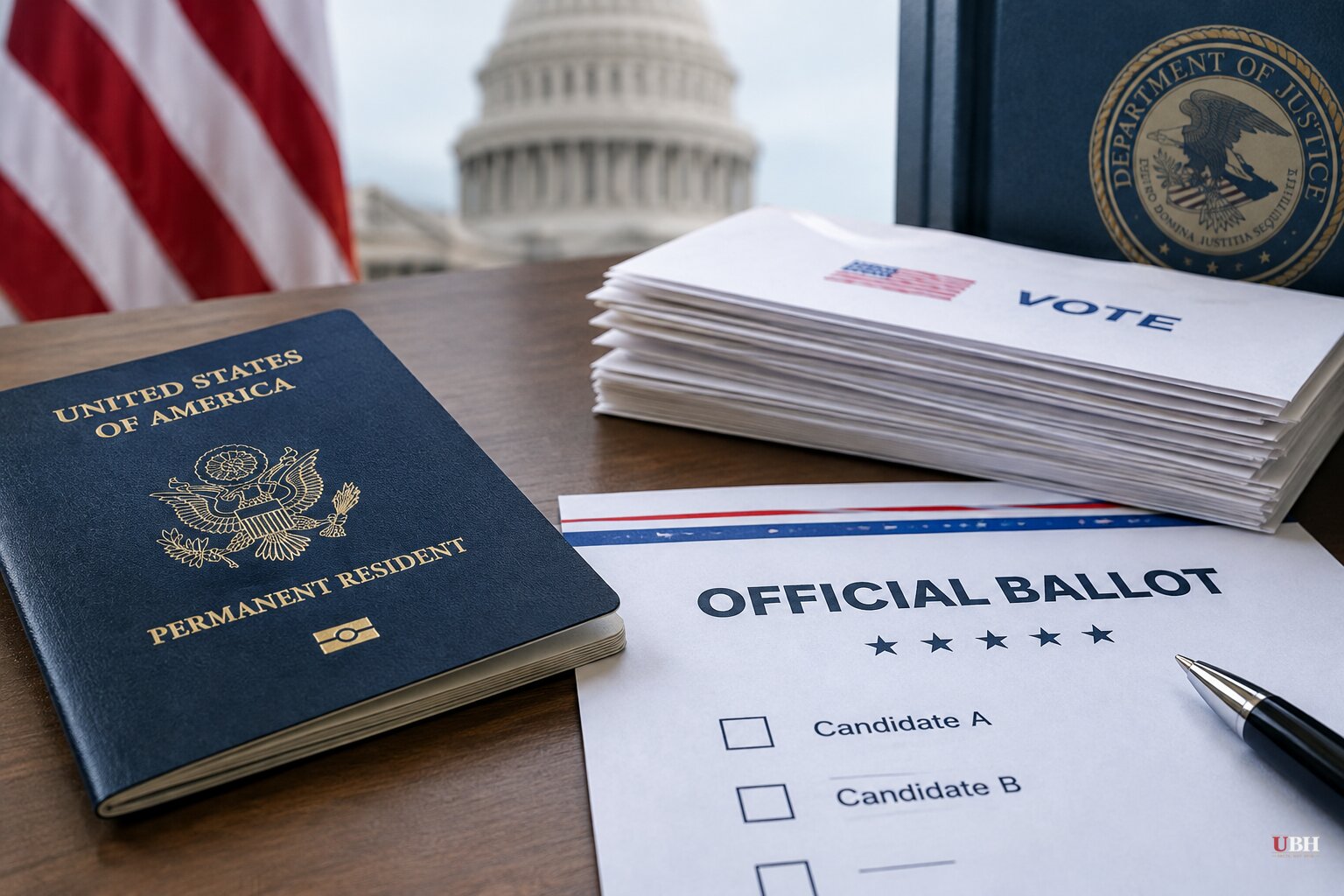
Since the Justice Department sued California and Los Angeles County last week over 20,000 voter registrations it calls potentially ineligible, the fight over federal power in the midterms has widened on three fronts: criminal charges, a privacy lawsuit, and a report of an unexecuted plan to hack a voting machine.
Election Day is Nov. 3. California voters are already marking mail ballots.
The California case and the 28 charges
The Justice Department demanded that California officials set aside ballots from 20,000 registered voters it says may not be eligible. The state rejected the demand, and DOJ sued.
On Monday, Oct. 19, DOJ filed charges against 28 immigrants who are lawful permanent residents. The charges allege they were either illegally registered to vote or had voted in an election. They are allegations, not convictions.
"Today's charges demonstrate why that lawsuit is so important," Acting U.S. Deputy Attorney General Trent McCotter told reporters. "It's about preventing voter fraud that cancels out the votes of U.S. citizens. Enforcing federal law increases the integrity of elections."
McCotter said separately that federal prosecutors have charged 50 individuals with voting crimes over the past month. DOJ is also appealing a Florida federal judge's ruling that declared a federal law banning noncitizen voting unconstitutional.
The list itself is under scrutiny. NPR reported that some people on DOJ's 20,000-name "likely" noncitizen list in California appear to be U.S.-born, and that officials describe the list as unreliable.
A CalMatters opinion column argues the California crackdown is "obviously aimed more at having a political impact than combating serious crime." It notes that the action lands as California voters decide Proposition 39, which would require voters to show eligibility credentials.
The administration's position is that noncitizen voting is a serious threat. Studies and prosecutions have found documented instances of noncitizens casting ballots to be rare, according to the Fox News account of the issue.
Lawsuit over DHS voter files
The League of Women Voters, the Electronic Privacy Information Center and the League of United Latin American Citizens filed a complaint in federal court in Washington. It alleges the Department of Homeland Security has obtained voter files from at least 47 states and handled the data in violation of federal law.
The plaintiffs say DHS runs a secretive probe that includes a policy to combine the voter data with commercial datasets. They say that ignores federal safeguards and the privacy rights of millions of Americans.
Officials in 30 states had previously refused federal demands for voter information, according to the complaint. Federal courts have repeatedly rejected administration efforts to compel states to hand over such data.
The suit asks the court to declare the collection illegal, block the DHS policy, and order the agency to delete and stop using the voter information it has already obtained.
The State Department is considering sharing passport records for voter citizenship checks.
Election law expert Rick Hasen, speaking on NPR's Fresh Air today, Oct. 21, described the administration's threats to prosecute local officials criminally unless they remove alleged noncitizens from voter rolls.
States traditionally run elections under the Constitution and federal law. The administration has repeatedly sought a larger federal role in voter eligibility.
CISA and the voting machine request
ProPublica reported, citing two former administration officials, that a few months into Trump's second term, political appointees at DHS asked the Cybersecurity and Infrastructure Security Agency to secretly acquire a voting machine and hack it. The findings were to be passed to the White House.
According to one of those officials, the agency was also directed not to alert the machine's maker if it found flaws, which is contrary to standard practice. CISA staff repeatedly said the request was impossible, partly because the agents capable of such an operation had been laid off by Elon Musk's Department of Government Efficiency. The appointees eventually stopped pressing. The request was never acted on.
One former official told ProPublica: "My thought was they could keep it in their back pocket to invalidate any [election] results they don't like." That is one anonymous official's interpretation of the request. DHS's response is not in the material reviewed for this story.
ProPublica reports the administration has laid off or pushed out more than 1,000 CISA employees, shrinking the agency by about one-third. The president's 2027 budget proposal would cut another $700 million, which could mean 900 more layoffs.
Several state election authorities told ProPublica the agency gave them no help during critical planning for the midterms. Ryan Macias, an election technology and cybersecurity expert who has consulted for CISA, said that in 2025 and through mid-September 2026 the agency was "nonexistent. Literally nonexistent."
Democratic lawmakers have called for an investigation into whether CISA can do its job.
What comes next
No court ruling on the DHS data lawsuit has been reported. The California case and the 28 prosecutions are in their early stages. With 13 days to Election Day, the open question is whether any court acts on the voter-data claims before ballots are counted.
Sources used for this briefing
6 links from 4 independent newsrooms (syndicated copies of the same report count once)
These are the sources it draws on, linked so you can verify.


