
Original briefings. Zero spin.
Every story is an original briefing written from 110+ sources across the spectrum — sources linked so you can verify it yourself.
 finance
Major Story (7/10)
August 26, 2026 at 03:32 PM
finance
Major Story (7/10)
August 26, 2026 at 03:32 PM
Fed's Preferred Inflation Gauge Stuck at 3.7% in July, Rate Hike Odds Climb
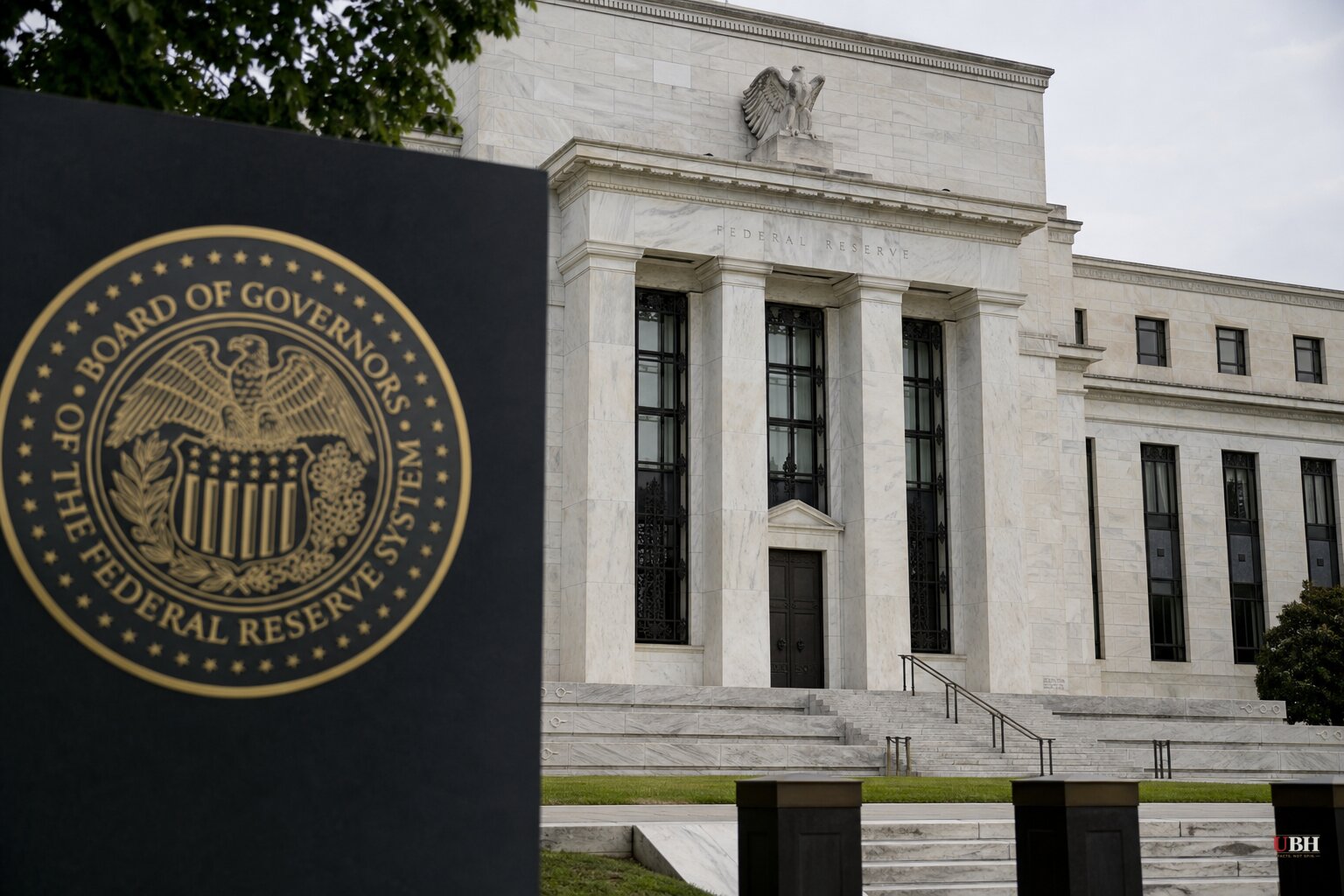
Inflation didn't budge in July, and that's creating pressure for rate hikes.
The Commerce Department's Bureau of Economic Analysis reported Wednesday that the personal consumption expenditures (PCE) price index, the Federal Reserve's preferred inflation gauge, rose 3.7% over the past year. That's unchanged from June and above the 3.6% economists polled by LSEG had forecast, according to Fox Business. Core PCE, which strips out food and energy, held at 3.3% annually, matching June and landing right at consensus.
On a monthly basis, both figures rose 0.2%, according to Reuters. That's a step up from June's cooler 0.1% core reading, and it's the kind of number that gives Fed hawks ammunition. Omair Sharif, founder of forecasting firm Inflation Insights, told Reuters the unrounded core PCE figure was 0.246%, "so it barely missed out on rounding to 0.3%," which annualizes to nearly 3.0% on a one-month basis.
This is the 65th straight month PCE inflation has run above the Fed's 2% target, according to Reuters. Not months. Years.
Markets Move on Rate-Hike Odds
Traders took notice. According to CME Group's FedWatch tool, cited by Forbes and the International Business Times, the probability of a Fed rate hike at the September 15-16 meeting climbed to roughly 40-42% after Wednesday's report, up from about 33-36% just a week earlier. Odds for a hike by December have reportedly climbed to 72.7%, per Forbes.
That's a real shift. Six weeks ago the conversation was about whether the Fed would hold or cut. Now it's whether the Fed hikes.
The Fed Is Split, and the Minutes Prove It
Minutes from the Federal Open Market Committee's July meeting, released last week and cited by the Epoch Times and IBTimes, show a central bank that agrees on very little. "Many participants assessed that policy tightening would likely be necessary if inflation did not decline," the minutes state. But "most participants anticipated that inflation would step down over the rest of the year," even as "many participants noted the possibility that inflation might be more persistently elevated."
Three officials, Cleveland Fed President Beth Hammack, Minneapolis Fed President Neel Kashkari, and Dallas Fed President Lorie Logan, voted for a quarter-point hike in July and lost. Nine others voted to hold.
Logan didn't mince words in a July 31 statement quoted by the Epoch Times: "More than five years after the [post-COVID-19 pandemic] surge, prices have continued to rise too rapidly. Every month of above-target inflation compounds the strain on the budgets of American families and businesses." She said inflation looks like it's trending toward "the mid-2's, not all the way to 2 percent."
Hammack told Yahoo Finance, according to IBTimes, that "one 25 basis point move probably doesn't do a whole lot for the economy," suggesting multiple hikes could be on the table. Kashkari argued a "potential series of small policy moves would be better than waiting and eventually concluding that even bolder actions were necessary."
What's Driving the Numbers
The war between the U.S. and Iran, which began in late February when the U.S. and Israel launched strikes, is still the dominant factor. PCE inflation was at 2.9% before the conflict started and spiked to a three-year high of 4.1% in May, according to Reuters, as the fighting disrupted roughly a fifth of global oil supply. It's cooled since, but not back to where it was.
Heather Long, chief economist at Navy Federal Credit Union, put it plainly to Fox Business: "The impacts of the war in Iran are still apparent with $4 gas and $5.60 diesel." She added that a "trade war with Canada will only exacerbate inflation woes."
That's a real risk on the horizon. President Trump has threatened new tariffs on Canada and China, and AI infrastructure spending has pushed up prices for computers, gaming consoles, and semiconductors, according to the Associated Press coverage carried by both the Independent and Breitbart.
There's a fair counterpoint worth stating. Not everyone thinks a hike is coming. Colin Martin, Charles Schwab's head of fixed income research, told Forbes that "when the labor market is strong and inflation is high, it's harder to defend not hiking interest rates." But job losses reported last month have complicated that picture, according to the Daily Signal's Reuters report, which noted markets saw only a 46% chance of a hike before the July CPI data came in cooler than the PCE figures. Morgan Stanley Wealth Management's Ellen Zentner said after that CPI report that a "no need to hike rates" narrative was still intact.
That tension, strong-ish inflation against a softening labor market, is exactly why the Fed hasn't moved either direction since December, when it last adjusted rates to the current 3.50%-3.75% range.
What Happens Next
New Fed Chair Kevin Warsh delivers his first major speech since rejoining the central bank in June at the Jackson Hole symposium in Wyoming this Friday. Every word will be parsed for hints on whether he sides with the hold camp or the hawks.
Separately, second-quarter GDP growth was left unrevised at a sluggish 1.5% annual rate, down from 2.1% in the first quarter, according to Reuters. Consumer spending adjusted for inflation was flat in July. Incomes rose 0.4%, the best gain since February, but Americans' income growth has merely kept pace with inflation over the past year, not gotten ahead of it.
The next real test comes with the August CPI and jobs reports, both due before the Fed's September 15-16 meeting. Early estimates from the Cleveland Fed's Nowcasting model, cited by the Epoch Times, suggest August CPI could hold near 3.4% annually. Gas prices have already rebounded this month, which will likely push the number higher rather than lower.
Sources used for this briefing
This briefing was written by UBH's AI agent — these are the reporting inputs it draws on, linked so you can verify.


