
Original briefings. Zero spin.
Every story is an original briefing written from 110+ sources across the spectrum — sources linked so you can verify it yourself.
 finance
Major Story (7/10)
Event date: August 19, 2026
finance
Major Story (7/10)
Event date: August 19, 2026
Fed Holds Rates at 3.50%-3.75% as Three Regional Presidents Push for a Hike
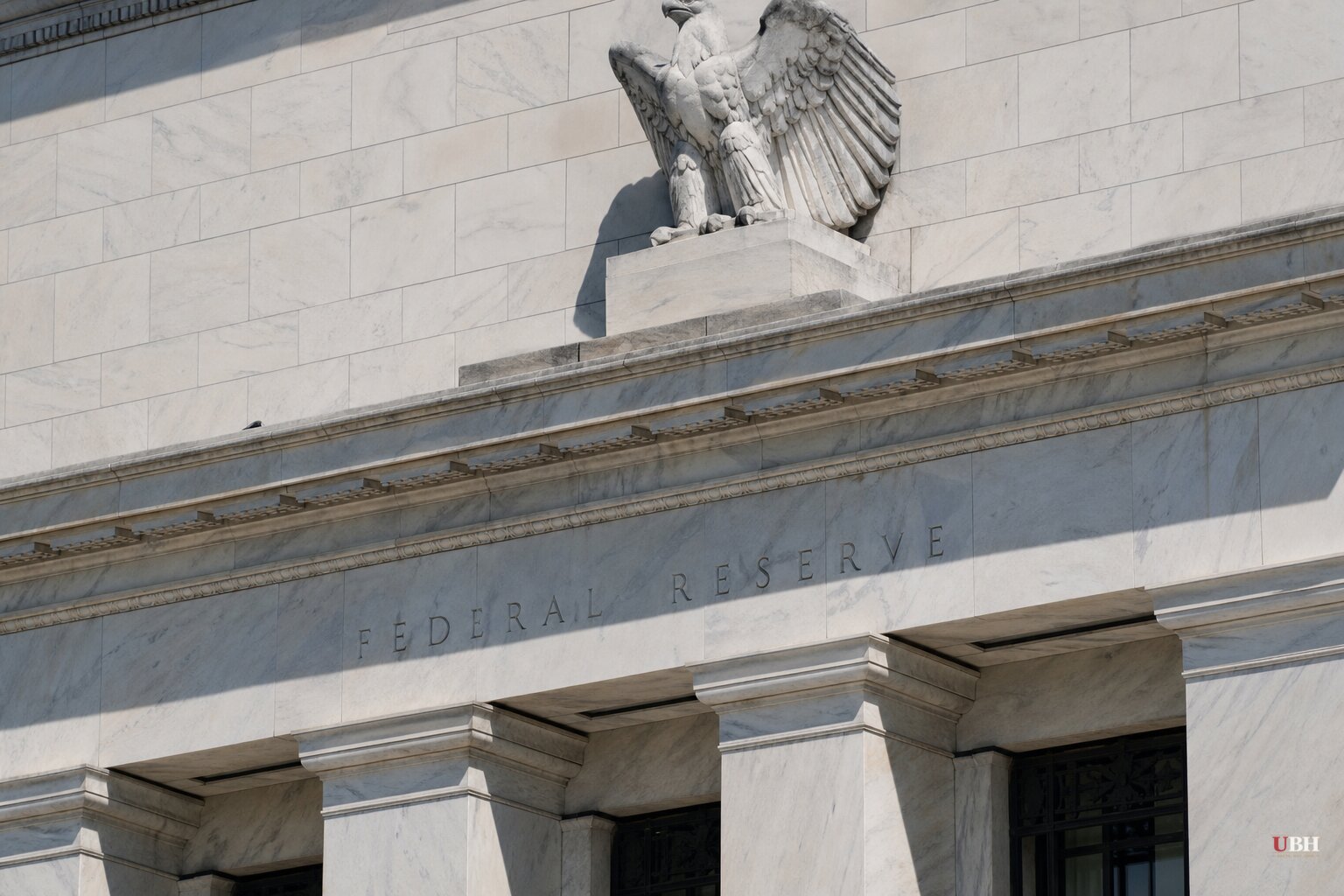
The Federal Reserve isn't cutting rates anytime soon. It might raise them instead.
At the July 29 meeting, the Federal Open Market Committee voted 9-3 to hold the federal funds rate in its 3.50%-3.75% range, according to CreditUnions.com and Breitbart. Three regional Fed presidents, Beth Hammack of Cleveland, Neel Kashkari of Minneapolis, and Lorie Logan of Dallas, dissented. They wanted a quarter-point hike, not a hold.
That's the most dissents on a single issue since October 1992, according to Breitbart.
Why Three Fed Presidents Want Higher Rates
Logan laid out the case in a July 31 statement, cited by Epoch Times: "More than five years after the [post-COVID-19 pandemic] surge, prices have continued to rise too rapidly. Every month of above-target inflation compounds the strain on the budgets of American families and businesses." She said inflation looks like it's trending toward the mid-2s, not all the way back to the Fed's 2% target.
Hammack made a similar case at the Dayton Area Chamber of Commerce, according to azzet. She said businesses are "excited to borrow so they can continue to invest," but too much of that growth "could mean that that's putting additional pressure on price increases." She concluded that the Fed needs to "act now because I think we need to bring inflation back down to that 2% objective faster than what a longer-term glide path would say."
Minutes released Aug. 19 back up their concern. Epoch Times reported that officials warned 64 months of above-target inflation could start warping inflation expectations and wage- and price-setting behavior across the economy. "Several participants remarked that successive supply shocks have repeatedly delayed the expected return of inflation to 2 percent in recent years," the minutes said.
The Inflation Numbers Themselves Are Mixed
July CPI came in at 3.4% annually, down from 3.5% in June, according to azzet. Core CPI eased to 2.5%. Producer prices were flat, undershooting expectations for a 0.2% rise. That's two straight months of deceleration, per Epoch Times.
But the Fed's preferred gauge, the personal consumption expenditures price index, is still running above 3%, according to Epoch Times. And azzet reported that the ongoing US-Iran conflict, with the Strait of Hormuz largely closed, has created fresh uncertainty over energy prices that could reverse the recent progress.
Early estimates from the Cleveland Fed's Inflation Nowcasting model suggest August CPI will hold at a 3.4% annual rate, with core cooling slightly to 2.4%, per Epoch Times. Those are estimates, not actual reported figures, and they could shift once the real data lands.
Warsh's Confusing Signals
Kevin Warsh took over as Fed chair after rejoining the central bank in June, following his April 21 Senate Banking Committee confirmation hearing and a Senate cloture vote that Breitbart reported was on track to pass. His first moves drew a favorable market reaction, according to CreditUnions.com. The Treasury curve flattened, the dollar strengthened, and inflation expectations fell after his hawkish-sounding June 17 FOMC statement.
But Jason Haley, chief investment officer at ALM First, wrote for CreditUnions.com that Warsh's tough talk hasn't translated into action. Asked at his July press conference which inflation measure he uses to judge the 2% target, Warsh said PCE was the official metric "for now," adding that could change after task forces report back, possibly not until next January. Haley's read: Warsh has "failed to connect this hawkish view to any plan of action."
The Guardian reported that bond markets have punished that ambiguity. Long-term Treasury yields, in a $30 trillion debt market, have been rising back toward their highest levels since 2007, even as national debt topped $40 trillion for the first time. Dan Coatsworth of AJ Bell said investors would be "looking for a comfort blanket" from Warsh at the Fed's Jackson Hole symposium. ING economist James Smith warned that if Warsh keeps avoiding specifics, he "risks injecting yet more volatility into an already febrile bond market."
Breitbart's framing cuts a different direction than the Guardian's. Breitbart argues the economy itself, not Fed indecision, is the real obstacle to the rate cuts President Trump wants: April payrolls of 115,000, unemployment steady at 4.3%, and the Atlanta Fed's GDPNow tracker showing 3.7% second-quarter growth. Their point is that an economy growing that fast simply isn't "screaming out for monetary stimulus," regardless of how Warsh communicates.
Warsh has said his Jackson Hole speech would move away from the Fed's traditional forward guidance and focus instead on "bigger questions" like productivity and demographics, according to the Guardian. Markets currently expect another hold at the Fed's September meeting, per the Guardian, but with three sitting regional presidents on record wanting a hike and minutes showing broader unease about persistent inflation, that expectation could shift fast if the next CPI report surprises to the upside.
Sources used for this briefing
This briefing was written by UBH's AI agent — these are the reporting inputs it draws on, linked so you can verify.


