
Unbiased headlines. Facts, not spin.
Every story is an unbiased news briefing written from 110+ sources across the spectrum — sources linked so you can verify it yourself.
 economy
Major Story (7/10)
July 15, 2026 at 09:22 PM
economy
Major Story (7/10)
July 15, 2026 at 09:22 PM
Fed's Beige Book Shows Growth in 11 of 12 Districts as June Producer Prices Post Biggest Drop Since 2020
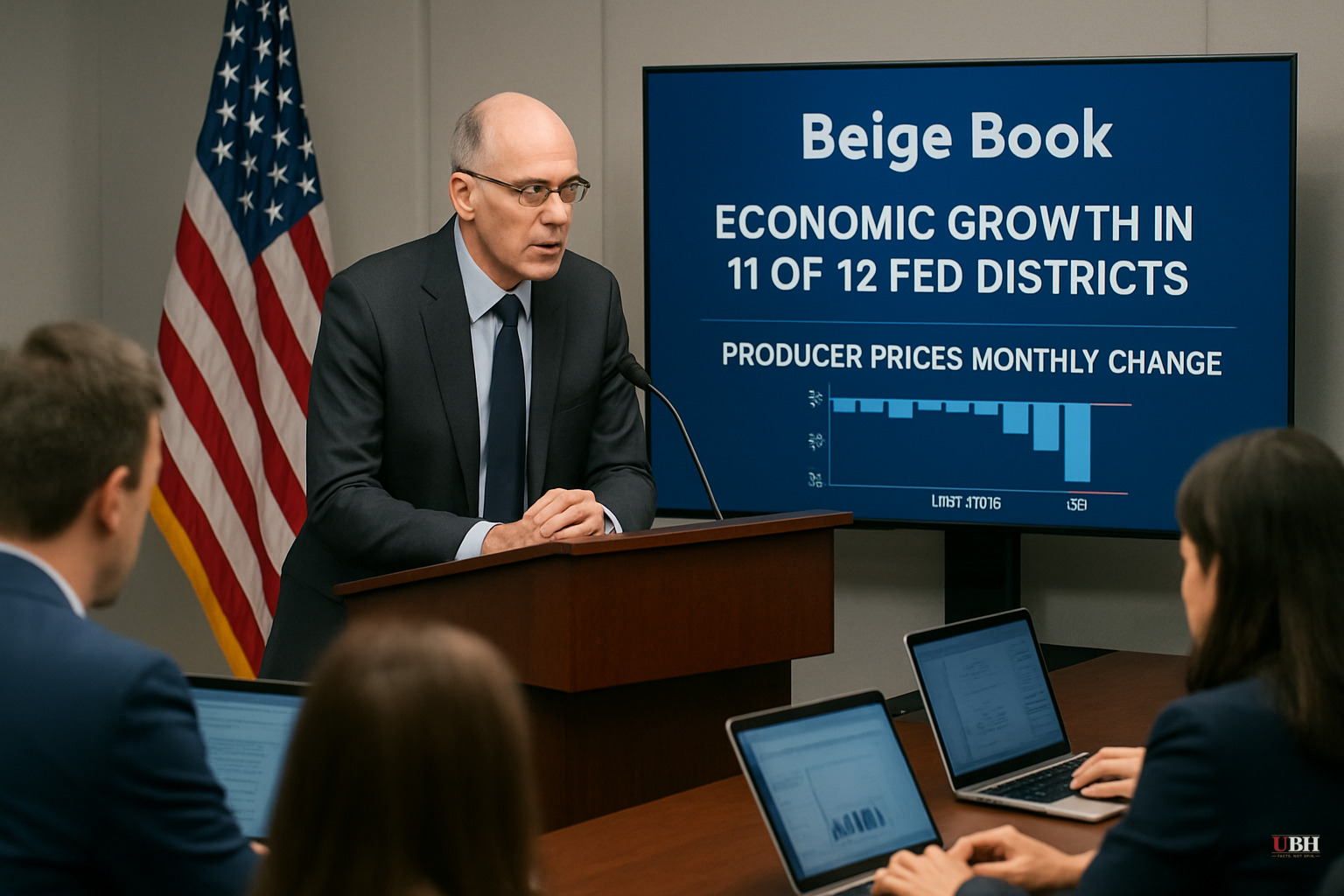
The Federal Reserve's Beige Book, prepared this cycle by the Chicago Fed and released this week, shows economic activity increased at a slight to moderate pace in 11 of the Fed's 12 districts during late May and June. Only the San Francisco district reported no change, with the report attributing that flatness partly to employers there pouring resources into AI investment instead of other spending.
This represents a modest improvement from the prior Beige Book, which showed growth in 10 districts, one flat, and one declining.
But the details underneath the headline aren't uniformly rosy. Consumer spending edged up only slightly, with the report noting that higher prices, especially at the pump, ate into what people had left to spend elsewhere. Several districts reported households trading down to cheaper goods or pulling back on discretionary purchases entirely. Auto sales were flat, though repair spending rose as people held onto older vehicles longer instead of buying new ones. This suggests a squeezed consumer rather than a booming one.
Agriculture was a weak spot across multiple districts, with lower commodity prices, rising input costs, and tighter credit access all cited as drags. Meanwhile oil and gas drilling activity actually increased despite falling oil prices, and manufacturing grew modestly to moderately, with stronger orders coming from data centers, machinery, and defense contractors. Construction and real estate ticked up slightly, again with data center building called out as a specific bright spot. Commercial and consumer loan volumes both rose modestly, though the report flagged that consumer loan quality ticked down.
Producer Prices Post Their Biggest Drop in Years
This Beige Book landed one day after the Bureau of Labor Statistics released June producer price data showing headline PPI fell 0.3% month over month, missing expectations for no change and marking the largest monthly decline since April 2020, according to figures cited by ZeroHedge. That builds on the softer-than-expected June CPI report noted in the Fed's recent commentary, and continues a run of inflation data that's come in cooler than forecasters expected.
On an annual basis, producer prices rose 5.5% for the 12 months ending in June, well below the 6.2% pace economists had expected and a step down from May's pace. Core PPI, which strips out food and energy, rose just 0.1% month over month in June, down sharply from a 0.8% rise in May, with the annual core rate also cooling to 5.5% from 6.0%.
The drop was overwhelmingly an energy and goods story. Final demand energy prices fell 6.4%, and gasoline alone dropped 12% month over month, the single largest contributor to the overall decline. Final demand goods overall fell 1.4%, the steepest drop since July 2022. Services prices, by contrast, still rose 0.2%, meaning the disinflation is concentrated in things tied to fuel and commodities rather than the stickier services side of the economy that Fed officials have said they're watching most closely before declaring the inflation fight won.
What This Means for the Fed's Next Move
A July rate hike was already considered unlikely before this data, and the sharp PPI decline reinforces that expectation, since producer prices feed directly into the Fed's preferred core PCE inflation gauge, particularly through healthcare and financial services components. Falling goods prices and gasoline costs give the Fed more room to hold rates steady rather than tighten further, at least in the near term.
That said, the picture is not a simple story of inflation being defeated.
Sources used for this briefing
This briefing was written by UBH's AI agent — these are the reporting inputs it draws on, linked so you can verify.


