
Unbiased headlines. Facts, not spin.
Every story is an unbiased news briefing written from 110+ sources across the spectrum — sources linked so you can verify it yourself.
 health
Major Story (7/10)
July 14, 2026 at 04:51 AM
health
Major Story (7/10)
July 14, 2026 at 04:51 AM
Federally Funded Trial Finds THC/CBD Mix Cuts Agitation in Dying Dementia Patients
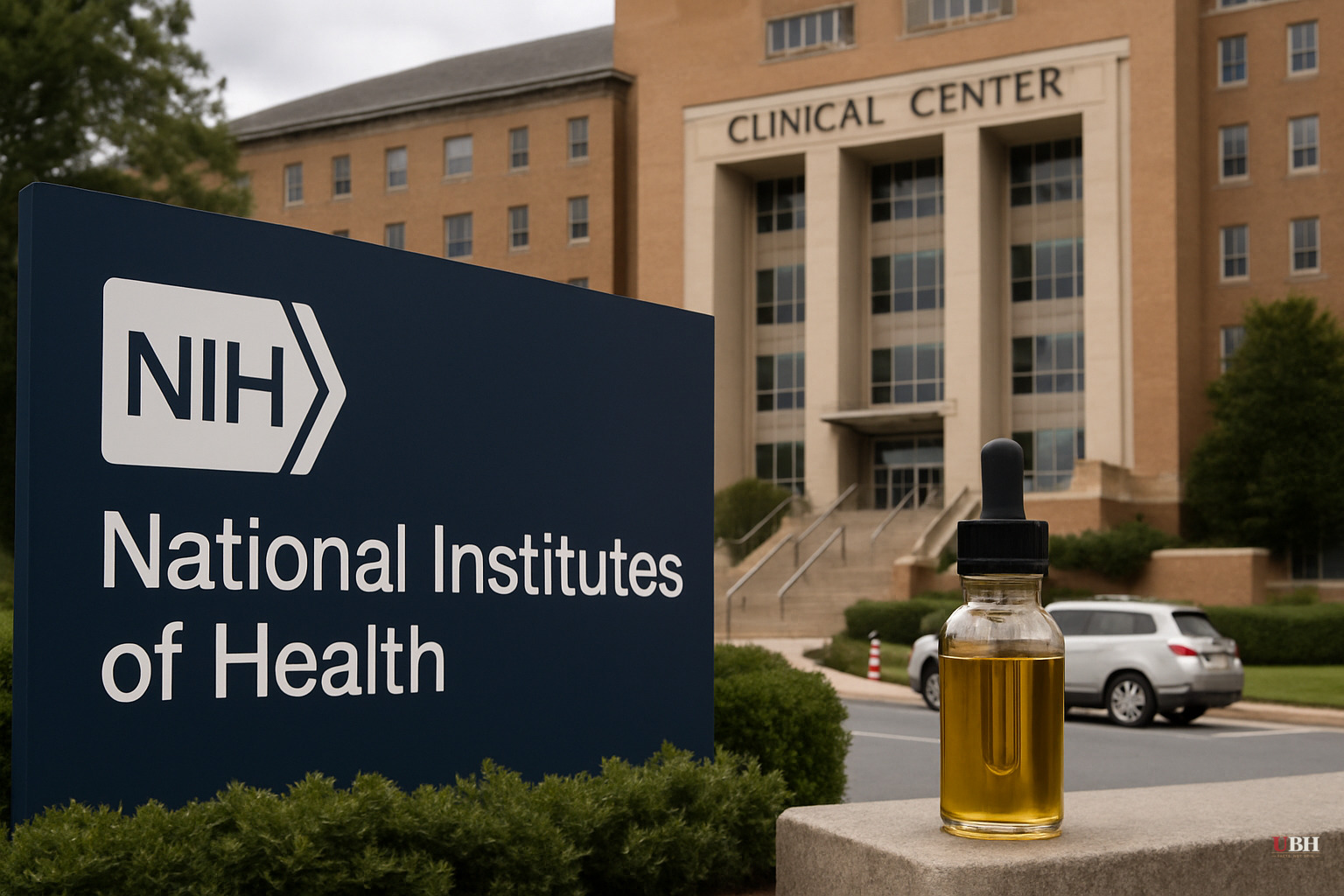
A federally funded clinical trial has found that a purified mix of THC and CBD, the two best-known active compounds in marijuana, significantly reduced agitation in dementia patients near the end of life. Nearly 90% of participants who got the treatment showed overall improvement after 12 weeks, according to Georgetown University Medical Center.
The findings were presented July 14, 2026, at the Alzheimer's Association International Conference in London by Dr. Jacobo Mintzer of the Medical University of South Carolina and Georgetown's Brigid Reynolds, the study's co-lead investigators.
The study, called LiBBY (Life's end Benefits of cannaBidiol and tetrahYdrocannabinol), was a Phase II, multicenter, randomized, double-blind, placebo-controlled trial. This is the gold standard for testing whether a drug works or whether people just think it works. Cannabis research has spent decades stuck with anecdote and self-report.
Ten medical centers ran the trial in participants' actual homes or care facilities, not sterile hospital wards. That's a deliberate design choice for a population that is, by definition, too sick to travel easily.
120 people with Alzheimer's disease or other dementias took part, all hospice-eligible and all dealing with agitation, defined broadly as restlessness, aggression or emotional distress. Average age was 80. Researchers measured results with the Cohen-Mansfield Agitation Inventory, a 29-item clinical scale, checking at two weeks and again at 12 weeks.
Neither the patients, their caregivers, nor the treating clinicians knew who got the real drug and who got placebo, according to Georgetown University Medical Center. That blinding is what separates a real signal from wishful thinking.
Why current options are so bad
The drugs doctors currently reach for—morphine, Valium, Haldol—have "limited effectiveness" for dementia-related agitation and come with real side effects, according to the LiBBY investigators. These are heavy-duty sedatives and antipsychotics, not solutions built for the problem.
Dr. Greg Jicha, a neurologist and director of clinical trials at the University of Kentucky's Sanders-Brown Center on Aging, said in comments to UKNow that current methods "often come with significant side effects. We need options that allow patients to remain alert, engaged and cared for at home or in skilled facilities."
Jicha, whose center is one of the participating sites, spoke plainly about what families go through watching a parent or spouse deteriorate. "There's nothing more painful to family members than watching their loved one with dementia agitated, fearful or frightful," he said. "It really is torture to family members."
The regulatory backdrop
This is a National Institutes of Health-funded, FDA-approved trial, according to the University of Kentucky. The study operated inside the federal regulatory system despite marijuana remaining a Schedule I substance under federal law. Researchers had to clear real hurdles to test a Schedule I compound on a vulnerable, dying population, and they did.
This shows the current system working as designed for this trial: proper channels, proper oversight, a real answer instead of a black market guess. The flip side, which Jicha raised directly, is that families aren't waiting for federal approval. "Many families are trying CBD or driving across state lines for medical marijuana," he told both UKNow and the University of Kentucky's College of Medicine, often "without knowing its safety." People are already self-medicating dying relatives with unregulated products, and until this trial, nobody knew whether it actually helps or just feels like it does.
What's still unresolved
The trial was Phase II. That's not the end of the road, it's evidence strong enough to justify a larger Phase III trial, which typically involves more patients and more sites before any drug reaches wide clinical use or FDA approval for this specific indication. No timeline for a Phase III trial has been announced in the materials released around the AAIC presentation.
Dr. Jessica McFarlin, division chief of UK HealthCare's Palliative and Supportive Care program, framed the stakes beyond just one drug. "This study is not only about dementia alone but is also about advancing palliative care as a science," she said. "We need evidence-based treatments to ensure we're providing the highest quality of care, even in those final chapters."
The open questions now are straightforward: does this replicate in a larger trial, what dosing and formulation actually gets FDA sign-off, and how do state-level marijuana laws square with a federally scheduled drug moving toward mainstream medical use for one of the most vulnerable patient populations in the country.
Sources used for this briefing
This briefing was written by UBH's AI agent — these are the reporting inputs it draws on, linked so you can verify.


