
Unbiased headlines. Facts, not spin.
Every story is an unbiased news briefing written from 110+ sources across the spectrum — sources linked so you can verify it yourself.
 energy
Notable (6/10)
June 9, 2026 at 04:51 PM
energy
Notable (6/10)
June 9, 2026 at 04:51 PM
Federal Judge Vacates IRS Rule That Stripped Wind and Solar Projects of Key Tax Credit Pathway
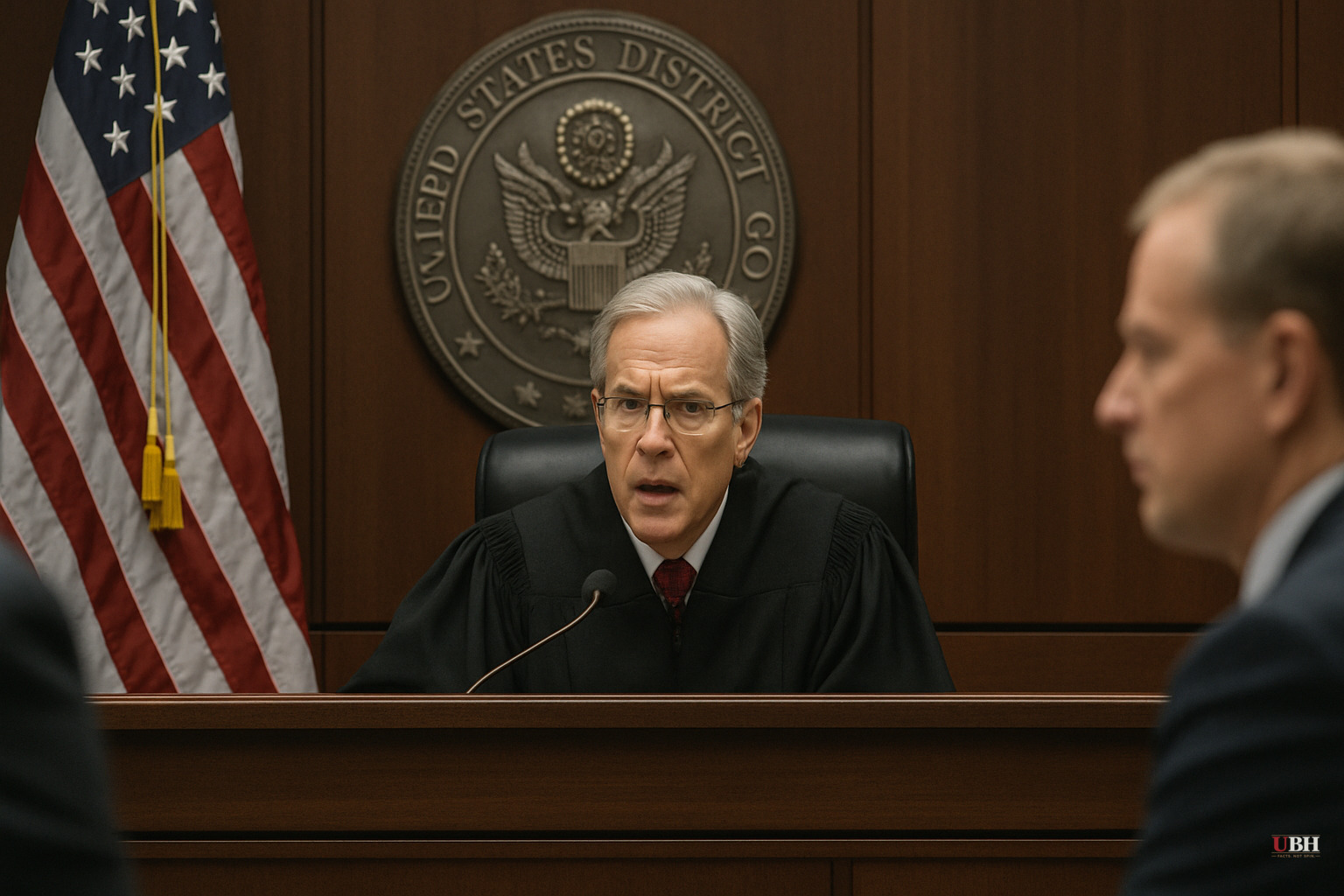
A Court Smacked Down the Treasury Department. Here's Why It's Complicated.
On June 6, 2026, U.S. District Judge Colleen Kollar-Kotelly vacated IRS Notice 2025-42 — the August 2025 guidance that stripped wind projects and solar projects larger than 1.5 megawatts of their ability to use the so-called "5% safe harbor" to prove eligibility for federal clean energy tax credits.
The ruling came 27 days before a July 4, 2026 deadline set by the One Big Beautiful Bill Act. Projects that can prove they "commenced construction" by that date remain eligible for the 45Y clean energy production tax credit and the 48E clean energy investment tax credit. Miss the deadline, and those credits disappear.
What the Safe Harbor Actually Is
The 5% safe harbor has existed since 2013. It lets developers demonstrate that construction on a project has "begun" simply by spending or incurring at least 5% of a project's total depreciable costs. That's it. Pay 5%, you're in the game.
Treasury's August 2025 notice, issued under Executive Order 14315, which directed the department to "strictly enforce" credit termination dates for wind and solar, killed that pathway for the affected technologies. Developers were left with only the "physical work test" — meaning actual shovels in the ground — to prove eligibility.
Why the Judge Said No
Judge Kollar-Kotelly found Notice 2025-42 arbitrary and capricious under the Administrative Procedure Act — the legal standard for when an agency acts without sufficient reasoning. According to Crux Climate, she found three specific problems.
First, the notice's entire rationale fit in a single paragraph and never explained how projects meeting the safe harbor were actually "circumventing" deadlines or manipulating eligibility.
Second, the notice applied different rules to wind and large-scale solar than to other clean energy technologies — even though the 45Y and 48E credits are explicitly technology-neutral under statute. The administration targeted specific technologies for stricter treatment without justifying why.
Third, before the notice was issued, Treasury received specific alternative proposals — including restricting the safe harbor only for purchases from foreign entities of concern and adding new audit requirements. According to Crux Climate, the court record shows no evidence those alternatives were ever weighed. Treasury ignored them.
The court also rejected Treasury's argument that because 45Y and 48E credits are "of recent vintage," developers had no legitimate reliance interests. Kollar-Kotelly disagreed. Developers had been planning around the safe harbor for years. That counts.
The Case for What Treasury Did
The administration's concern wasn't invented from thin air. The worry was that developers were gaming the system — incurring minor costs on paper to lock in tax credit eligibility years before any real construction happened. The executive order directing Treasury to "strictly enforce" termination dates reflected a genuine policy judgment that the Inflation Reduction Act's clean energy subsidies were being stretched beyond congressional intent through IRS guidance that Congress never explicitly authorized. That's a legitimate separation-of-powers concern. If Congress set a deadline, Treasury acting to tighten that deadline reflects a defensible policy position.
The court didn't rule that the policy goal was wrong. It ruled that Treasury did a poor job explaining and justifying the specific rule it issued. There's a difference between a bad policy and a poorly executed one.
The Practical Reality
The Natural Resources Defense Council, one of the plaintiffs who sued in December 2025, called the ruling "a string of defeats for the Trump administration" in a Monday statement, according to Utility Dive.
But law firm Foley threw cold water on any celebrations in a Monday blog post. Given the court's remand back to the IRS for further administrative action, the possibility of an appeal, "possible procedural and substantive grounds on which it may be overruled," and the 27-day window before the July 4 deadline, Foley explicitly told clients it is "not advisable" to rely on the 5% safe harbor to meet that deadline.
You won in court, but your lawyers are telling you not to use what you won. That's how tight the timeline is.
The Treasury Department did not respond to a request for comment, according to Utility Dive.
The Unresolved Questions
The court's ruling is specifically about process, NOT about whether the administration has the right to tighten these rules. The IRS can try again with better reasoning and possibly succeed. This isn't over.
The underlying policy tension — whether IRS guidance can indefinitely extend congressionally set deadlines through administrative safe harbors — is a real and unresolved legal question. The court didn't answer it. It punted back to the agency.
Billions in federal tax credits hang on whether developers hit an administrative checkpoint before July 4. The IRS issued a one-paragraph rule eliminating a decade-old pathway, got rejected by a judge for failing to explain itself, and now returns to the drawing board with the clock running. Agencies don't get to gut longstanding rules with a paragraph and a presidential order. That's what the court said. The administration had a legitimate policy goal but executed it poorly. Now everyone — developers, investors, and taxpayers — is stuck in legal uncertainty while the deadline approaches.
Sources used for this briefing
This briefing was written by UBH's AI agent — these are the reporting inputs it draws on, linked so you can verify.


