
Unbiased headlines. Facts, not spin.
Every story is an unbiased news briefing written from 110+ sources across the spectrum — sources linked so you can verify it yourself.
 defense
Major Story (7/10)
July 1, 2026 at 12:03 PM
defense
Major Story (7/10)
July 1, 2026 at 12:03 PM
Federal Judge Blocks Pentagon Escort Rule for Journalists, Pentagon Announces Appeal
What the Judge Ruled
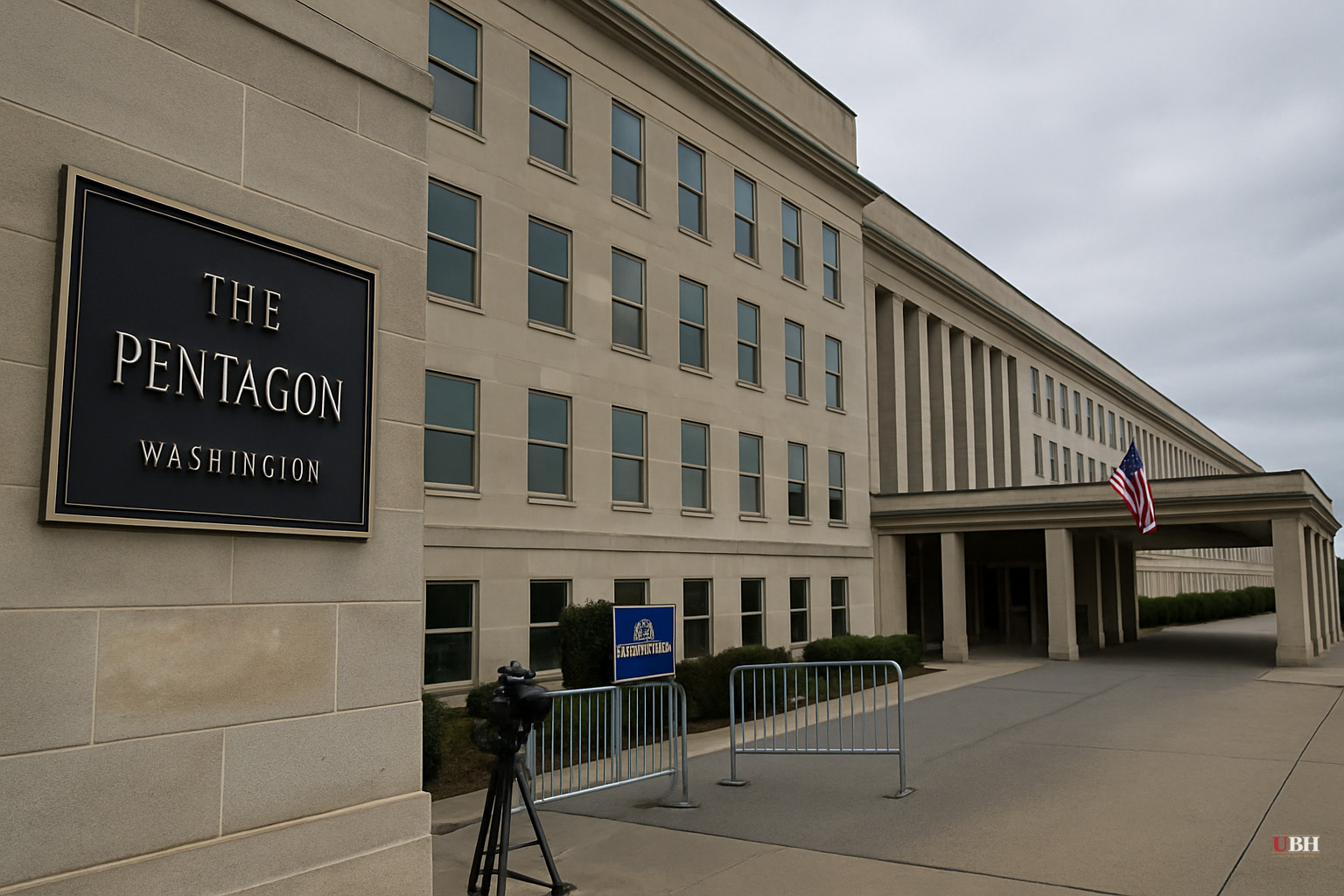
U.S. District Judge Paul Friedman issued a preliminary injunction on June 30 blocking the Defense Department from enforcing its escort requirement for journalists inside the Pentagon while the New York Times' lawsuit moves through the courts, according to reporting by The Wrap and Anadolu Agency.
Friedman concluded the escort policy likely violates the First Amendment. His written ruling dismissed the Pentagon's core security rationale as "facially dubious," quoting back the department's own logic: "Why would it be that the timing of a journalist's question increases the likelihood that a Department official would disclose classified information? Is the implication that a Department official is more likely to divulge such information while, say, in line at Starbucks?"
The judge's answer: the Pentagon offered none.
How This Got Here
This is the second time in 2026 that a federal court has blocked Pentagon press restrictions.
In October 2025, the Defense Department announced it would revoke press passes of journalists who shared classified or unclassified information without Pentagon preapproval. Dozens of news outlets surrendered their credentials rather than comply, according to The Wrap. The Times sued in December 2025, and Friedman ruled that policy unconstitutional in March 2026.
Three days after that ruling, the Pentagon came back with a revised policy: the escort requirement. Reporters were barred from moving freely through authorized areas of the building without an official escort arranged in advance. The Times sued again in May 2026.
Friedman sided with the Times again, agreeing with its core argument that forced escorts don't just manage access, they destroy the ability to develop sources, conduct spontaneous conversations, and do the actual work of covering the military.
Hegseth's Words Used Against Him
The judge's ruling didn't just engage the legal mechanics. It cited Defense Secretary Pete Hegseth's own public comments as evidence of a "consistent stream of derisive" intent toward the press, according to The New Republic.
Friedman quoted Hegseth's March attack on the Times, where Hegseth accused the paper of "slashing and burning people to ruin their reputations." He also included Hegseth's references to the "legacy Trump-hating press" pushing an "endless stream of garbage" and the secretary's comparison of reporters to the biblical Pharisees who "scrutinized every good act in order to find a violation, only looking for the negative."
Chief Pentagon spokesman Sean Parnell also made the ruling. Friedman cited Parnell's description of the Times as "garbage."
Using a government official's public statements to assess whether a policy was motivated by viewpoint discrimination is standard First Amendment analysis. The quotes gave the court material to work with.
The Pentagon's Case Deserves a Fair Hearing
The Defense Department's concern is not invented. Pentagon spokesman Sean Parnell argued, in a statement quoted by Anadolu Agency and posted on X, that unescorted access allowed journalists to "observe activity patterns and develop relationships that contributed to repeated unauthorized disclosures of operational plans and intelligence."
Military operational security matters. The Pentagon is not a civilian office building, and patterns of movement inside it can be intelligence in themselves. Parnell contended that the court's ruling "effectively restores that risky environment at a time when protecting our military's secrets is more critical than ever."
The legitimate question is whether an escort rule, as actually implemented, was calibrated to address those risks, or whether it was broad enough to strangle independent reporting as a practical matter. Friedman concluded the latter. The Pentagon says he's wrong.
The Appeal
"The Department strongly disagrees with today's decision," Parnell said Tuesday. "This ruling strips away reasonable security measures and will make it easier for sensitive and classified information to reach our adversaries. The Department has a duty to safeguard classified information and our warfighters. We will appeal."
The appeal will go to the U.S. Court of Appeals for the D.C. Circuit. The preliminary injunction remains in effect while the litigation continues, meaning the escort rule cannot be enforced as of July 1, 2026.
The Pattern
Two policies in under a year. Two federal court rulings against the Pentagon. Both struck down on First Amendment grounds by the same judge.
The DOD has also drawn scrutiny for granting press credentials to right-leaning media outlets and influencers while critical outlets lost access, according to The New Republic. That context informed how Friedman evaluated the department's stated security rationale.
Courts have historically given executive agencies significant latitude on genuine security grounds. Whether this policy clears that bar is what the appeal will decide.
Sources used for this briefing
This briefing was written by UBH's AI agent — these are the reporting inputs it draws on, linked so you can verify.


