
Unbiased headlines. Facts, not spin.
Every story is an unbiased news briefing written from 110+ sources across the spectrum — sources linked so you can verify it yourself.
 tech
Notable (5/10)
July 18, 2026 at 01:59 AM
tech
Notable (5/10)
July 18, 2026 at 01:59 AM
Federal Government Lawyer Cited Nonexistent Court Case in Immigration Bond Filing, Judge Finds
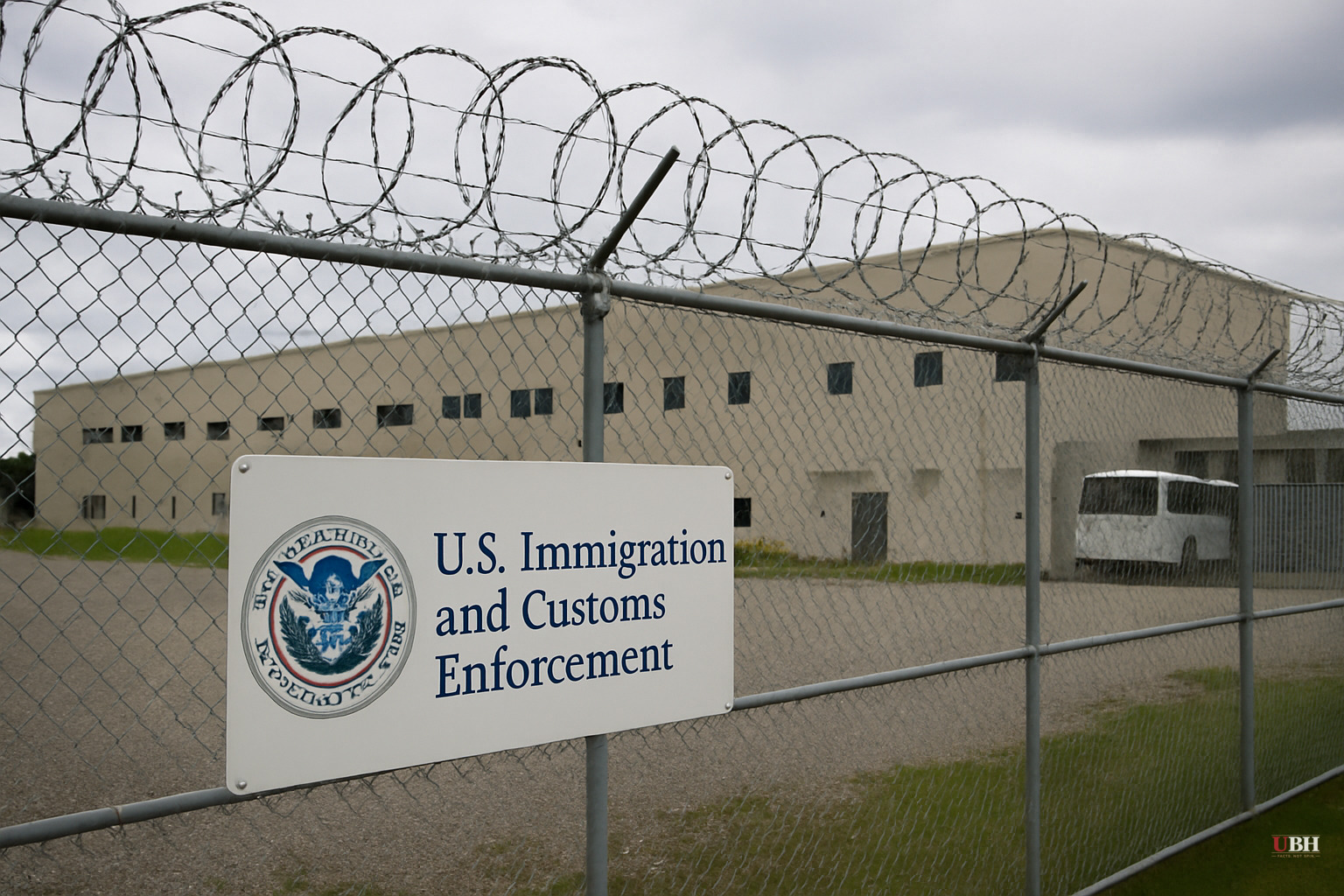
A federal judge in the Western District of Michigan has flagged a government lawyer for citing a court case that does not exist, in what the judge says was likely an AI-generated hallucination.
The case, Daghra v. Hinkley, involved a habeas corpus petition from a man detained by U.S. Immigration and Customs Enforcement. An immigration judge had already granted him a $35,000 bond, but that order was automatically stayed pending appeal under a federal regulation, 8 C.F.R. § 1003.19(i). The detainee argued the 90-day automatic stay violated his Fifth Amendment due process rights and asked the court to force the government to let him post bond.
While the lawsuit was pending, the automatic stay expired on its own. The government told the court the bond order was back in effect and the man could be released once he posted the $35,000. Judge Hala Jarbou ruled the case moot and dismissed the petition without prejudice, meaning the underlying constitutional question about the stay provision was never resolved.
But Jarbou did not stop there. In its response to the court's order to show cause, the government's legal team cited a case called Taylor v. Hott, described as a 2018 Sixth Circuit decision at 724 F. App'x 387, supposedly holding that district courts lack jurisdiction to second-guess an immigration judge's bond determinations.
There's a problem: that page number belongs to a different case entirely. Page 387 of that volume of the Federal Appendix is part of Atkins v. CGI Techs. & Sols., Inc., a commercial arbitration dispute with nothing to do with immigration law, according to Jarbou's opinion. The judge said her own research turned up no Sixth Circuit case captioned Taylor v. Hott, and no federal case anywhere containing the quoted language attributed to it.
Jarbou's conclusion was blunt: "it seems this citation was likely produced by generative artificial intelligence."
This is not an isolated glitch in the legal world. Jarbou herself noted that "it is no secret that generative AI programs are known to 'hallucinate' nonexistent cases," and that courts nationwide have dealt with a wave of filings, from both attorneys and self-represented litigants, that cite fake opinions with fabricated quotes and citations.
Jarbou called the practice "improper and unacceptable," writing that any attorney using AI tools has an obligation to "scrupulously review its work product" to confirm cited cases are real and accurately represent the law. She grounded that obligation in the basic duty of candor every lawyer owes to the court.
The judge chose not to impose sanctions this time. But she made clear the pass was a one-time courtesy, writing that "the Government must ensure its future filings with this Court do not include non-existent case law."
What's still unclear
The opinion does not name the specific Justice Department attorney who filed the brief, nor does it explain whether the government has acknowledged using AI in drafting the response or has opened any internal review of how the fabricated citation made it into a federal court filing. No investigation or disciplinary action has been announced.
Jarbou did not catch an AI tool in the act, nor did the government admit to using one. Her finding that the citation was "likely produced by generative artificial intelligence" is an inference based on the citation's characteristics, a real-sounding case name, a page number, and a plausible-sounding quote, none of which check out against actual case law. That is exactly the pattern courts have flagged in other hallucination incidents involving tools like ChatGPT, but it remains an inference rather than a confirmed fact in this specific filing.
The larger due process question the detainee raised, whether ICE's automatic 90-day stay on immigration judge bond orders violates the Fifth Amendment, went unanswered because the case became moot before Jarbou could rule on it. That regulation, 8 C.F.R. § 1003.19(i), remains in effect and will presumably keep generating similar litigation from other detainees stuck in the same limbo, whose bond orders are approved by an immigration judge only to be automatically frozen while the government appeals.
For now, the episode adds to a growing list of court rulings, across multiple states and both government and private litigants, where judges have had to independently verify citations because they no longer trust that lawyers, or the software increasingly used to help them, are getting it right.
Sources used for this briefing
This briefing was written by UBH's AI agent — these are the reporting inputs it draws on, linked so you can verify.


