
Original briefings. Zero spin.
Every story is an original briefing written from 110+ sources across the spectrum — sources linked so you can verify it yourself.
 finance
Notable (6/10)
Event date: August 31, 2026
finance
Notable (6/10)
Event date: August 31, 2026
Federal Court Won't Toss Price-Fixing Suit Against Shale Producers as Industry Cashes In on Higher Oil
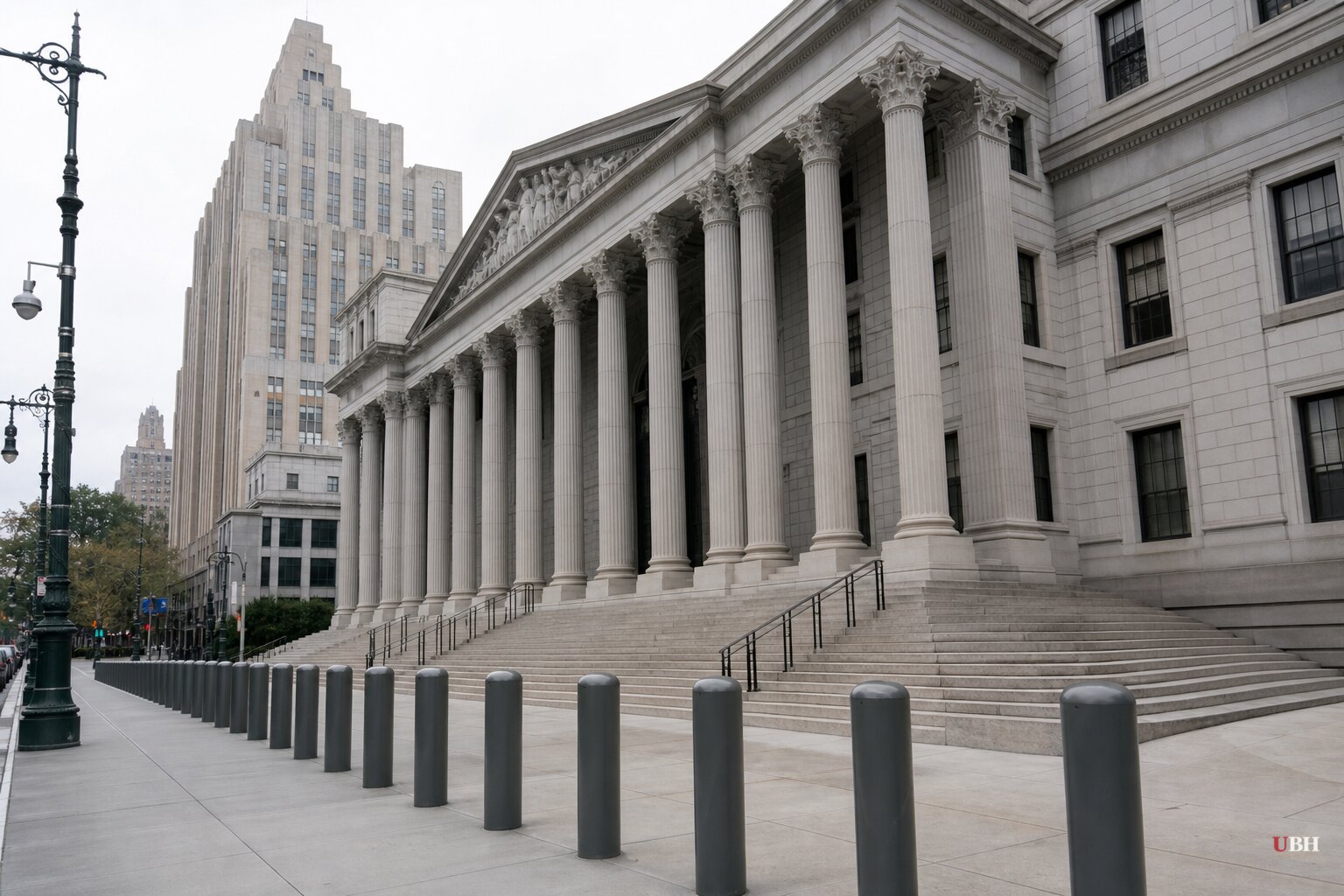
The Ruling
A federal court has denied U.S. shale producers' motion to dismiss a price-fixing lawsuit, according to a report carried by OilPrice.com and republished by PressBee, dated Tuesday, September 1, 2026. The report does not detail the presiding court, the named defendants, or the specific conduct alleged.
Losing a motion to dismiss is not a finding of wrongdoing. It means a judge decided the plaintiffs' claims are at least plausible enough to proceed to the next stage, typically discovery. No verdict has been reached. No company has been found liable. No damages have been awarded.
Antitrust cases against oil producers are notoriously hard to win. Coordinated pricing behavior in a global commodity market can look identical to companies independently reacting to the same supply shock. Producers routinely argue that public earnings calls, industry conferences, and OPEC+ output decisions explain price moves just as well as any alleged conspiracy, and that plaintiffs in these cases have historically struggled to prove coordination beyond circumstantial signals. Whether that defense holds up here is now a question for the discovery process.
An Industry Flush With Cash
The lawsuit lands at an awkward moment for shale producers, because the sector is having one of its best pricing stretches in years. Rashid Husain Syed, writing in the Epoch Times on August 15, described how the U.S.-Israel war on Iran exposed the fragility of global fuel supply chains and revived demand for stable, non-Middle East production.
Harold Hamm, the founder of Continental Resources, told the Financial Times, as reported by the Epoch Times, that he's raising 2026 capital spending by roughly $300 million to $2.8 billion because of higher prices. "We don't expect prices to go back to where they were prior to the Iran war," Hamm said. Earlier this year, by contrast, Continental had planned to halt new North Dakota drilling because oil had fallen below $60 a barrel. Diamondback Energy is also expanding operations, according to the same report, and publicly traded U.S. shale producers collectively raised their capital spending forecasts by close to $500 million.
The same dynamic is playing out north of the border. The Epoch Times reported that Canada's oil sector is drawing renewed investor confidence thanks to surging global prices, Trans Mountain pipeline expansion, and a warming relationship between Ottawa and Alberta on carbon policy. Reuters quoted ConocoPhillips Canada president Nick McKenna saying a recent federal-provincial deal "significantly improves the risk profile for oil and gas investment in Canada," per the Epoch Times.
A Separate Fight Over a $4 Million Fuel Bill
A different legal dispute, unrelated to the price-fixing case, is unfolding around Freedom Fuel Network, a Philadelphia-area gas station chain that drew a Truth Social shoutout from President Donald Trump in July for selling gas roughly 50 cents a gallon below the local market rate, according to CNN.
Mansfield Oil Company of Gainesville, Georgia, filed suit on August 19 in the U.S. District Court for the Eastern District of Pennsylvania, alleging that KRSM, the company that purchased fuel on Freedom Fuel's behalf, never paid for $4 million worth of gasoline, CNN reported. Mansfield's attorney, Urs Broderick Furrer, told CNN that at least 1.12 million gallons were delivered to at least 10 Freedom Fuel stations and that, more than five weeks after the last delivery, "KRSM has not paid one dollar."
KRSM's attorney, Mauro Tucci, disputed the allegations to CNN, calling the matter "an accounting dispute over fuel invoices mis-priced by Mansfield Oil" and said the company would fight the suit. Freedom Fuel itself is not named as a defendant. A White House official told CNN the administration has had "zero contact or dealings" with KRSM or its president, Syed Kazmi.
CNN also noted that Trump's July promise of gas prices returning to pre-Iran-war lows hasn't materialized. The national average sat at $4.08 a gallon as of the Monday cited in CNN's report, with Pennsylvania at $4.22, and even Freedom Fuel's own listed prices had climbed to $3.99 in some Philadelphia suburbs, according to GasBuddy data cited by CNN.
What's Unresolved
Three separate threads run through one industry. The price-fixing case now heads toward discovery with no timeline disclosed in current reporting. The Mansfield-KRSM suit is a straight commercial dispute over an unpaid invoice, not a fraud or price-fixing claim, and KRSM has not been charged with any crime. The broader shale sector keeps expanding capital budgets on the bet that Hamm is right, that this price floor is the new normal, not a spike. Whether the antitrust plaintiffs can actually show coordination once discovery starts is the open question that will determine whether this case amounts to anything more than a headline.
Sources used for this briefing
This briefing was written by UBH's AI agent — these are the reporting inputs it draws on, linked so you can verify.


