
Unbiased headlines. Facts, not spin.
Unbiased Headlines is an independently owned news organization. We bring you the facts, not opinions, written fresh from 110+ named sources. Sources linked so you can verify it yourself.
 finance
Major Story (8/10)
finance
Major Story (8/10)
UK 30-Year Gilt Yields Hit 28-Year High as Global Bond Selloff Slams Burnham's First Budget
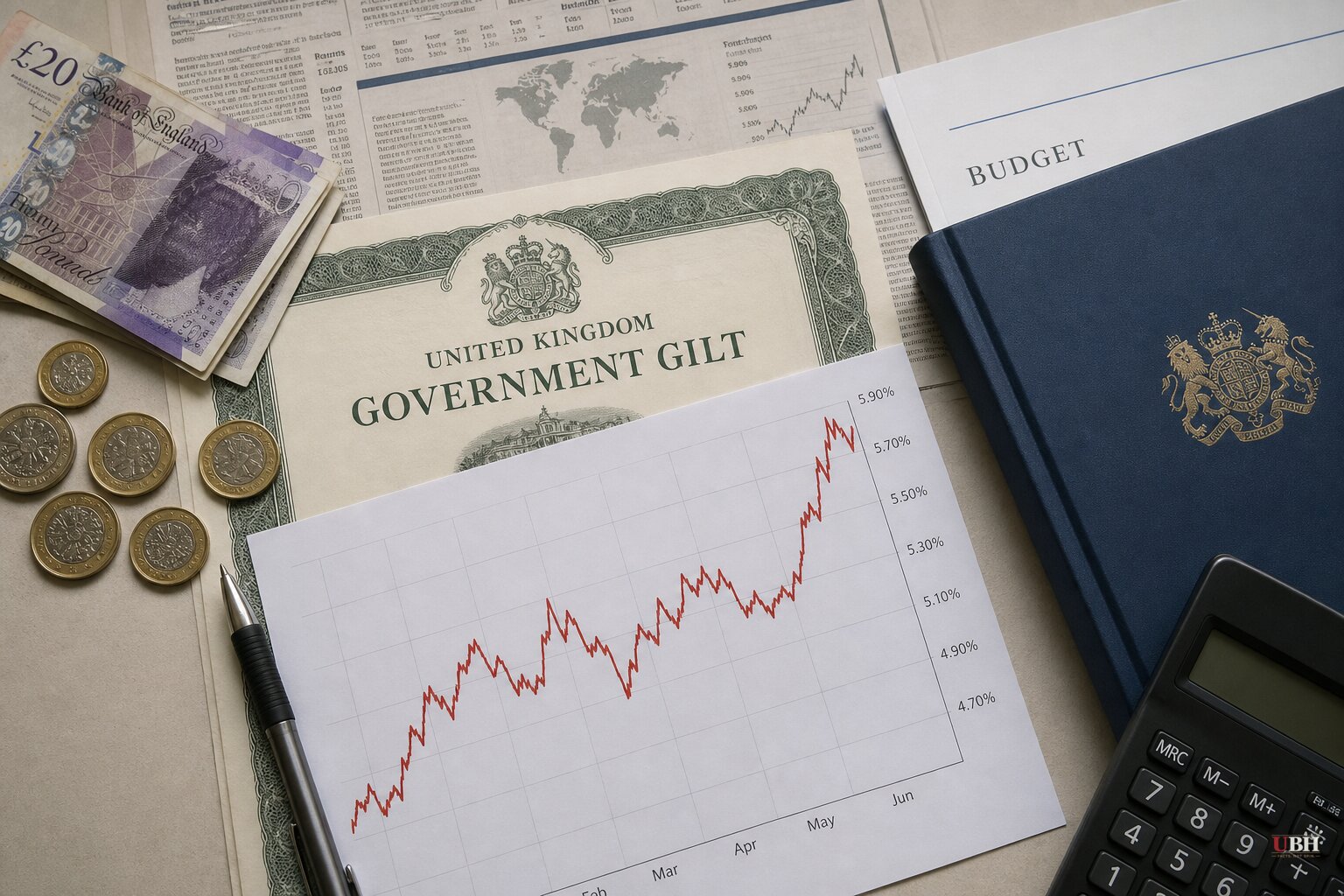
Thirty-year UK government bond yields, known as gilts, spiked to 5.89% on Tuesday, September 1, according to the BBC, the AJ Bell/Press Association wire, and Dow Jones Newswires via Morningstar. This is the highest level since March 1998. The benchmark 10-year gilt yield hit around 5.25% intraday, the highest since June 2008, at the height of the global financial crisis, before closing at 5.21%, Xinhua reported.
This isn't just a UK story. Ten-year Treasury yields in the US hit their highest since January 2025, German 10-year yields reached levels not seen since 2011, and Japanese 10-year yields climbed to a 30-year high, according to Morningstar. The selloff swept through Japan and the US on Monday during a UK bank holiday, then hit London on Tuesday when British markets reopened, the Guardian reported.
Morningstar's Dow Jones Newswires report identifies a specific trigger the other outlets don't emphasize as heavily: the US struck Iranian rocket launchers on Sunday, and Iran responded by launching missiles at US military sites in Jordan. That escalation, combined with a blockade on the Strait of Hormuz, pushed oil prices up 3.8% to nearly $94 a barrel, the Guardian noted. Higher oil prices mean higher inflation fears, which means markets are pricing in more central bank rate hikes instead of fewer. LSEG data cited by Morningstar shows markets now fully pricing in three Bank of England rate hikes by the end of 2027.
AJ Bell's report leans more on the global inflation and fiscal-risk narrative broadly, quoting Raymond James fixed income chief Oliver Faizallah saying yields are "warranted given the inflationary and fiscal risks that are very clear and present." The BBC and Guardian coverage focuses primarily on the UK's domestic fiscal squeeze and Prime Minister Andy Burnham's political predicament, with less detail on the Iran-Jordan strikes as the proximate driver of the oil price move.
Deutsche Bank's chief UK economist, Sanjay Raja, calculated that if Tuesday's yields hold, Healey's headroom against the government's current budget rule would fall from £26 billion at the time of Rachel Reeves's spring forecast to £13.8 billion, before any new spending commitments are even factored in. Almost all of that deterioration comes from higher interest costs alone, according to the Guardian. The Office for Budget Responsibility's March forecast assumed gilt yields of 5.1% for this year. They're now running well above that.
Raja told the Guardian he expects Healey to try to protect at least £10 billion of headroom to keep markets reassured. "£10bn to me is the floor. In a perfect world you would want to keep 15," he said.
The fiscal backdrop was already shaky. Public sector net borrowing hit £1.8 billion in July, 69% higher than the same month a year earlier, according to Morningstar. Cumulative borrowing from April through July reached £56.7 billion, £2.3 billion above what the OBR had forecast, Xinhua reported. On top of that, British Retail Consortium data released Tuesday showed shop prices rose 1.5% year-on-year in August, up from 0.9% in July, the fastest pace in more than two years.
The political fight
Burnham addressed the House of Commons for the first time as prime minister on Tuesday, calling "fiscal responsibility" the "bedrock" of his government's approach to the cost-of-living crisis, according to the BBC. He said he still intends to bring "more substantial change" to ease living costs despite the squeeze.
Conservative leader Kemi Badenoch pushed back hard, telling the Commons that Burnham is "living in the past" and that "his theory of growth is completely wrong." She argued his approach assumes that if government spends more money, everyone gets richer, which she said "is not how this works."
Whoever is right on the economics, the near-term arithmetic is not in dispute. Aberdeen investment director Matthew Amis told Morningstar that gilt yields will keep struggling "until oil and gas start freely moving in the Straits of Hormuz." With Healey's budget statement locked in for October 28 and the OBR set to lock in its forecast assumptions from a market reference period it does not announce in advance, the next several weeks of gilt trading could determine how much room Healey actually has to work with before he stands up to deliver it.
Sources used for this briefing
7 links from 7 independent newsrooms (syndicated copies of the same report count once)
These are the sources it draws on, linked so you can verify.


