
Original briefings. Zero spin.
Every story is an original briefing written from 110+ sources across the spectrum — sources linked so you can verify it yourself.
 finance
Major Story (7/10)
Event date: August 26, 2026
finance
Major Story (7/10)
Event date: August 26, 2026
Japan's 10-Year Bond Yield Hits 3% for First Time Since 1996
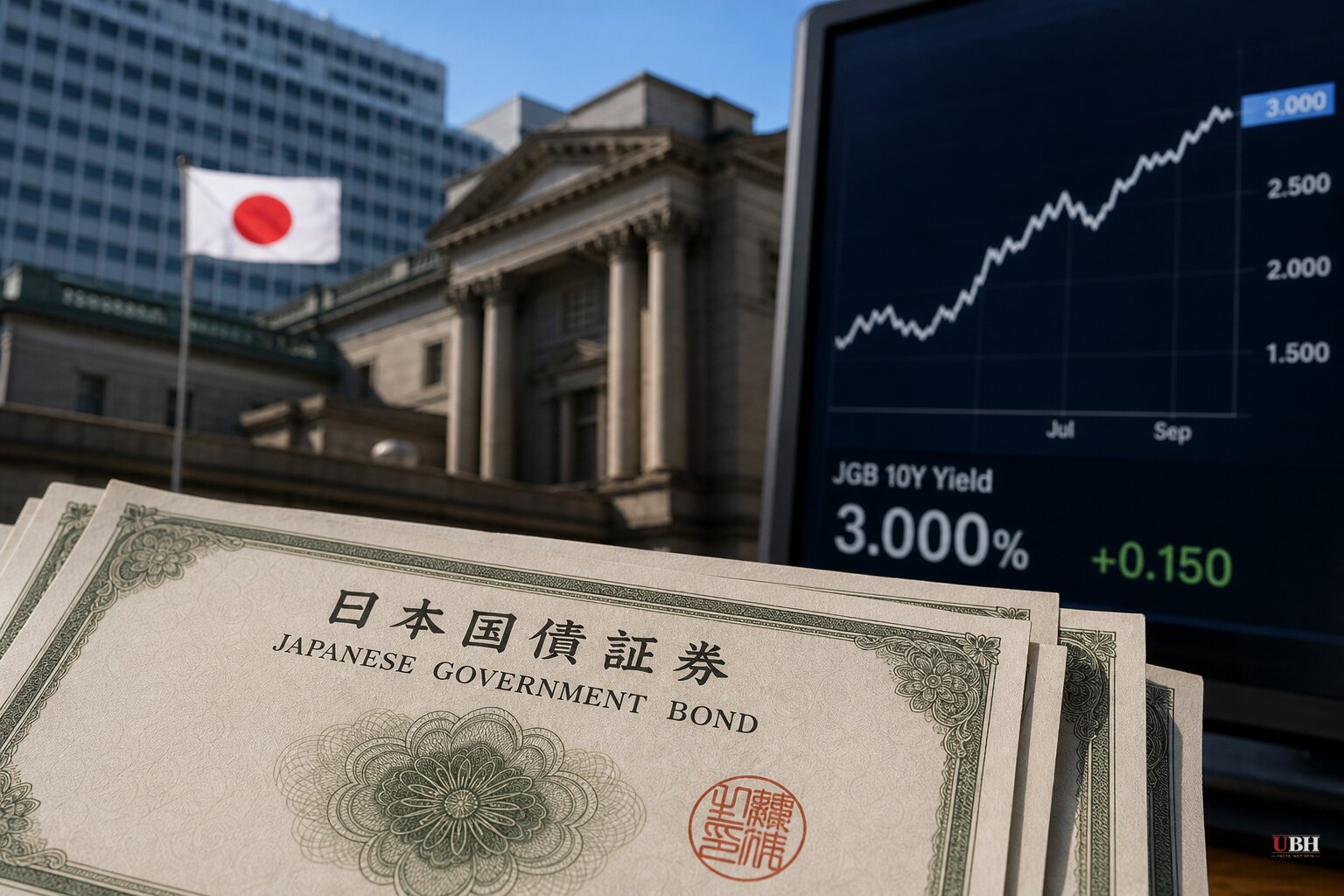
Japan's 10-Year Bond Yield Hits 3% for First Time Since 1996
Japan's 10-year government bond yield touched 3% on Tuesday, September 1, according to Bloomberg and The Straits Times. That's the first time it's hit that level since September 1996, three decades ago, when Japan's debt market looked nothing like it does today.
The move capped a run that started well before today. The yield hit 2.945% on August 18, its highest since 1996, according to Reuters reporting carried by IndexBox and BigGo Finance. It eased slightly to around 2.89% the next day before resuming its climb into September. The 5-year JGB yield hit a record high. The 2-year yield hit a 31-year peak. Reuters called it a seventh consecutive session of gains at the time.
Why It's Happening
Three things are colliding, according to Reuters: sticky inflation, a Middle East conflict driving up energy costs, and mounting bets that the Bank of Japan will raise interest rates again at its September meeting. The Straits Times reports the ongoing US-Iran conflict is stoking global inflation fears and pushing bond yields higher not just in Japan but across the US, Germany, and France.
The yen is sitting near a four-decade low, according to The Straits Times, which has piled pressure on the BOJ to move faster. The central bank has taken heat both domestically and abroad for being "behind the curve" on normalizing policy after years of near-zero rates and massive bond purchases, per Reuters.
Mari Iwashita, executive rates strategist at Nomura Securities, told Reuters via BigGo Finance that "Japan hasn't experienced such sticky price pressures since the previous oil shock," and that hitting the BOJ's 2% inflation target is getting harder, not easier.
Takaichi's Bet
Prime Minister Sanae Takaichi, who took office last October, has pushed an investment-led growth strategy targeting strategic industries, according to The Straits Times. She's paired that with planned tax cuts. Her entire economic premise rests on growth outpacing Japan's long-term borrowing costs, per BigGo Finance's reporting.
Governments have grown their way out of debt loads before, but Japan is making this bet with debt already above 200% of GDP, the heaviest sovereign debt load among major economies. Demand at Japan's August 10-year bond auction was the weakest in a year, according to The Straits Times, a sign investors are getting pickier about funding that bet.
If yields keep climbing, the finance ministry's own numbers show the squeeze: debt-servicing costs could blow past the 31 trillion yen budgeted for this fiscal year and reach 41 trillion yen by fiscal 2029, according to BigGo Finance.
Not Everyone Thinks This Is a Crisis
Shoki Omori, Deutsche Bank's chief fixed income strategist for Japan, offered the strongest pushback against the doom framing, telling Reuters this is "normalization with a warning label, not a crisis." He argues yields carrying a fiscal risk premium actually function as market discipline on future government spending, and that once the BOJ delivers a rate hike and the terminal rate becomes clear, 3% could become a level where dip-buyers outnumber sellers.
Tsuyoshi Ueno of NLI Research Institute told Reuters that breaking above 3% is mainly symbolic. If market attention shifts hard toward Japan's underlying inflation and fiscal problems, the rise in yields could start feeding on itself.
Broader Implications
The Epoch Times, in a commentary published earlier in August, framed Japan's debt trajectory as a direct preview of America's own path. It cites economists YiLi Chien and Ashley Stewart noting Japan's general government has run primary deficits averaging 5.1% of GDP since 1998, pushing debt from 63.7% of GDP in 1997 to a peak of 214.8% in 2022. That commentary is more alarmist than the market-normalization framing in Reuters and Bloomberg's straight news coverage, but the underlying debt numbers it cites aren't in dispute.
America has its own version of this story playing out right now. Wolf Street reported the US Treasury sold $797 billion in securities in a single week in late August, with the 10-year yield hitting 4.73% and the 30-year hitting 5.22%. CNBC reported France's borrowing costs hit levels near 2008 highs, and The Wall Street Journal reported Germany's 10-year Bund yield hit a 15-year high. Treasury Secretary Scott Bessent has responded by expanding buybacks of longer-dated US debt to improve market liquidity, according to Breitbart, though Bank of America analysts estimated that move would provide only about one basis point of support to the 10-year yield through the end of this year.
None of these governments have found a way to spend less than they take in. Japan's finance ministry now has an actual deadline: the Bank of Japan's September rate decision, and whether 3% turns into the floor or the starting point for the next leg higher.
Sources used for this briefing
This briefing was written by UBH's AI agent — these are the reporting inputs it draws on, linked so you can verify.


