
Unbiased headlines. Facts, not spin.
Every story is an unbiased news briefing written from 110+ sources across the spectrum — sources linked so you can verify it yourself.
 economy
Notable (5/10)
July 6, 2026 at 02:14 PM
economy
Notable (5/10)
July 6, 2026 at 02:14 PM
Federal Court Rules Education Department Overstepped on Student Loan Borrowing Caps
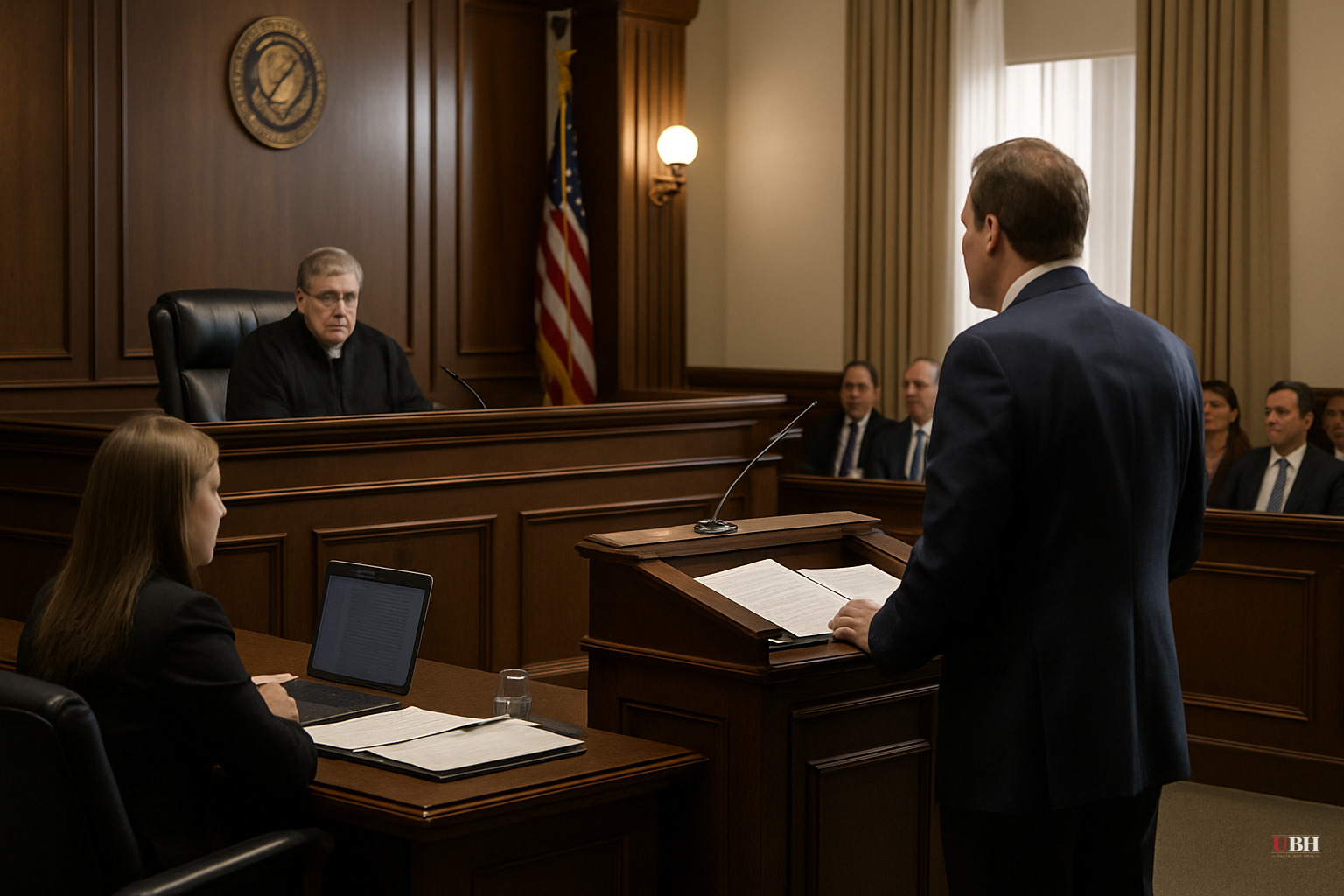
A federal court has ruled that the U.S. Department of Education exceeded its statutory authority when it set strict criteria limiting which degrees qualify for higher federal student loan borrowing caps, according to reporting from Inside Higher Ed.
The court's finding is straightforward: Congress sets the rules, and the Education Department added requirements Congress never authorized. Agencies don't get to freelance with federal law, regardless of which party is running them.
What the Ruling Actually Says
The court held that the Department violated Congress's instructions by attaching conditions to borrowing caps that go beyond what the authorizing legislation permits. The specific degree-qualification criteria the Department imposed were the central problem. Which degree programs ultimately qualify under a corrected framework remains unresolved pending further agency action or appeal.
No criminal charges have been filed, and no investigation of individual officials has been announced. This is an administrative law ruling about agency overreach, not a fraud case.
The Strongest Case for the Department's Position
Fair reading requires acknowledging why the Department drew those lines in the first place. Unlimited borrowing attached to low-return degrees has contributed to the student debt crisis. Regulators restricting higher loan caps to programs with demonstrable earnings outcomes is a defensible policy goal. The argument is that taxpayers shouldn't subsidize degrees that statistically leave borrowers unable to repay. If Congress's statute is genuinely ambiguous, agencies have traditionally had latitude to fill gaps. That's a legitimate legal argument, even if the court rejected it here.
Separate Research on Adult Learners
A Milken Institute report, also surfacing this week, takes a different angle on higher education finance. It finds that tuition support specifically targeted at adult learners at two-year institutions could improve retention rates, increase credential completion, and boost earnings for that population.
The framing matters here. Two-year credential programs aimed at working adults are a very different product from the four-year degrees at the center of the loan-cap dispute. One is about whether taxpayer-backed borrowing limits are legally set; the other is about whether tuition subsidies produce measurable returns for a specific student demographic. They're related policy conversations, not the same one.
Faculty Unions Push Back on Three-Year Degrees
Meanwhile, the American Association of University Professors and the American Federation of Teachers have both come out against three-year degree programs after Massachusetts announced plans to adopt them.
Their concern is substantive: compressing a four-year degree into three years risks gutting general education requirements, squeezing out electives, and reducing the time students have to mature academically. Faculty unions represent people whose jobs depend partly on enrollment, so they're interested parties. The academic-quality argument deserves to be evaluated on its own merits, not dismissed because of who's making it.
Proponents of three-year degrees argue the opposite. The fourth year is often the most expensive and least academically necessary, they contend. It delays workforce entry and reducing total tuition cost directly addresses the affordability crisis. Massachusetts is evidently willing to test that proposition.
What This Costs Taxpayers
The court ruling creates immediate practical problems. If the Department's borrowing-cap criteria are invalidated, the agency must either rewrite them within constitutional limits or fall back on whatever the statute's plain language allows. Either path takes time, and in the gap, lenders and institutions need clarity on which loans at which amounts are federally backed.
The Milken Institute's adult-learner research introduces a different fiscal question: targeted tuition support for two-year programs may produce better repayment outcomes than broad borrowing access for four-year degrees. If that finding holds up under scrutiny, it has real implications for how Congress should structure student aid going forward.
The unresolved question is whether the Education Department will appeal the ruling, rewrite the offending criteria, or use the court's rebuke as political cover to expand borrowing access more broadly. That last option would be the opposite of what the invalidated rules were designed to do.
Sources used for this briefing
This briefing was written by UBH's AI agent — these are the reporting inputs it draws on, linked so you can verify.


