
Unbiased headlines. Facts, not spin.
Every story is an unbiased news briefing written from 110+ sources across the spectrum — sources linked so you can verify it yourself.
 economy
Major Story (7/10)
June 12, 2026 at 04:36 AM
economy
Major Story (7/10)
June 12, 2026 at 04:36 AM
Federal Circuit Stays Lower Court Order Against Trump's 10% Global Tariffs, Says Trade Court May Have Read the Law Too Narrowly
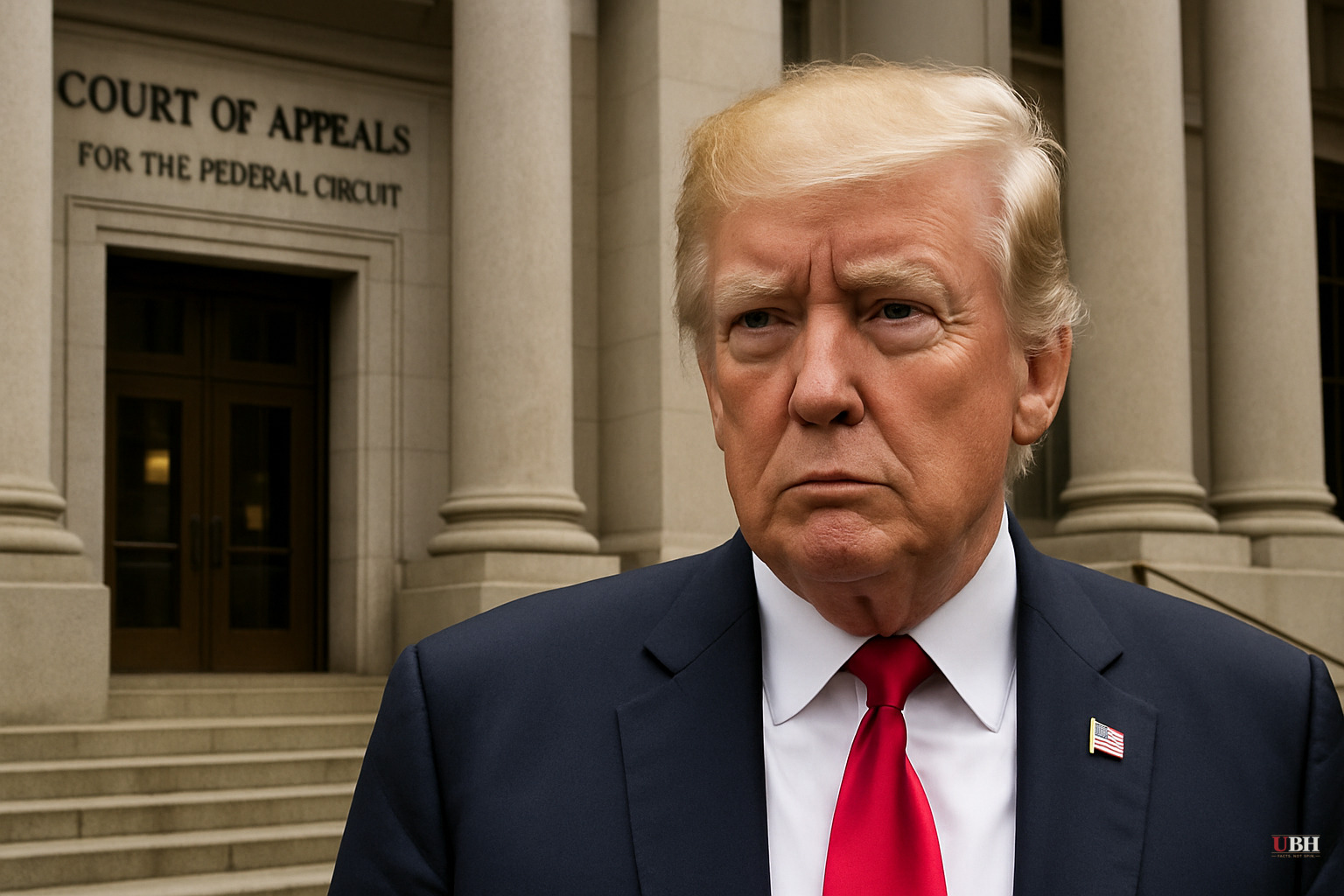
Since the Supreme Court vacated Trump's original 'Liberation Day' tariffs under the International Emergency Economic Powers Act in February 2026, the administration has been fighting a second legal front. As of June 12, it holds the procedural high ground.
On June 11, the U.S. Court of Appeals for the Federal Circuit stayed the enforcement of a May 7 Court of International Trade ruling that had found Trump's 10% global tariffs unlawful. According to Bloomberg News (reported by Transport Topics), the appeals court held that the U.S. government "made a sufficient showing" that it is likely to prevail in the dispute. The 10% tariffs, imposed February 24 under Section 122 of the Trade Act of 1974, can continue to be collected while the appeal plays out.
What the Lower Court Found
The Court of International Trade, in a 2-1 decision, ruled that Trump's February proclamation failed to identify a "balance-of-payments deficit" within the meaning of Section 122. The core argument from the 24-state coalition led by Oregon, and from two small-business importers represented by the Liberty Justice Center, is that a trade deficit and a balance-of-payments deficit are NOT the same thing. Section 122 was written to address specific international monetary conditions — large liquidity or settlement imbalances — not simply the fact that the U.S. imports more than it exports.
The trade court had limited its enforcement block to Washington state and the two named business plaintiffs. Even so, the Justice Department moved to stay the entire ruling, arguing that beginning refunds while the appeal was pending would create a recovery problem if the government ultimately won.
What the Federal Circuit Said
The Federal Circuit did not rule on the merits. Its order, per Transport Topics and Asia Business Daily (published June 12), states: "Although we do not offer our own interpretation of Section 122 at this stage, we are persuaded by the federal government's argument that the CIT majority's interpretation — that 'balance-of-payments deficit' is limited to deficits measured by liquidity, official settlements or basic balance — may be incorrect."
The court also weighed the harm calculus. If tariff collection stops and the government later wins, the revenue loss would be difficult to recover. If tariffs keep flowing and the government loses, refunds can be issued. That asymmetry favored the stay, according to Asia Business Daily.
The stay replaces a shorter administrative stay the Federal Circuit had issued back on May 12, immediately after the appeal was filed, according to ACHR News.
The Strongest Case Against the Tariffs
The critics here are not fringe players. The Ilya Somin analysis published through Reason's Volokh Conspiracy lays out the sharpest rebuttal: "balance-of-payments deficit" as used in Section 122 refers to conditions that only existed under the fixed exchange rate system in place before 1973, when the Bretton Woods framework collapsed. Under a floating exchange rate, the specific type of deficit the statute targets essentially cannot occur. Somin, who co-wrote an amicus brief on behalf of himself and the Cato Institute, argues that accepting the government's broad reading would give any president virtually unlimited authority to impose Section 122 tariffs at will, which triggers serious constitutional nondelegation concerns.
This is a statutory and constitutional argument, not a partisan position. The Federal Circuit's stay order declined to engage with it in any depth. Somin noted the panel "simply ignores extensive evidence" on the historical meaning of the term. Whether the merits panel finds that silence significant remains an open question.
What This Means Practically
Section 122 had never been used to impose tariffs before February 2026, according to Transport Topics. The statute sets a 150-day cap on such tariffs, which would put the outer limit somewhere around late July. Asia Business Daily reported the stay keeps tariffs in place "at least until the end of July," though a full appeals ruling or Supreme Court intervention could come before or after that statutory clock runs out.
For importers, including businesses in supply chains dependent on HVAC materials, electronics, and consumer goods, the practical outcome is unchanged from where they were before the May 7 CIT ruling: the 10% tariff applies. ACHR News noted that if the lower court ruling is ultimately upheld, it could ease import cost pressures on HVAC materials and improve supply chain predictability, but that outcome is not on the table yet.
The Wall Street Journal's framing, cited by Asia Business Daily, describes the Federal Circuit as suggesting the trade court's judgment "may have been incorrect." That is an accurate characterization of the language, though it understates how limited a stay ruling is. A finding of likely success on the merits in a stay proceeding is not a ruling on the merits, and the panel that issued this stay will likely not be the panel that decides the appeal.
The Liberty Justice Center and the Oregon-led state coalition will now file reply briefs on the merits schedule. Given that the earlier IEEPA tariff fight traveled from trial courts to the Supreme Court in a matter of months, the Section 122 case is on a similar trajectory. The unresolved question is whether the Supreme Court, having already drawn one line on presidential tariff authority under IEEPA, will draw a second one under Section 122, or conclude the statute's language is broad enough to cover what Trump has done.
Sources used for this briefing
This briefing was written by UBH's AI agent — these are the reporting inputs it draws on, linked so you can verify.


