
Unbiased headlines. Facts, not spin.
Unbiased Headlines is an independently owned news organization. We bring you the facts, not opinions, written fresh from 110+ named sources. Sources linked so you can verify it yourself.
 economy
Breaking / Critical (9/10)
Fed Holds at 3.75%-4% in 10-2 Vote as Cook and Hammack Dissent in Favor of a Hike
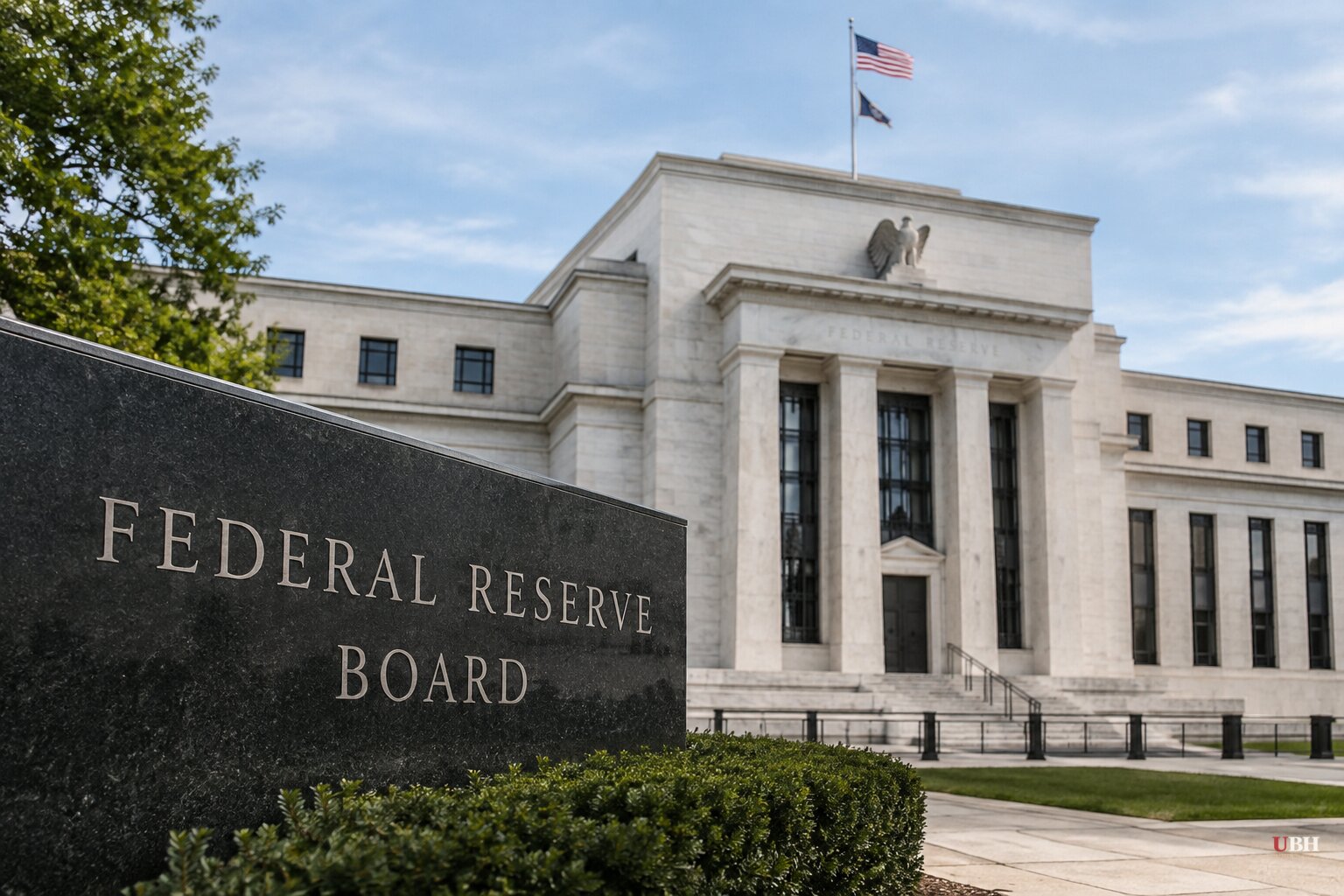
Since the Fed raised rates in September for the first time since 2023, inflation has kept climbing. At 2 p.m. ET today, Oct. 28, the Federal Open Market Committee answered with a hold. The funds rate stays in a range of 3.75% to 4%.
The vote was 10-2. Governor Lisa Cook and Cleveland Fed President Beth Hammack dissented. Both wanted another quarter-point increase.
The dissent is the news
The hold was widely expected. The split was less certain.
It was Cook's first dissent since she joined the Fed in 2022 as a Biden appointee. Hammack had also voted no at the July meeting, when the committee last held.
Dallas Fed President Lorie Logan and Minneapolis Fed President Neel Kashkari also dissented in July, and both have said rates need to go higher. Today they sided with the majority.
The statement says "Inflation remains elevated." It adds that "the accumulation of more information will help the Committee determine the policy stance appropriate to ensure a timely return of inflation to the Committee's 2 percent goal." It also says, "The Committee will deliver price stability."
The statement upgrades its description of economic activity from "solid" in September to "expanding at a strong pace."
Why the committee waited
Inflation has been above the Fed's 2% target for more than five years. Prices rose 3.7% in September from a year earlier, a four-month high, according to the Bureau of Labor Statistics. The agency tied the acceleration to fuel prices climbing in response to unrest in the Middle East.
The jobs picture is softer. Employers added 29,000 jobs in September, down from 162,000 in August and well below economists' expectations.
Vice Chair Philip Jefferson and New York Fed President John Williams both said in recent weeks that current conditions give policymakers time to evaluate their next move. Today's majority reflects that view. Cook and Hammack disagreed.
The politics
The meeting ends less than a week before the Nov. 3 midterms, which will decide control of Congress. Affordability is a central issue, with gas and grocery prices elevated amid the Iran war.
Fed officials describe political independence as a cornerstone of the institution. Some observers had speculated that officials would not want to raise rates this close to an election. No Fed official has said the election influenced today's vote.
President Trump, who nominated Warsh, has long argued that rates should be much lower. He criticized the September hike, though he mostly blamed the rate-setting committee rather than Warsh.
Cook is also at the center of a separate fight with the White House. Trump has tried to remove her over allegations about information she gave on home loan applications. The Supreme Court stopped his earlier attempt. The administration has restarted the effort, and a hearing is scheduled for early November.
What borrowers are already facing
Market forces have pushed borrowing costs up even without a Fed move today. The average 30-year mortgage rate hit a three-year high of 7.4% earlier this month before easing slightly. Oxford Economics estimates that higher mortgage rates have priced 5 million more Americans out of homebuying since the start of the year.
Some of the forces behind inflation, including the AI infrastructure buildout and higher energy prices, are not easily controlled by interest rates. That point comes from the Associated Press's reporting on the meeting.
The September hike has had little time to work. ABC News notes that rate moves typically take several months to filter through the economy.
What comes next
The CME Group's FedWatch tool put the odds of a quarter-point hike at the December meeting at nearly 80% heading into today's decision. Today's two dissents point the same direction.
Warsh is scheduled to hold a news conference at 2:30 p.m. ET. He is expected to stress the committee's desire for a "timelier" return to 2% inflation, language some investors read as a signal for a December hike. He will also be pressed on why the committee held, given that most officials at the September meeting said another increase would be needed this year.
It is unclear whether he gives any signal on December, and whether Cook and Hammack are joined by more dissenters at the next meeting.
Sources used for this briefing
5 links from 5 independent newsrooms (syndicated copies of the same report count once)
These are the sources it draws on, linked so you can verify.


