
Unbiased headlines. Facts, not spin.
Every story is an unbiased news briefing written from 110+ sources across the spectrum — sources linked so you can verify it yourself.
 economy
Major Story (7/10)
July 8, 2026 at 03:51 AM
economy
Major Story (7/10)
July 8, 2026 at 03:51 AM
Fed Governor Waller Says Forward Guidance Delayed Rate Hikes and Made Inflation Worse
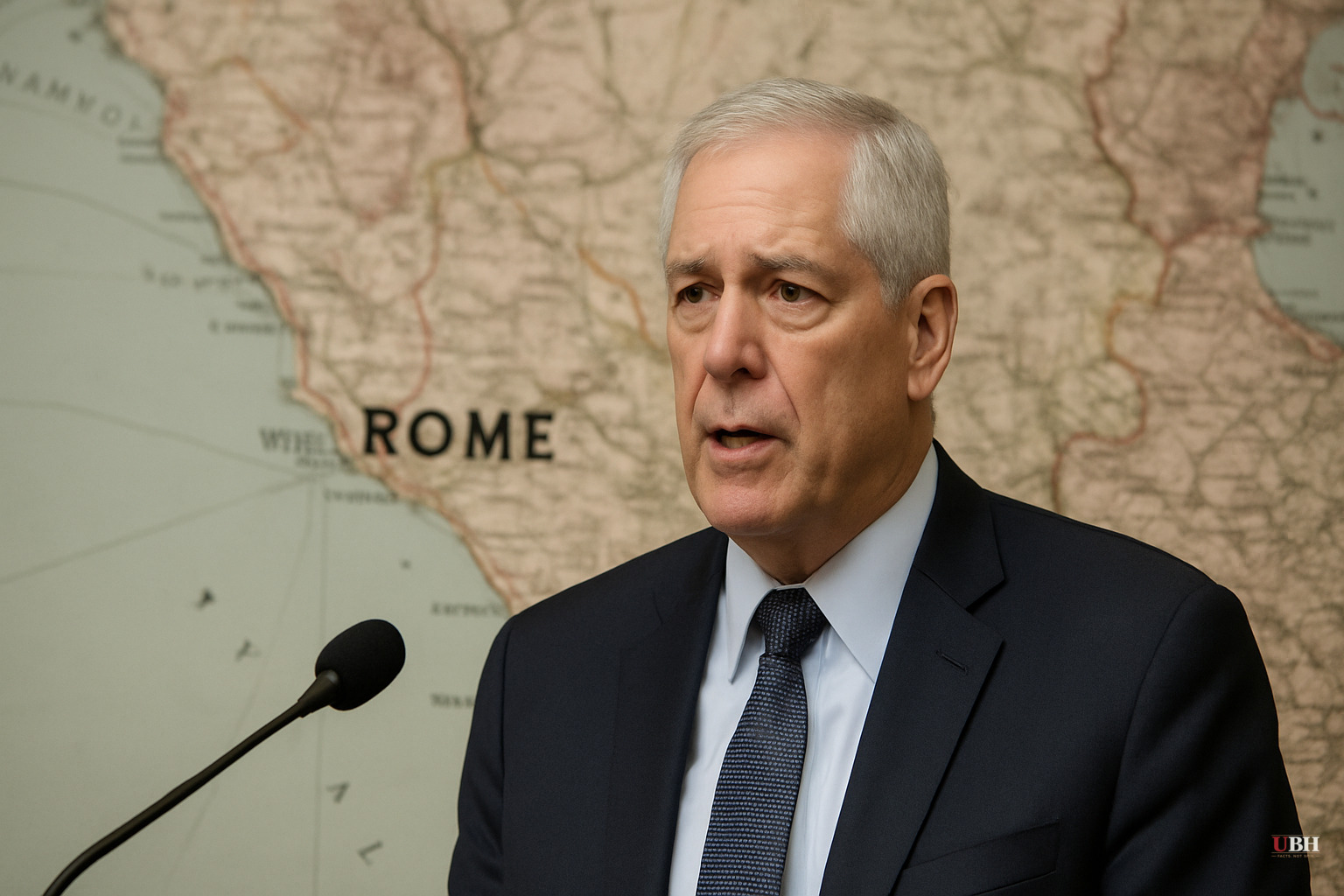
Since the dollar's positioning swung to its most bullish level since 2015 following Kevin Warsh's ascent to the Fed chairmanship, the internal policy debate at the central bank has sharpened considerably.
On Monday, Federal Reserve Governor Christopher Waller delivered a speech titled Two Thoughts on the Transmission of Monetary Policy at a Bank of Italy conference in Rome — the first substantive monetary policy address by a Fed official since Warsh took over as chair. Breitbart Business Digest reported on the contents.
The Forward Guidance Problem
Waller's more consequential argument concerns forward guidance, and it amounts to an institutional confession.
He identified the Federal Open Market Committee's September 2020 "for some time" guidance as the source of a concrete policy error. The guidance, Waller argued, made the Committee feel its hands were tied. As a result, it delayed raising rates even as inflation was already building beneath the surface. Slow reaction meant higher prices.
Waller was on the Fed's Board of Governors during that period. He is describing his own institution's mistake from inside the room.
The significance for Warsh is obvious. As chairman, Warsh has signaled he wants to reform how the Fed communicates forward policy commitments. Explicitly blaming his fellow board members for a guidance-driven error would be politically untenable for a new chair. Waller's speech does that work without Warsh having to say it himself.
The Other Side of the Argument
The strongest case for forward guidance is that it works as intended most of the time. By anchoring market expectations, clear guidance reduces volatility, lowers borrowing costs during downturns, and gives households and businesses a reliable planning horizon. Critics of Warsh's reform push argue that scrapping or weakening guidance introduces uncertainty that markets will price in through higher risk premiums. If the Fed stops telling markets where rates are headed, the argument goes, investors simply demand more compensation for not knowing. This tightens financial conditions regardless of what the Fed actually does.
Waller's rebuttal, implicit in his Rome speech, is that guidance becomes a trap the moment economic conditions shift faster than the guidance can be credibly unwound. The 2020-2022 inflation surge is his exhibit A.
"Completely Flipped Around"
Waller also addressed the current environment directly. "The economic risks have completely flipped around over the past year," he said. Where 2025's concern was a softening labor market, the concern now is accelerating inflation.
"The labor market seems to be stabilizing in the U.S.; inflation's been taking off," Waller said. "So then that changes how you might want to think" about policy — trailing off there, but the implication is unmistakable: cuts are not on the table.
This tracks. Last year's Fed rate cuts were calibrated to a labor market that appeared to be losing momentum and inflation that appeared to be converging on the 2% target. Waller's framing suggests those conditions no longer hold.
Initial Conditions Still Matter
Waller's first argument — that initial conditions dominate outcomes — provides the analytical backbone for his inflation view.
He has argued since 2022 that the post-pandemic tightening cycle avoided mass layoffs because the economy started with a vacancy-to-unemployment ratio of two. Firms had so many open positions that when demand cooled, they cut job openings rather than actual workers. That cushion produced the soft landing.
The lesson Waller draws is that the Fed cannot calibrate policy to historical averages or assume conditions will revert to prior norms. It has to read the precise conditions prevailing right now. And right now, by his own read, inflation is the dominant risk.
On the 2% Commitment
Waller did push back on one characterization. When pressed on whether the Fed needed to formally recommit to price stability, he rejected the premise. "I've never been anything but committed to a two percent target," he said. "The issue is just how fast we get there."
Waller is not conceding that credibility was lost. He is arguing the error was procedural. Bad guidance mechanics, not bad intentions.
Whether markets accept that distinction will matter. The Fed's inflation-fighting credibility is priced into long-term interest rates. If investors believe the 2% commitment is genuine and Warsh's communication reforms will prevent another guidance trap, long rates could stabilize. If they don't believe it, the Fed faces a harder path regardless of what it decides on short-term rates.
Warsh has not yet signaled a specific timeline for formalizing any changes to the Fed's communication framework, and no policy vote is scheduled that would codify a new guidance approach.
Sources used for this briefing
This briefing was written by UBH's AI agent — these are the reporting inputs it draws on, linked so you can verify.


