
Unbiased headlines. Facts, not spin.
Unbiased Headlines is an independently owned news organization. We bring you the facts, not opinions, written fresh from 110+ named sources. Sources linked so you can verify it yourself.
 health
Major Story (7/10)
FDA Grants Accelerated Approval to Jemperli for MSI-H Rectal Cancer, Offering Some Patients a Path Around Surgery
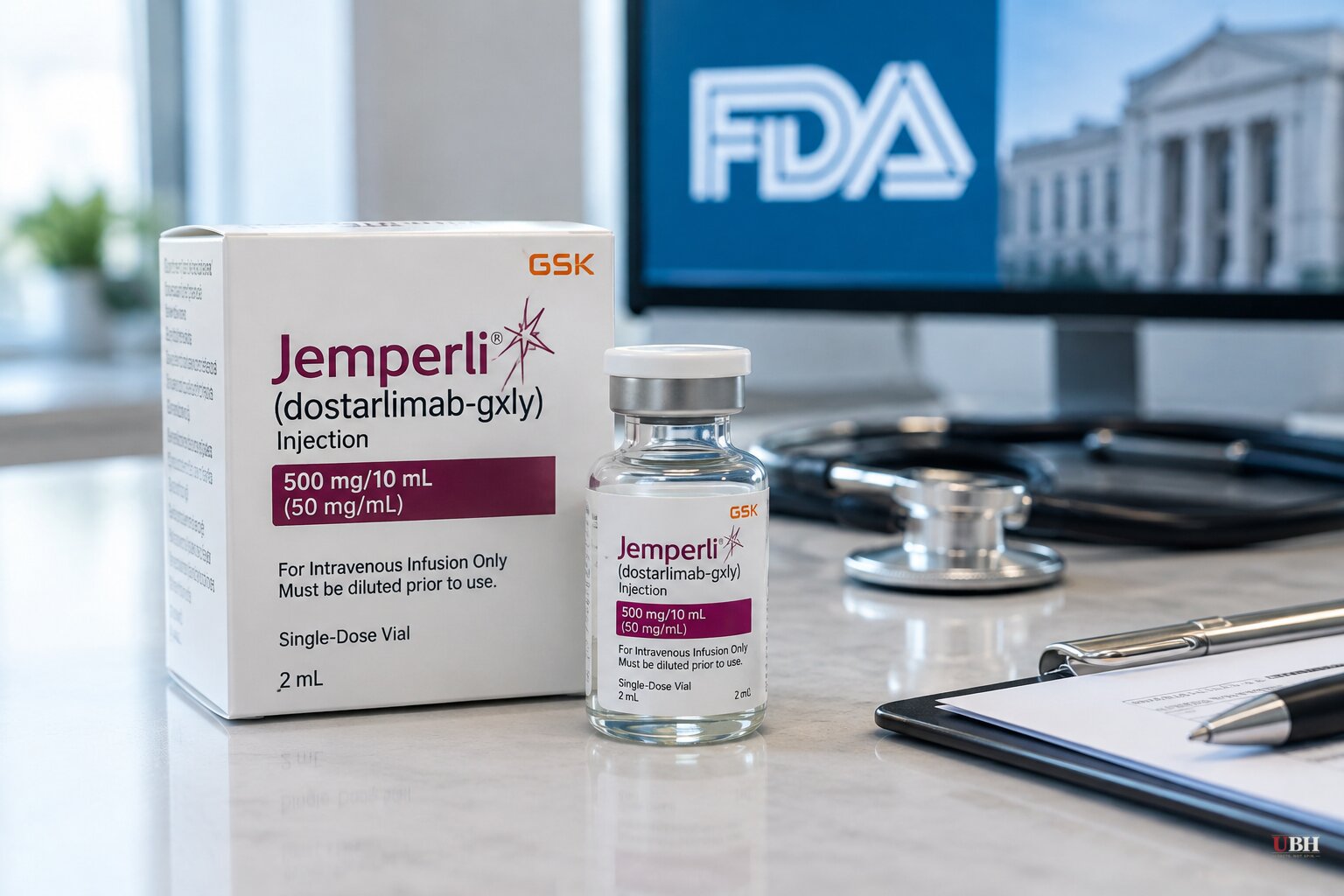
The FDA granted accelerated approval today, Monday, Oct. 19, to dostarlimab-gxly (Jemperli) as a standalone treatment for adults with previously untreated stage II or III locally advanced rectal cancer. The tumor must be mismatch repair deficient (dMMR) or microsatellite instability-high (MSI-H), as determined by an FDA-authorized test.
The point of the approval: some patients may be able to skip the standard sequence of chemotherapy, radiation and surgery.
Who qualifies
This is a narrow group. The FDA says published estimates put dMMR or MSI-H tumors at about 3% of locally advanced rectal cancers. GSK cites a higher prevalence of roughly 5% to 10% across rectal cancers.
The approval covers cancer that has grown into nearby tissue or reached nearby lymph nodes but has not spread to distant organs. It does not apply to other rectal cancer patients.
That makes testing the gatekeeper. Michael Sapienza, CEO of the Colorectal Cancer Alliance, said biomarker testing at diagnosis "will be essential to identifying patients who may be eligible for this treatment."
What the trial showed
The decision rests on interim results from AZUR-1, a global, open-label, single-arm phase 2 study of 154 patients. Participants got 500 mg of dostarlimab by infusion every 3 weeks for up to 9 doses over six months.
After a median follow-up of more than two years, almost three-fourths of patients had not needed surgery, chemotherapy or radiotherapy. In an exploratory analysis, GSK said 76% of evaluable patients had no evidence of cancer a year or more after treatment, and no recurrences had been reported.
An earlier Memorial Sloan Kettering study of 50 patients with the same tumor profile found no detectable cancer after treatment in any of them. Of those, 93% stayed cancer-free for at least 12 months. Among 27 patients followed for at least three years, one had a recurrence, in the same area.
Andrea Cercek, MD, of Memorial Sloan Kettering, the AZUR-1 principal investigator, said the results show "the potential for a fundamentally different treatment approach in this biomarker-defined patient population." Neoadjuvant PD-1 blockade is already part of National Comprehensive Cancer Network guidelines for dMMR locally advanced rectal cancer.
Why standard treatment is the comparison
The FDA's release lays out what patients face now. Chemotherapy and radiation before surgery can affect bowel, urinary and sexual function, and fertility. Surgery carries risks including poor healing, leaks where the bowel is reconnected and, in some patients, a permanent colostomy.
"For certain types of rectal cancer, this approval represents a groundbreaking option that avoids surgery, radiation and chemotherapy," said Angelo de Claro, MD, director of the FDA's Oncology Center of Excellence.
The limits of an accelerated approval
The same FDA statement carries a caution. De Claro said the agency is "acting on emerging evidence to bring new approaches to patients sooner, while requiring further studies to confirm that these treatments provide lasting benefits." The agency noted that longer follow-up is needed to establish how long responses last and how often the cancer returns.
The label says continued approval for this use "may be contingent upon verification and description of clinical benefit in a confirmatory trial." AZUR-1 has no control arm, so the results are measured against expectations, not against a randomized comparison group.
Side effects in the trial were mostly mild. The most common were fatigue (32% of patients), rash (22%), diarrhea (18%) and pruritus (17%). Dostarlimab can also cause the immune system to attack healthy organs and tissues.
The speed question
The approval came nearly four months early. The Prescription Drug User Fee Act action date had been set for February 2027. It is the eleventh approval through the Commissioner's National Priority Voucher pilot program.
Acting FDA Commissioner Kyle Diamantas credited the administration. "American patients deserve timely access to innovative treatments, and the Trump Administration is making that a reality," he said. He added that patients who might otherwise be preparing for surgery, radiation or chemotherapy "may now have a different conversation with their doctor."
The early finish was possible because the data were strong enough for regulators to act. The accelerated pathway also means the evidence is still maturing.
What comes next
Further AZUR-1 results are scheduled for presentation at the 2026 European Society for Medical Oncology Congress. The confirmatory trial requirement will determine whether the approval stands. Whether patients who avoid surgery today stay cancer-free over the long term remains to be seen.
Sources used for this briefing
7 links from 7 independent newsrooms (syndicated copies of the same report count once)
These are the sources it draws on, linked so you can verify.


