
Unbiased headlines. Facts, not spin.
Unbiased Headlines is an independently owned news organization. We bring you the facts, not opinions, written fresh from 110+ named sources. Sources linked so you can verify it yourself.
 health
Major Story (7/10)
Modeling Study Projects More Chronic Hepatitis B Cases If Birth Dose Falls Under New CDC Guidance
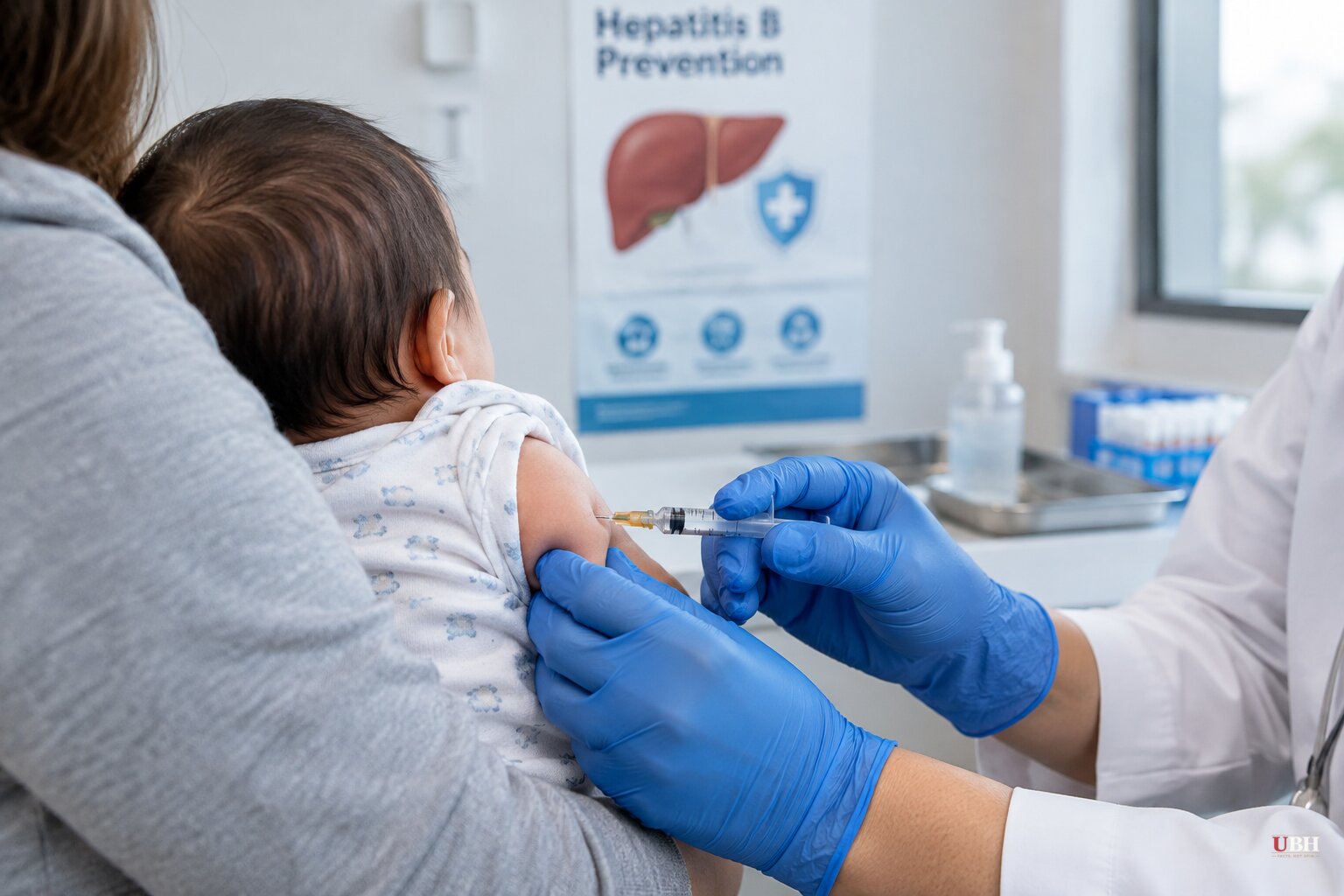
A Harvard-affiliated research team has put numbers on what changing the hepatitis B birth-dose recommendation could do. The projection, published in Annals of Internal Medicine, is a computer model, not a count of real infections. It still gives the first concrete range for a policy fight that is now in court.
What the CDC changed
Universal hepatitis B vaccination for infants became routine in 1991. Later guidance called for the first dose within 24 hours of birth.
In December 2025, the CDC's revamped Advisory Committee on Immunization Practices voted to drop that universal recommendation for babies born to mothers who test negative for hepatitis B surface antigen. In its place is shared clinical decision-making, in which parents and clinicians decide "when or if" to give the shot. For families who skip the birth dose, the guidance says the first dose should come "no earlier than 2 months of age."
Babies born to mothers who test positive, or whose status is unknown, still get a dose shortly after birth.
The policy's stated premise is that parents and clinicians together decide what is medically appropriate for each child.
What the model projects
Dr. Amir Mohareb of Harvard Medical School and Massachusetts General Hospital led the study with colleagues. They simulated a single year of U.S. births, 3.6 million children, and followed them for 20 years.
The baseline is universal birth-dose vaccination, which produces 255 chronic infections in that cohort. Delaying the first dose to 2 months, with everyone eventually getting it, raises that to 303, a 19% increase.
If only 75% of infants get the delayed dose, the model shows 357 chronic infections. The shared decision-making scenario reaches 467 cases, an 83% increase.
The steepest figure comes from a low-uptake scenario. If only about 26% of children are vaccinated, chronic cases rise 225%. That 26% is a modeled estimate of what shared decision-making might produce. It is not a measured vaccination rate.
The absolute numbers and the long view
The authors do not oversell the near-term count. "These estimates suggest that the relative increase in HBV infections would be substantial, although the absolute increase would remain modest, at least in the early years after a policy change," they wrote.
The larger number sits at the 20-year mark. Under shared decision-making with lower vaccination, up to 1,806,000 people would enter adulthood susceptible to hepatitis B. Under a universal birth dose, the figure is 232,000.
Mohareb noted the model covers only one birth year. "Imagine that happening year after year after year," he said, warning it could add up to thousands of cases.
The stakes for any single case are high. Among babies infected before age 1, up to 90% develop chronic infection. One in four people with untreated chronic infection develop complications such as cirrhosis or liver cancer. The virus can pass from mother to child at birth and through infected blood or semen, and people often have no symptoms until the liver fails.
Where the study stops
This is a projection built on assumptions about uptake. If vaccination rates fall below what the model assumes, the authors say the effect would be larger than their base case. Two similar modeling studies published earlier this year also warned of added infections from skipping the universal birth dose.
The study does not measure what parents are actually choosing. No uptake data under the new guidance appears in it.
The fight over the policy
The American Academy of Pediatrics continues to recommend a birth dose for all infants. Fifteen states have sued the Trump administration over the vaccine schedule changes.
Mohareb said the team wanted "to add some evidence to the conversation about what the potential impact of those changes could be." The authors went further in the paper itself: "These results should motivate policymakers and clinicians to consider reimplementation of the prior recommendation for universal childhood HBV vaccination at birth."
Whether the CDC will revisit the guidance is not addressed in the study. The 15-state lawsuit is still pending. How many families actually decline the birth dose will show whether the 26% scenario or the milder ones are closer to reality.
Sources used for this briefing
5 links from 4 independent newsrooms (syndicated copies of the same report count once)
These are the sources it draws on, linked so you can verify.


