
Unbiased headlines. Facts, not spin.
Unbiased Headlines is an independently owned news organization. We bring you the facts, not opinions, written fresh from 110+ named sources. Sources linked so you can verify it yourself.
 health
Major Story (7/10)
Event date: October 7, 2026 ·
PhRMA Sues Over Medicare Foreign-Price Rule Set for Jan. 1, as HHS Report Targets 340B Spending
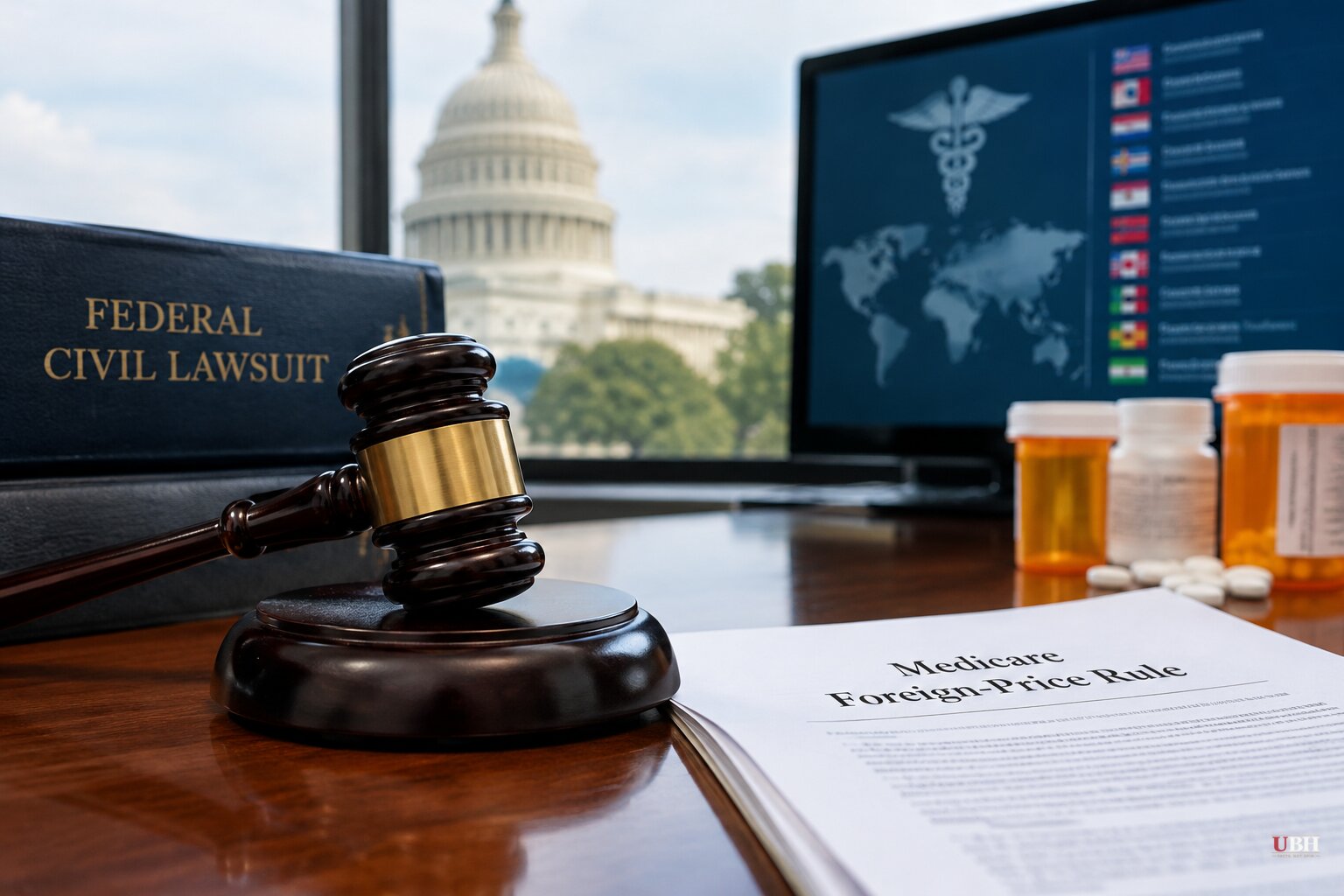
The Pharmaceutical Research and Manufacturers of America filed suit against the federal government on Oct. 7 over a Medicare drug pricing rule scheduled to take effect Jan. 1, 2027.
PhRMA, which represents 34 manufacturers including Pfizer and Sanofi, says the Centers for Medicare & Medicaid Services has no legal basis for the policy.
"[The program] is unlawful and clearly exceeds CMS' authority," PhRMA president and CEO Stephen Ubl said in a statement.
What the lawsuit says
The rule would update Medicare's drug pricing model to base payment on average sales prices across a number of other nations. According to the complaint, that "would untether Medicare pricing from the statute and the American market, instead importing foreign price controls from 19 countries."
PhRMA argues CMS is leaning on "an obscure statutory provision" that does not give the agency "carte blanche to rewrite the Medicare program to fit policy priorities that Congress has not authorized."
Ubl said the industry shares the administration's goal of making medicines affordable, but that "CMS cannot rewrite the law and bypass Congress to impose foreign price controls." He also argued the policy does not make medicines more affordable for most beneficiaries.
The government's position is different. CMS has stated in notices that it has statutory authority to change drug pricing, including under portions of the Social Security Act. Officials have also pointed to a part of the act barring judicial review of certain pricing changes. HHS, a named defendant, did not respond to a request for comment on the suit.
Not PhRMA's first fight over this
The group has been here before. During the first Trump administration, PhRMA sued over an earlier version of a most-favored-nation pricing rule, and a federal judge entered a temporary restraining order in its favor. The rule was withdrawn after Joe Biden took office.
President Trump announced a new most-favored-nation effort in 2025 and has since unveiled agreements with dozens of manufacturers, including Pfizer, Merck and GlaxoSmithKline. In a February speech he said Americans, who have paid the highest prices in the world, "will now pay the lowest price anywhere in the world for drugs."
That leaves an awkward split. Pfizer is among the companies that struck a deal with the administration, and it is also a member of the group now suing. Neither the filing nor the sources say how the individual agreements relate to the Medicare rule.
HHS turns to 340B
On Thursday, Oct. 8, an HHS Office of the Assistant Secretary for Planning and Evaluation brief took aim at a different program: 340B.
Created by statute in 1992, 340B lets safety-net providers buy outpatient drugs at steep discounts. Purchases topped $100 billion in 2025. The Congressional Budget Office has said they grew from $6.6 billion in 2010 to $43.9 billion in 2021.
HHS policy heads wrote that the program "has expanded beyond its original intent," incentivizing provider consolidation while doing little to better serve patients' needs.
The brief says the gap between discounted purchase prices and reimbursement rates pushes covered entities "to consolidate practices and engage in anticompetitive behavior in order to maximize their spread revenue." It adds that consumers can be harmed by higher costs and by "clinical choices that are made to increase revenue over patient outcomes."
The analysis backs a proposed rule that would cut 340B reimbursement from average sales price plus 6% to 33.4% below that price. The administration also plans a pilot rebate program starting with the new year. The hospital industry has sharply criticized the proposed reimbursement cut.
The hospitals' side
Providers say the discounts matter more than ever as supply costs rise and policy-driven revenue cuts pile up. In September 2025, the American Hospital Association asked the Federal Trade Commission and the Justice Department to investigate what it called concerted efforts by major drugmakers to restrict 340B discounts.
The association argued that a rebate model would force hospitals to pay full price up front and recover money later, squeezing safety-net providers.
That dispute is now in court. Mosaic Health, Inc. v. Sanofi-Aventis U.S., LLC is an antitrust case over drugmaker limits on 340B access. The claims are allegations, not findings.
Critics of 340B, for their part, have long said the program is too lucrative and too opaque, letting large health systems generate substantial revenue with limited accountability.
What comes next
Both policies are pointed at the same window. The Medicare pricing rule is due Jan. 1, 2027, and the 340B rebate pilot is set for the start of the new year.
The open question is whether a court reaches the merits of PhRMA's challenge. The industry says CMS exceeded its authority. The government points to a provision it says bars judicial review of certain pricing changes. How a judge rules on that threshold issue will shape whether the rule takes effect on schedule.
Sources used for this briefing
3 links from 3 independent newsrooms (syndicated copies of the same report count once)
These are the sources it draws on, linked so you can verify.


