
Unbiased headlines. Facts, not spin.
Unbiased Headlines is an independently owned news organization. We bring you the facts, not opinions, written fresh from 110+ named sources. Sources linked so you can verify it yourself.
 health
Notable (5/10)
Event date: October 16, 2026 ·
Canadian MRI Study Links Heavy Ultra-Processed Food Intake to Silent Brain Injury in Healthy Adults
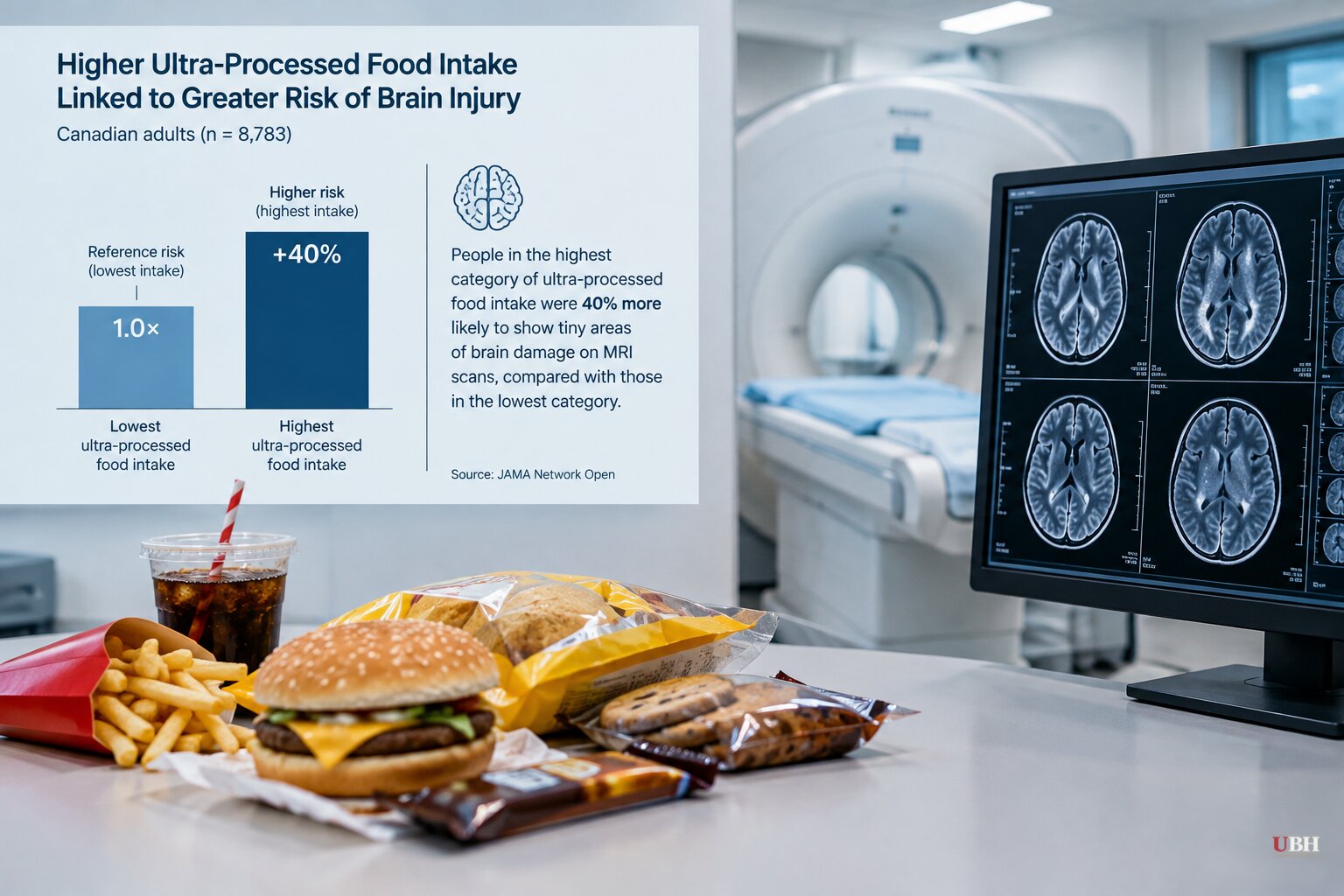
Canadian researchers say middle-aged adults who eat the most ultra-processed food are more likely to have small areas of brain damage that show up on MRI scans. The study was published Oct. 15 in JAMA Network Open.
The finding is an association. It is not proof that these foods damage the brain.
What the researchers measured
The team at the Population Health Research Institute of McMaster University and Hamilton Health Sciences analyzed 8,783 adults between the ages of 35 and 69. None had cardiovascular disease. All were enrolled in the Canadian Alliance for Healthy Hearts and Minds and Prospective Urban and Rural Epidemiology-MIND cohorts.
Participants reported their habitual diet on a food frequency questionnaire. The researchers then looked at MRI brain scans for what they call vascular brain injury, including white matter hyperintensities and silent brain infarcts. Silent infarcts are small strokes that cause no obvious symptoms.
Ultra-processed foods averaged about 25% of participants' daily food intake. For the highest-intake group the figure was 45%. For the lowest it was 16%.
The highest group was 40% more likely to show tiny areas of brain damage. Among women, the highest-intake group was nearly twice as likely to show signs of damage as the lowest.
Body fat and displaced whole foods
Heavy ultra-processed eaters also carried more body fat, including more deep belly fat. The highest-intake group had 1.7% more body fat than the lowest. The researchers noted that deep abdominal fat has been linked to inflammation and blood vessel damage, which can reach the brain.
The diets also looked different in kind. Minimally processed foods such as fruits, vegetables and grains made up 41% of daily intake for the highest ultra-processed group and 68% for the lowest. The researchers said that suggests these products were replacing whole foods rather than being added on top of them.
"Usually, this kind of damage is associated with conditions we hear about and treat at a much older age," said lead author Russell de Souza of McMaster. He told Newsweek that people "may feel completely well," but those with more white matter hyperintensities and silent brain infarcts "are known to be at higher risk of future stroke and cognitive decline."
Senior author Dr. Sonia Anand said the findings suggest the link between diet and brain health "may be detectable before people experience noticeable problems with memory or thinking." She said what people eat from their 30s through their 60s may shape brain health later in life.
What the study does not show
The researchers themselves say the study does not prove cause and effect. Participants were assessed once and not followed over time, so the team could not determine whether the diet came before the brain changes or whether other habits drove both.
The researchers also found no significant differences in cognitive performance between groups. The brain changes are associated with later stroke and cognitive decline, but this study did not show those outcomes. Some headlines claiming ultra-processed food raises stroke or dementia risk go further than the data.
Michelle Routhenstein, a preventive cardiology dietitian at Entirely Nourished who was not involved in the research, put it this way: "These findings are concerning, but it is important to remember that an association does not prove cause and effect."
The wider debate over processing versus nutrition
What makes ultra-processed food harmful is still argued over. The Environmental Working Group points to a separate Virginia Tech study in Nature Metabolism. Researchers there gave 32 participants two 300-calorie meals three days apart, matched for calories, carbohydrates, fat, fiber, protein, sodium and water. One meal was ultra-processed and one was not.
After the ultra-processed meal, participants had a higher insulin response and used less carbohydrate for energy. Brain scans showed different activity in a reward-related region when participants viewed ultra-processed foods.
Some researchers argue nutrition, not processing, is what makes these foods harmful, since they tend to be high in added sugar and saturated fat and low in fiber and protein. The Virginia Tech study is small, and it tested single meals.
How much Americans eat
The exposure is large. Ultra-processed foods made up an average of 55% of daily calories for Americans age 1 and older between August 2021 and August 2023, according to CDC data published in August 2025. The CDC describes these foods as often lacking fiber, vitamins and minerals while carrying high levels of sodium, saturated fat and added sugar.
The Canadian participants ate less of them than that, averaging about 25% of intake. The researchers said this is part of why the findings surprised them in people who reported no heart problems or other health concerns.
The team says longer-term research is needed to establish whether diet changes precede the brain injury. Until then, the study shows a pattern in a single snapshot of nearly 9,000 healthy people, not a proven cause.
Sources used for this briefing
7 links from 7 independent newsrooms (syndicated copies of the same report count once)
These are the sources it draws on, linked so you can verify.


