
Unbiased headlines. Facts, not spin.
Unbiased Headlines is an independently owned news organization. We bring you the facts, not opinions, written fresh from 110+ named sources. Sources linked so you can verify it yourself.
 health
Notable (6/10)
Event date: October 12, 2026 ·
health
Notable (6/10)
Event date: October 12, 2026 ·
E-Bike ER Visit Rate Up 760% Since 2023, 19-Fold Among Kids, Truveta Data Show
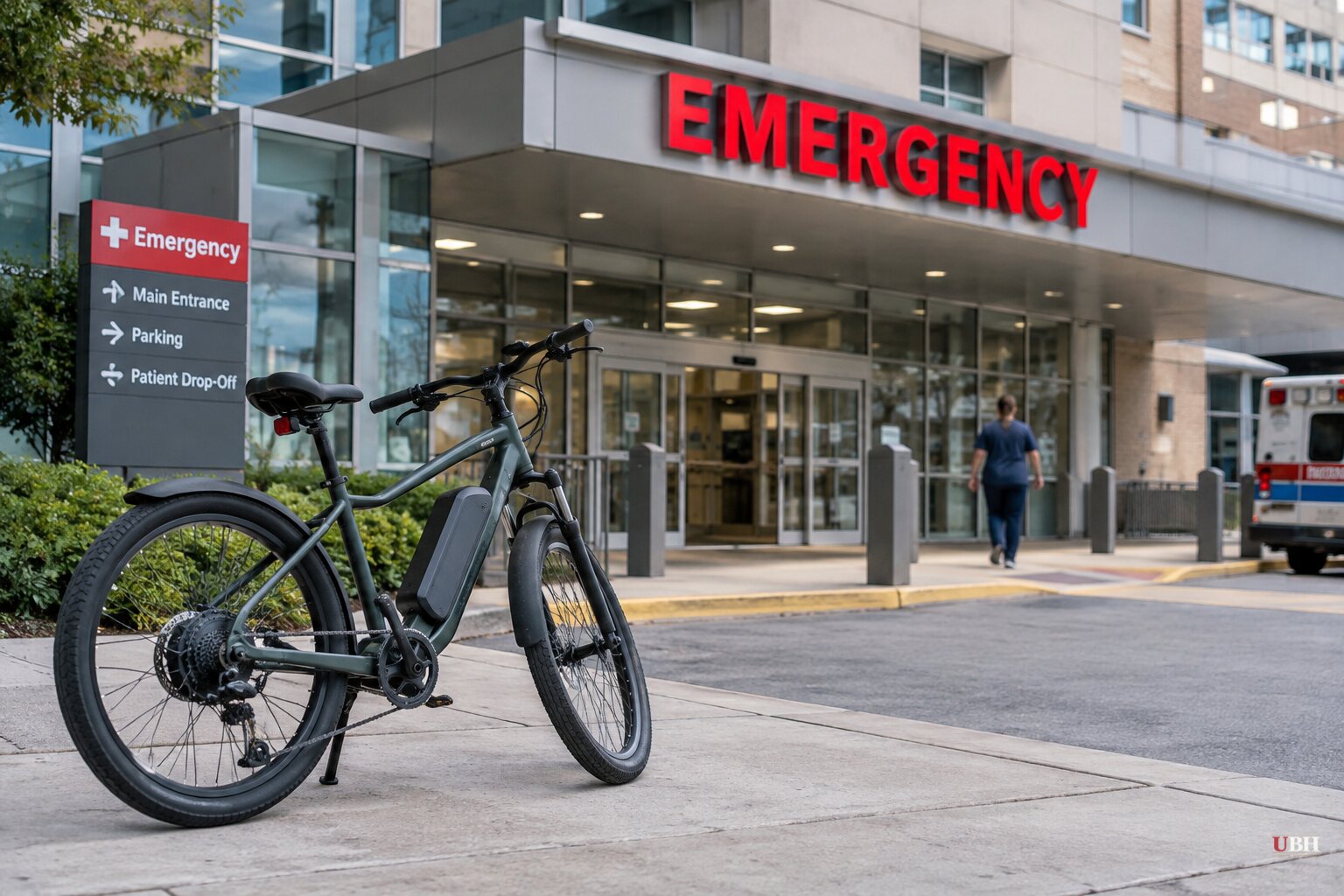
Emergency department visits for e-bike injuries have climbed far faster than visits for ordinary bicycle crashes, according to new data from Truveta, a health data company with records from more than 140 million patients.
The analysis, released Oct. 12, covers January 2023 through August 2026. The e-bike injury visit rate rose 760.2% over that stretch. Traditional bicycle injuries rose 7.9%.
For children and adolescents, the e-bike rate rose 19.1-fold, a 1,810% increase. The traditional bicycle rate for the same age group rose 1.5-fold.
The numbers
Truveta counted 4,769 e-bike-related emergency visits in the period. Traditional bicycles accounted for 63,811. Ordinary bikes still send far more people to the ER. The e-bike line is just moving much faster.
Head and neck injuries made up about one-third of visits for both groups. Traumatic brain injuries, including concussions, were diagnosed in 5.8% of e-bike visits and 5.6% of traditional bicycle visits.
Among patients under 18, the gap widened. Traumatic brain injury was diagnosed in 7.8% of e-bike visits, against 6.0% of traditional bicycle visits.
Truveta also reported earlier that the rate of e-bike and e-scooter ER visits among children and adolescents rose 7.5-fold over roughly three years.
What the data can't say
Truveta's researchers did not have data on how many people ride e-bikes or how often. Dr. Karen Gilbert Farrar, who worked on the analysis, offered a hypothesis rather than a finding: e-bikes are becoming more common, traditional bikes may be less so, and rental fleets and easier personal purchases are adding riders.
That complicates reading the headline figure. A rising visit rate could reflect more riders, more dangerous riding, or both. The e-bike market was valued at an estimated $2 billion in 2025 and is projected to reach $4.3 billion by 2035, according to the Journal of Urgent Care Medicine, which wrote that it "stands to reason" much of the increase in absolute injuries reflects substantially more e-bikes on the street.
Farrar said differences in helmet use, riding locations or behavior could also play a role. Truveta's write-up notes that helmet use among injured e-bike riders has been reported in only about 31% of cases, and that earlier research has not been entirely consistent.
Hospitals report the same direction
Local trauma centers describe a similar trend. Dr. Nathan Heinzerling, trauma medical director at Akron Children's in Ohio, said that by mid-July the hospital had surpassed the number of e-bike and scooter injuries it saw in all of 2025. The injuries include brain injuries, fractures and damage to the liver, kidney, spleen and intestines.
Akron Children's is logging about 35 to 40 e-bike injuries a month, according to chief quality officer Dr. Michael Bigham. He cautioned that the hospital's data is imperfect because many cases are recorded as generic bicycle accidents.
At Children's Hospital Colorado, injuries from e-motorcycles and e-bikes combined rose 184% from 2024 to 2025. A JAMA Network Open analysis found e-bike injuries increased by more than 99% annually from 2017 to 2022, while conventional bicycle injuries did not rise significantly.
At Northwestern Medicine McHenry Hospital in Illinois, trauma program coordinator Karen Battaglia tracked 41 patients treated for serious e-bike and e-scooter injuries between September 2025 and August 2026. Twenty-one were 15 or younger. About 90% were not wearing helmets.
Speed, weight and who gets hurt
Dr. John Maa, a trauma surgeon in Marin County, California, and an outspoken advocate for tighter rules on these devices, points to physics. E-bikes are heavier and faster, he told NPR, so the injuries "look like motorcycle crashes, not like bicycle crashes." A rider at 20 mph carries nearly three times the kinetic energy of one at 12 mph.
Heather Trnka, injury prevention manager at Akron Children's, cited speed, mass and what she called road mix: kids on e-bikes sharing space with cars, pedestrians, driveways and school traffic. Class 3 e-bikes can reach 28 mph.
The American Academy of Pediatrics does not recommend that teens under 16 operate motorized e-bikes and scooters. For parents who decide a child aged 12 to 15 is ready, the group advises a Class 1 bike, and says readiness should rest on maturity, not just age.
Not everyone who rides these machines sees recklessness as the norm. Mark Bentz and Jennifer Crusher, members of an electric unicycle group in Portland, Oregon, told NPR they are careful about safety. Crusher said she is known as the "safety mom" who nags riders to wear helmets. Bentz acknowledged serious crashes happen, saying he knows riders who have broken backs, legs, arms and wrists.
Illinois writes the rules
States are already acting. Gov. JB Pritzker signed Senate Bill 3484 on Aug. 27, after the Senate approved it 54-0 on June 1. It takes effect Jan. 1, 2027.
Under the law, riders of Class 1 and Class 2 e-bikes, capped at 20 mph, must be at least 15. Illinois had no state age minimum for them before. Class 3 riders, up to 28 mph, must be at least 16. Devices capable of exceeding 28 mph require a rider who is at least 16 and holds a driver's license, plus a title, registration and insurance. Low-speed e-bikes are banned from sidewalks statewide, with fines and confiscation possible. Municipalities may add their own rules.
The law replaces ordinances already adopted in towns such as Glen Ellyn and Lombard. Lombard police received 89 911 calls tied to e-bikes and similar devices in the month starting April 1, stopped 37 riders and impounded seven devices. "Behaviors are not getting better. They're getting worse," Police Chief Joe Grage told NBC Chicago in May. He said parents can be cited in place of, or alongside, their child.
Whether age limits and sidewalk bans bring the injury rate down is an open question. The Illinois law takes effect Jan. 1, 2027, and Truveta's next update on the post-summer months will show whether the climb continues without anyone yet able to say how many riders are behind it.
Sources used for this briefing
7 links from 6 independent newsrooms (syndicated copies of the same report count once)
These are the sources it draws on, linked so you can verify.


