
Unbiased headlines. Facts, not spin.
Unbiased Headlines is an independently owned news organization. We bring you the facts, not opinions, written fresh from 110+ named sources. Sources linked so you can verify it yourself.
 health
Major Story (7/10)
Event date: October 12, 2026 ·
health
Major Story (7/10)
Event date: October 12, 2026 ·
Infectious Disease Leaders Call for Clearer Federal Measles Message as CDC Sends $100 Million to Health Departments
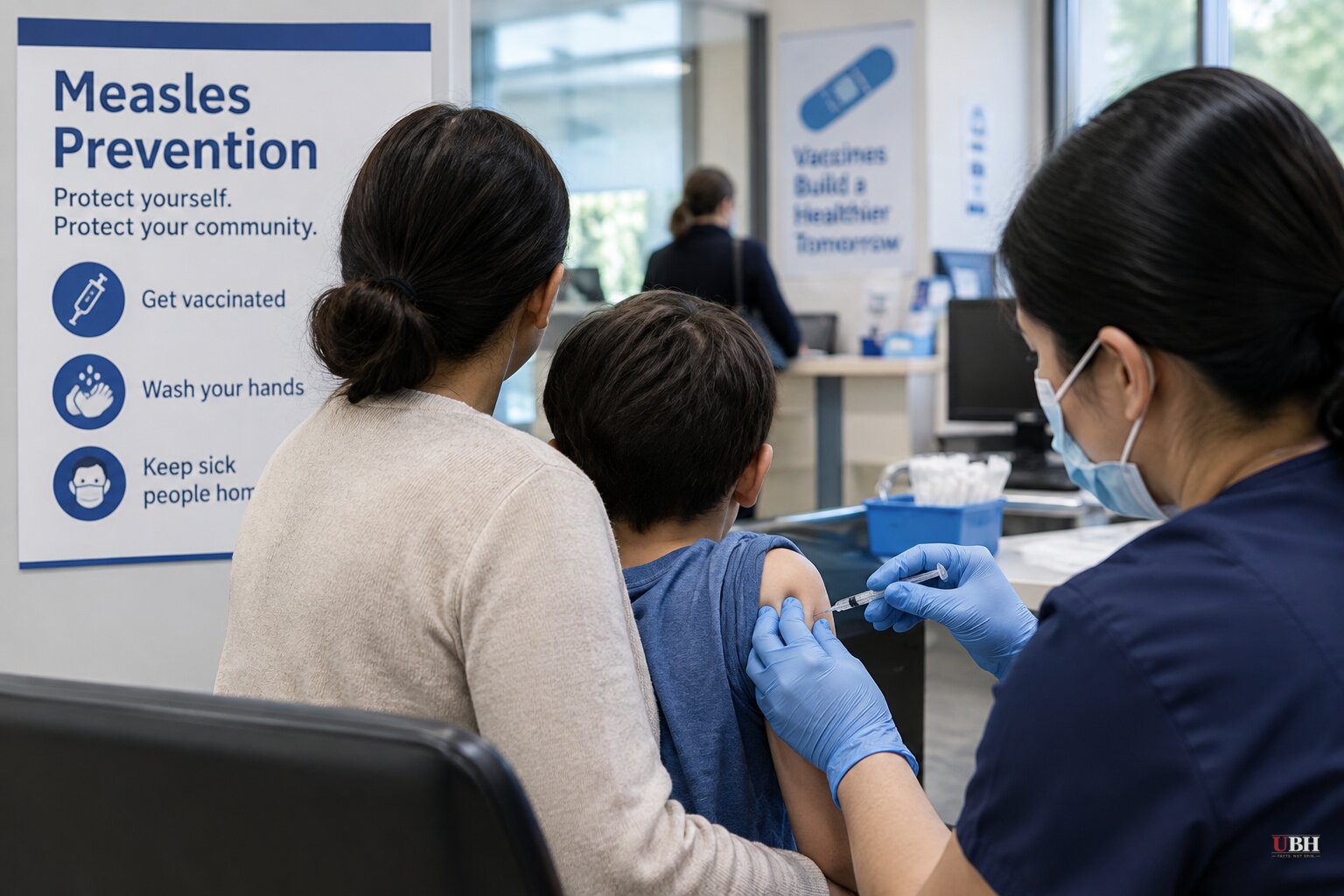
Measles cases in the U.S. have topped 4,000 this year, the highest in 35 years, and the CDC this week said it is deploying additional support to Pennsylvania, the state with the most cases. The money is flowing. What infectious disease specialists say is missing is a clear, steady message from the top of the federal health apparatus.
Money has moved, messaging has lagged
The CDC has issued roughly $100 million in additional funds to state, local and tribal health departments. The money is earmarked for vaccination, prevention and disease detection.
Local agencies are stretched. Adriane Casalotti, chief of government and public affairs at the National Association of County and City Health Officials, said there is "so much measles out there that the chances of it popping up in different communities is really high." She added that conflicting messages at different levels of the health system make it harder for local departments and the public to know what to do.
The cumulative figures show the scale. From Jan. 1, 2025, through Oct. 16, 2026, the CDC has confirmed 6,699 measles cases reported by 48 states and jurisdictions, according to the Public Health Communications Collaborative. About 93% of those patients were unvaccinated or of unknown vaccination status.
What the specialists want to hear
CDC Director Erica Schwartz is about two months into the job, which sat unfilled for a long stretch before that. The Hill reports she has said little publicly about the outbreaks. In a September interview with Atlanta News First, she called measles "the most contagious disease" and said the MMR vaccine is "safe and effective."
Jeanne Marrazzo, CEO of the Infectious Diseases Society of America, said a national message explaining what the MMR vaccine does would be a start, given that the country has logged 42 outbreaks this year. She was careful about the limits. "I don't think that pronouncements from the federal government are necessarily going to fill that much more complex space where decision-making is impacted by a lot of things we often don't understand," she said. She also said a national message could be built to account for people's vaccine hesitancy.
Demetre Daskalakis, a former director of the CDC's National Center for Immunization and Respiratory Diseases, said doubts voiced by federal officials about how Pennsylvania assessed its measles deaths added difficulty to the response.
The HHS response
HHS spokeswoman Emily Hilliard said the CDC gives states epidemiological, laboratory and technical help. She said Health Secretary Robert F. Kennedy Jr. and Schwartz both stress that the MMR vaccine is the most effective way to prevent measles.
That is the department's account of its own messaging. The critics' complaint is about how often and how forcefully that message reaches the public, not whether the statement exists.
Pennsylvania and the death count
Pennsylvania is the only state with confirmed measles deaths this year. NPR reports the state has five. Patsy Stinchfield, executive director of the Measles Collaborative, a public health effort led by the National Foundation for Infectious Diseases, said Pennsylvania had 12 cases in January and is now seeing more than 100 per week, with over 1,000 cases in total. "If Pennsylvania can see it spread that fast, that can happen in any state that has low immunization rates," she said.
The CDC's national death count does not yet include Pennsylvania's deaths. The Hill ties that to the agency's move to a different database for verifying such cases. Its reporting says the country appears to have already doubled last year's measles death toll.
New York state has declared a measles emergency.
Policy backdrop
The messaging debate sits against a fight over vaccine policy. U.S. Medicine reports that Kennedy earlier this year directed the CDC to cut the number of recommended childhood vaccines from 17 to 11. A federal judge in Boston temporarily blocked the change in a suit brought by the American Academy of Pediatrics and other medical groups. In August, President Trump signed an executive order recommending the same reduction and the splitting of the MMR shot into three separate doses.
Johns Hopkins International Vaccine Access Center data cited by the same outlet show national MMR coverage has held steady, but only nine states meet the 95% target. Two doses of MMR are 97% effective, NPR reports, citing infectious disease physicians including Dr. Adam Ratner of New York City, who calls the vaccine "safe" and "highly effective."
What is at stake
The U.S. received measles elimination status in 2000. The Public Health Communications Collaborative says the country is at risk of losing it, which requires going 12 consecutive months without continuous transmission.
Whether the CDC folds Pennsylvania's deaths into its national count once its database transition is complete, and whether Washington puts out a sustained public campaign, are the open questions as county health officials keep absorbing new cases.
Sources used for this briefing
6 links from 5 independent newsrooms (syndicated copies of the same report count once)
These are the sources it draws on, linked so you can verify.


