
Unbiased headlines. Facts, not spin.
Unbiased Headlines is an independently owned news organization. We bring you the facts, not opinions, written fresh from 110+ named sources. Sources linked so you can verify it yourself.
 health
Notable (5/10)
Event date: October 16, 2026 ·
health
Notable (5/10)
Event date: October 16, 2026 ·
NHS England's Own Impact Assessment Warns Trans Ward Rules Could Cause Delays and Corridor Care
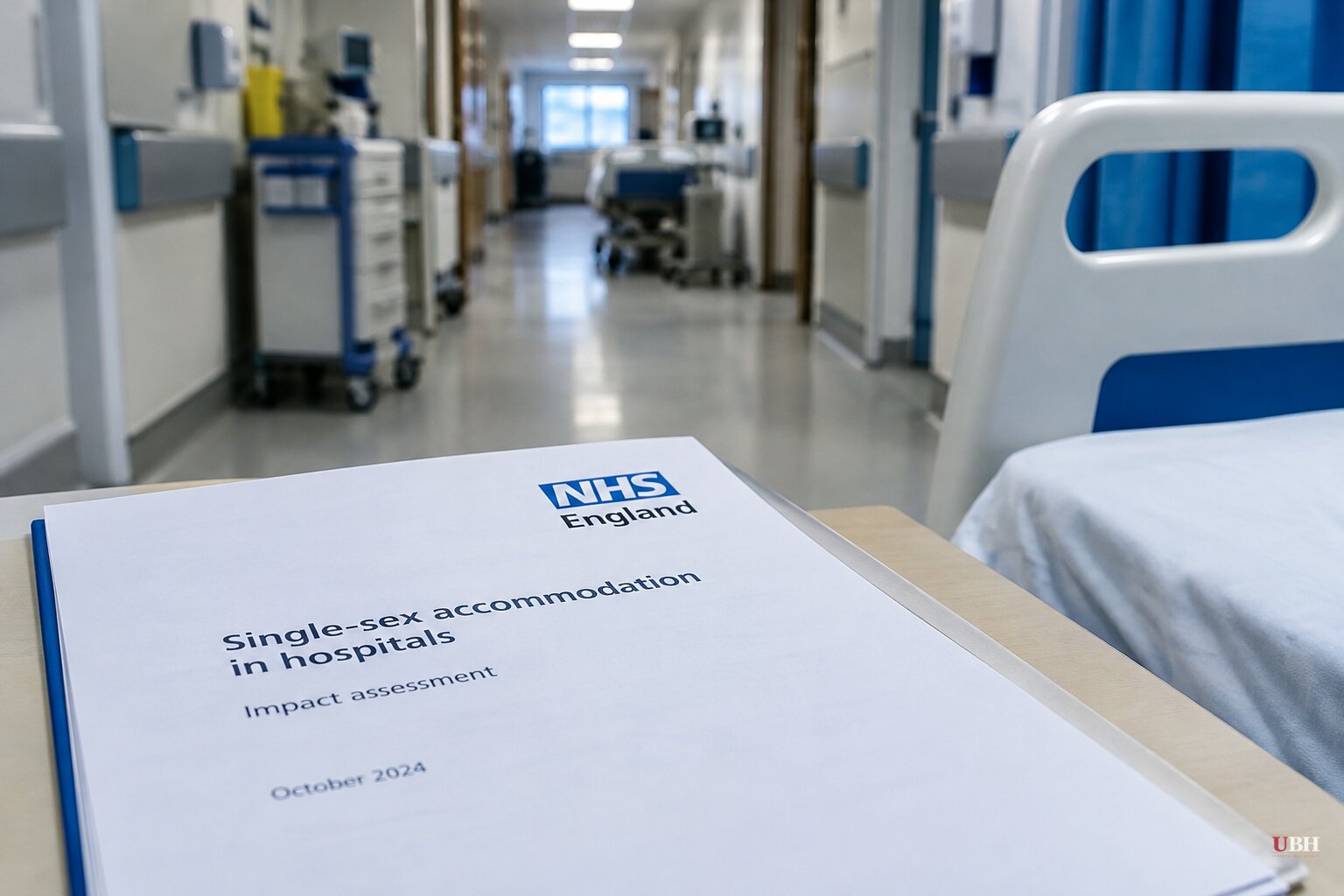
Since NHS England published guidance on Thursday, Oct. 15 telling hospitals to accommodate trans patients according to biological sex, an internal impact assessment has surfaced that spells out the policy's own risks.
The document, seen by the Guardian, weighed the guidance against every protected characteristic, including age, disability and sex. It found upsides and downsides, and it did not hide the downsides.
What the assessment says
On the positive side, the assessment said the policy's focus on "privacy, dignity and safety for men and women" would have a positive impact. So would the legal accuracy of the guidance on single-sex spaces. It also identified benefits for pregnant or breastfeeding women, people with certain religious beliefs, and minority-ethnic groups.
On the negative side, it listed "a number of potential adverse impacts for trans people." In its words: "There may be delays and a greater risk of 'corridor care' for trans people with a negative impact on their physical and mental health and wellbeing if side rooms are not available."
It also said trans patients could be "outed" by being placed in a side room or kept off a ward matching their lived gender. That could lead some to "avoiding accessing healthcare at all."
The assessment flagged a capacity problem. Hospitals without enough side rooms could end up "forcing trans people into the potentially distressing situation of being accommodated on wards aligned with their biological sex."
It further warned of a "negative impact on fostering good relations" between cisgender and transgender people. Staff may have to "balance the needs of one group against the other," it said, which could create animosity. It added that some women who do not "present in line with general societal expectations" could face questions about their sex when trying to use single-sex wards.
What the guidance requires
The guidance says trans people "should be accommodated in line with their biological sex." It follows the Supreme Court's April 2025 ruling that "woman" and "sex" in the Equality Act mean biological sex, and the Equality and Human Rights Commission's code of practice, which took effect just over two months ago.
It covers acute, mental health and community trusts, plus NHS-funded patients in private settings. It excludes A&E departments, urgent treatment centres and paediatrics.
Where a trans patient cannot clinically be cared for on a ward of their biological sex, trusts "should identify alternative arrangements." The guidance says that "where clinical needs and same-sex accommodation requirements cannot both be met, clinical needs are the priority."
It calls such exceptions likely to be "rare." Each one must be "clearly recorded and reported nationally as breaches of this guidance."
Reaction
Jess O'Thomson, trans rights lead at the Good Law Project, said: "Exclusion should not be the default. The priority should have been patient safety." She added that trans patients "have been treated on gendered wards for many years without complaint or incident," and that the policy "may even lead to their deaths." That is her claim, not an established outcome.
The British Medical Association said it was concerned the guidance could disadvantage or exclude transgender and nonbinary patients.
Bethany Hutchison welcomed what she called "clear and necessary guidance from NHS England." Supporters of the policy say it gives hospitals legal certainty after the Supreme Court ruling and protects women's privacy, as the assessment's own positive findings also state.
The guidance does not say trans patients are automatically entitled to single rooms. Side rooms are also in demand for infection control and end-of-life care, according to QueerAF's reading of the document.
Staff facilities
NHS England also issued guidance saying staff toilets, changing rooms and showers should be used by biological sex. Trusts are encouraged to consider single-occupancy or mixed-sex facilities with lockable rooms where most facilities are single-sex.
TransActual, a trans advocacy group, said the staff guidance tells trusts not to wait for the EHRC's separate workplace code. It also said no extra funding comes with it. The group argued that trusts face litigation risk from both directions and possible building costs. It cited the 2025 NHS Staff Survey, which it said found a quarter of trans NHS staff had experienced harassment, bullying or abuse from colleagues in the past year.
The capacity question
The NHS is already struggling with its existing mixed-sex accommodation rules. QueerAF, citing the BBC, put August 2026 breaches at 5,520, with each patient held on a mixed-sex ward counted as a breach. That compares with 3,853 in June 2025.
The assessment's central risk, side-room availability, depends on a stock of rooms the NHS already uses heavily. NHS England has not said how many additional side rooms trusts are expected to find, and the guidance carries no new funding for building work, according to TransActual.
The next test is the national breach reporting the guidance requires. The first figures will show how often trusts place trans patients outside their biological sex's ward, and whether the side-room shortfall flagged in the impact assessment shows up in practice.
Sources used for this briefing
7 links from 7 independent newsrooms (syndicated copies of the same report count once)
These are the sources it draws on, linked so you can verify.


