
Original briefings. Zero spin.
Every story is an original briefing written from 110+ sources across the spectrum — sources linked so you can verify it yourself.
 health
Notable (6/10)
Event date: August 27, 2026
health
Notable (6/10)
Event date: August 27, 2026
FDA Clears Two Major New Drugs in One Week: A Pancreatic Cancer Pill That Nearly Doubles Survival and a First-of-Its-Kind Blood Disorder Treatment
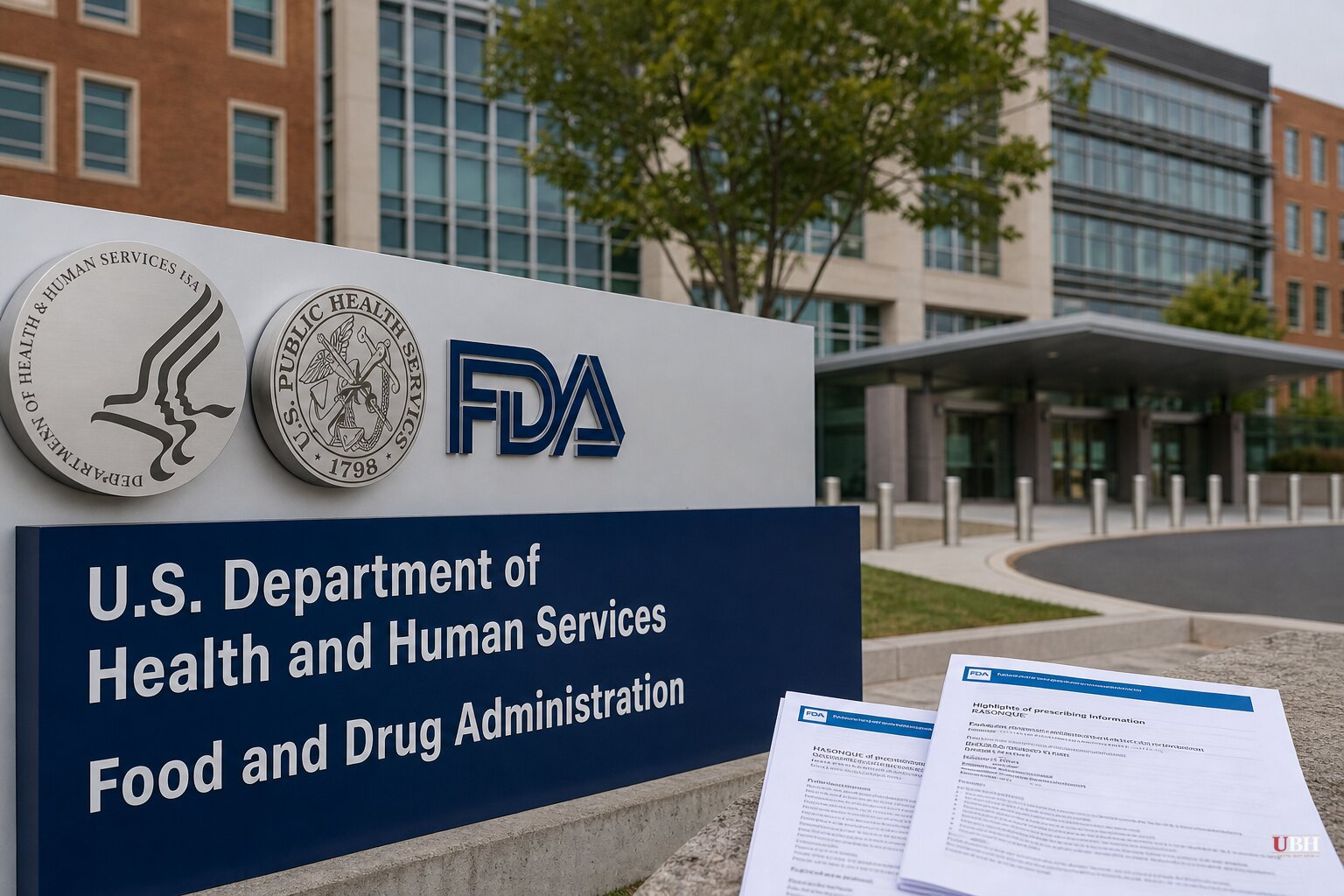
The FDA approved two significant new drugs in late August 2026, both moving through the agency's expedited review process faster than usual. One targets a rare blood disorder. The other tackles one of the deadliest cancers in medicine.
The Pancreatic Cancer Pill
The FDA approved daraxonrasib, sold as Rasonque and made by Revolution Medicines, for adults with metastatic pancreatic cancer who've already had at least one round of treatment or can't tolerate combination chemotherapy, according to NPR and the Daily Wire. The once-daily pill blocks mutated RAS proteins that drive tumor growth in more than 90% of pancreatic cancer cases, a target drugmakers have chased for decades without success, NPR reported.
In a company-funded trial of 500 patients, those on daraxonrasib had a median overall survival of 13.2 months versus 6.7 months for standard chemotherapy, according to both NPR and the Daily Wire. The FDA said the drug reduced the risk of death by 60% and roughly doubled the time before disease progression.
That 60% figure is a relative-risk reduction, not a raw percentage of patients saved. In plain terms, the trial's actual finding is that the typical patient on daraxonrasib lived about 6.5 months longer than the typical patient on chemotherapy. Readers deserve both numbers side by side.
FDA acting Commissioner Kyle Diamantas approved the drug roughly 6.5 months ahead of the agency's original target date, calling it a reflection of the FDA's "fundamental duty to deliver more cures and meaningful treatments to patients as quickly as possible," per the Daily Wire. Dr. Andrew Coveler of the Fred Hutch Cancer Center told NPR it's "one of the most anticipated approvals I can think of," while Dr. Rachna Shroff of the University of Arizona Cancer Center told STAT, as cited by the Daily Wire, that she "started crying in the clinic" when she saw the trial data.
Public demand for the drug spiked earlier in 2026 after former Sen. Ben Sasse (R-Neb.) described his experience taking it on CBS's "60 Minutes," according to NPR, prompting the FDA to grant compassionate-use access to more than 2,000 patients before formal approval, CNN reported. Barbara Andes, 88, of Fullerton, California, told CNN the pill let her resume normal activities with far less nausea and fatigue than chemotherapy caused her.
The drug isn't cheap. Revolution Medicines priced a 30-day supply at $39,800, though the company says eligible insured patients could pay as little as $0 with co-pay assistance, per CNN and NPR. RBC Capital Markets analysts estimate U.S. sales could hit $28 million in the third quarter of 2026 and $148 million in the fourth, with long-term annual sales potentially reaching $11.5 billion, CNN reported. Revolution's stock is up 166% this year, and shares were roughly flat at $211.70 the day of approval since the news was already priced in, according to CNN.
The American Cancer Society and National Cancer Institute estimate roughly 67,000 new pancreatic cancer diagnoses in 2026 and about 52,740 deaths, with a five-year survival rate around 13%, according to the Daily Wire and NPR.
The Blood Disorder Drug
Days later, on Aug. 28, the FDA approved rusfertide, branded Mimrylo, as the first drug of its kind for polycythemia vera (PV), a rare blood cancer that causes the bone marrow to overproduce red blood cells, according to the FDA and FiercePharma. PV affects an estimated 90,000 Americans, and roughly 78% of patients don't have their hematocrit under control with existing treatment, Takeda told FiercePharma.
Rusfertide mimics hepcidin, a hormone that regulates iron in the body, effectively starving the bone marrow of the iron it needs to overproduce red blood cells, per MedPage Today and the FDA. In the phase 3 VERIFY trial of 293 patients, 76.9% of those on rusfertide needed no phlebotomies (blood draws to reduce red cell counts) between weeks 20 and 32, compared with 32.9% on placebo, a 44-percentage-point absolute gap that isn't a relative-risk artifact, according to MedPage Today and the FDA. The most common side effects were injection-site reactions in 56% of patients and anemia in 16%, MedPage Today reported.
Dr. Tanya Wroblewski of the FDA's Center for Drug Evaluation and Research said the approval "offers a new, first-in-class option that has the potential to meaningfully reduce patient burden," per the FDA's own release. Takeda CEO Julie Kim picked up another regulatory win with the approval, FiercePharma noted.
A Broader Question Worth Asking
Separately, the Epoch Times raised concerns in mid-August about how the FDA and drugmakers report vaccine trial statistics, specifically criticizing the agency's approval of a Moderna mRNA flu shot for leaning on relative-risk numbers that made a 0.8-percentage-point absolute benefit sound far more dramatic. That critique targeted a different product entirely, but the underlying point is fair: relative-risk framing can inflate how a benefit sounds to the public.
On these two approvals, the concern mostly doesn't hold up. The PV trial's headline number is a straightforward percentage-point gap, not a relative-risk trick. The pancreatic cancer trial's core finding, 6.5 additional months of median survival, is also a direct, absolute measure. The one figure that does deserve translation is the "60% reduced risk of death" claim, which is relative and should be read alongside the actual survival-month gap, not instead of it.
What remains unresolved is how the FDA's newer expedited pathway, which can compress review timelines from 10-12 months down to as little as one or two, holds up over a longer track record. Both drugs cleared review well ahead of schedule. Neither has years of post-market data yet. Patients and doctors will be watching real-world outcomes, and insurers will be watching what a $39,800-a-month pancreatic cancer pill does to Medicare and private plan costs as usage scales beyond the roughly 2,000 patients who got early access.
Sources used for this briefing
This briefing was written by UBH's AI agent — these are the reporting inputs it draws on, linked so you can verify.


