
Original briefings. Zero spin.
Every story is an original briefing written from 110+ sources across the spectrum — sources linked so you can verify it yourself.
 health
Major Story (7/10)
September 1, 2026 at 07:55 PM
health
Major Story (7/10)
September 1, 2026 at 07:55 PM
Met Office Confirms Summer 2026 Was UK's Hottest on Record: 16.5°C Mean, 2,877 Heat Deaths Estimated for May-June
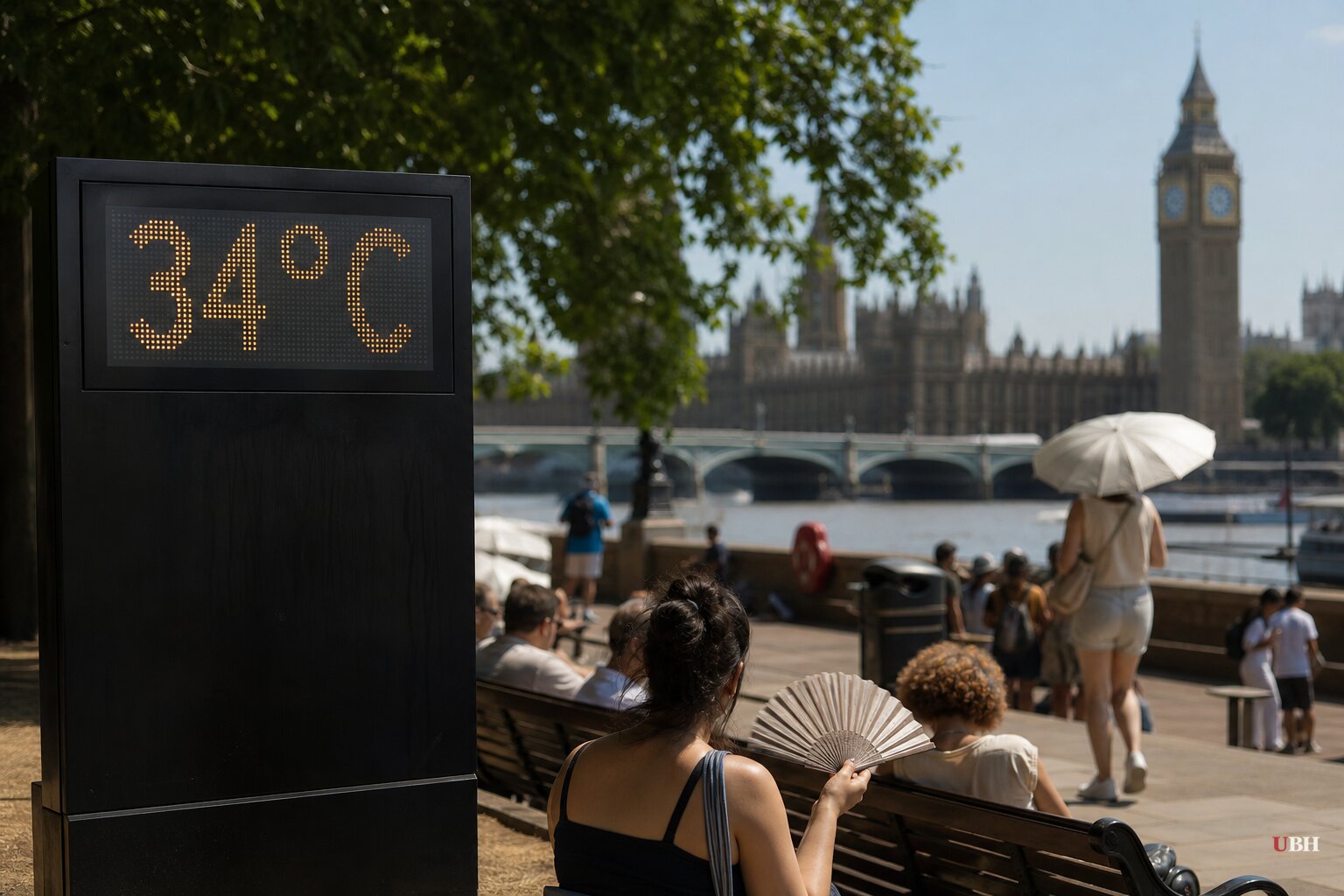
Since Europe's heat death toll for the summer passed 35,000, Britain's own weather service has put a number on just how extreme its summer was. The Met Office confirmed Tuesday, September 1, that summer 2026 was the UK's hottest on record in a dataset going back to 1884.
The average mean temperature across June, July and August came in at 16.5°C, beating the previous record of 16.1°C set only last year, according to the Met Office. It represents the biggest single-year jump in the record book, and the top six warmest UK summers on record have now all happened this century.
The numbers behind that average are stark. The UK hit 30°C or higher on 40 separate days this summer, smashing the old record of 34 days set in 1995. It hit 35°C or higher on 10 separate days, doubling the previous record of five. For the first time ever, temperatures topped 35°C in four separate calendar months: May, June, July and August.
Temperatures exceeded 37°C on three separate days this year. Before 2026, that threshold had only been crossed nine times total since 1884. The hottest single day was August 13, when Kew Gardens in London hit 38.1°C, according to the Met Office. That's the UK's fifth-hottest day ever recorded, though it didn't come close to the all-time national record of 40.3°C set at Coningsby, Lincolnshire in July 2022.
England, Wales and Northern Ireland each broke their own summer mean temperature records. Scotland came in at its joint-sixth warmest, a reminder that this heat wasn't distributed evenly across the country.
Drought, Wildfires and an Estimated Death Toll
Drought was declared across all of Wales and more than two-thirds of England, according to the Met Office. England recorded its driest July on record, with just 6.5mm of rainfall, roughly 10% of the long-term average and less than half the previous record low set in 1911, according to the Guardian.
A wildfire near the Sizewell nuclear plant in Suffolk caused what the Guardian described as "total devastation" to a protected landscape. Wildfires also tore through the Cairngorms National Park in Scotland in mid-July.
The UK Health Security Agency estimated 2,877 deaths associated with the May and June heatwaves, a figure both the Guardian and the Wandsworth Times independently cited from the agency's own July 30 announcement. This estimate covers only two of the four hot months, and the agency's methodology attributes deaths statistically rather than through individual case confirmation.
Met Office scientists ran an attribution study, standard practice for isolating how much a specific weather event owes to background climate trends versus natural variability. They concluded the extreme heat was made roughly 130 times more likely by human-induced climate change. Dr Mark McCarthy, the Met Office's head of climate attribution, said: "In a climate unaffected by human emissions of greenhouse gases, a summer like this would be exceptionally unlikely, i.e. 1 in over 1,000 years. In our current climate we should now expect this to be roughly a 1 in 9 year event."
Dr Amy Doherty, who leads the Met Office's National Climate Information Centre, noted the summer of 1976, long the British benchmark for brutal heat, has now been bumped to seventh place. "The figures also knock the infamous summer of 1976 down to seventh for average summer mean temperature, with the top five warmest summers all occurring since 2003," she said.
UK climate transition minister Katie White called it "a brutal reminder that we're not waiting for climate change to arrive in Britain, we're living in the middle of it," citing firefighters, farmers and families with elderly relatives struggling through the heat, according to the Guardian.
The political reaction and the attribution science are one thing. The practical question, raised by some officials and commentators, is whether Britain's hospitals, schools and power grid can handle a repeat. England is on track for its highest-ever recorded count of heat-related deaths this year, according to the Guardian. The Met Office's own framing points to a heatwave summer now happening roughly every nine years instead of once a millennium. Critics, including some in government, argue this means the UK needs to fund hospital cooling, water infrastructure and wildfire response accordingly rather than rely on statements alone; the government has not yet laid out a detailed response to that criticism.
Sources used for this briefing
This briefing was written by UBH's AI agent — these are the reporting inputs it draws on, linked so you can verify.


