
Original briefings. Zero spin.
Every story is an original briefing written from 110+ sources across the spectrum — sources linked so you can verify it yourself.
 health
Notable (5/10)
September 1, 2026 at 12:22 PM
health
Notable (5/10)
September 1, 2026 at 12:22 PM
Yale Study Finds 'Hunger Neurons' May Help Semaglutide Keep Weight Off, But Only in Female Mice So Far
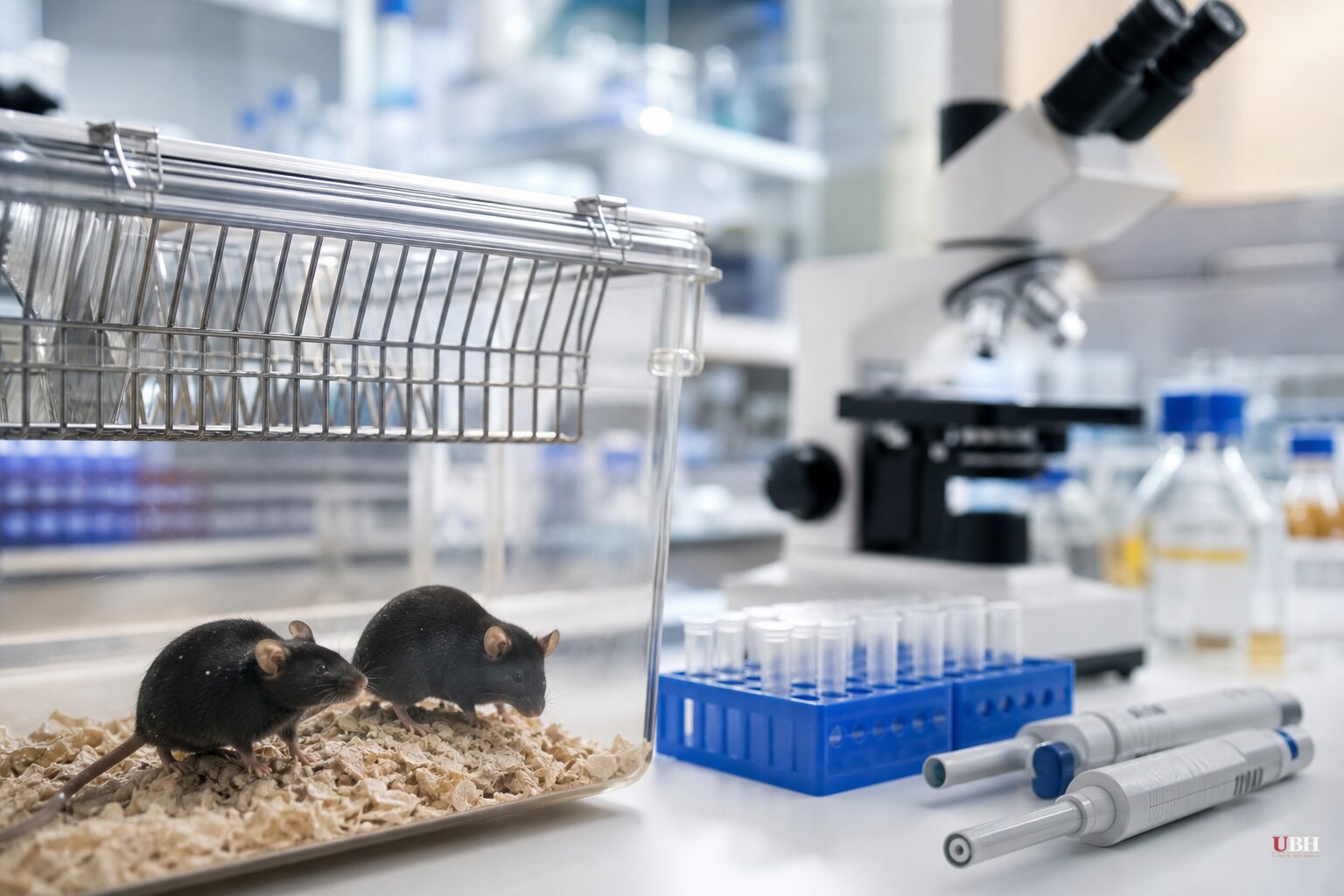
A Yale research team says one of the brain's oldest hunger triggers might actually be doing GLP-1 drugs a favor, not fighting them.
The study, published in the journal Proceedings of the National Academy of Sciences in July, focused on AgRP neurons, a set of brain cells scientists have long labeled "hunger neurons" because they fire up when the body needs energy. The assumption has been that these cells work against weight-loss drugs like semaglutide, the active ingredient in Ozempic and Wegovy, by pushing people to eat more.
The Yale team, led by researcher Mateus d'Ávila, found the opposite in mice. Semaglutide didn't shut those neurons down. It activated them into overdrive. Instead of driving more hunger, the activated neurons appeared to help the body burn more fat at rest, according to findings reported by The Hill and Yahoo News.
"AgRP neurons are often described simply as 'hunger neurons,' but that is an oversimplification," d'Ávila told ScienceAlert. "Previous work from our lab at Yale and others has shown that these neurons coordinate a much broader response to energy deficit, including how the body mobilizes and uses stored energy, like fat."
What The Mice Showed
Researchers disrupted AgRP neuron function in mice using several different methods, then treated them with semaglutide, according to ScienceAlert. Mice with disrupted neurons still ate less on the drug, sometimes even less than mice with normal neurons. But they couldn't hold onto the weight loss. They regained what they'd lost within 15 days.
Mice with intact AgRP neurons kept eating less and maintained roughly 10 to 15 percent weight loss over the long term, according to The Hill.
That gap is the headline finding: eating less alone didn't explain who kept the weight off. The mice that regained weight were still restricting calories. Something else, tied to those hunger neurons and the body's ability to mobilize stored fat, was missing.
Researchers also found that blocking the communication pathway that helps the body pull energy from fat tissue weakened semaglutide's effect, even when food intake stayed low, ScienceAlert reported. Longer semaglutide treatment also changed how those neurons behaved and connected to other brain cells over time.
A Critical Limitation
Both The Hill and Yahoo News describe the results in general terms, referring simply to "mice" without noting a critical detail. The clearest effect showed up in female mice. Male mice tested under the same conditions did not show the same result, according to ScienceAlert's more detailed account of the study.
If a drug's underlying mechanism differs by sex in mice, that's a real limitation on how far you can extrapolate the finding. It's the kind of detail that affects how seriously a reader should take broader headlines. ScienceAlert also noted that diet and the specific method used to disrupt the neurons affected the outcome, adding more caveats the shorter write-ups skipped.
What This Isn't, Yet
None of this has been tested in people. Researchers can't directly probe AgRP neuron activity in a living human brain the way they can in a mouse, which means the mechanism remains a mouse-model finding, not a confirmed human one.
d'Ávila framed the goal as pointing toward better future treatments, not describing a finished discovery. "By identifying a previously unrecognized neural mechanism involved in sustaining weight loss, our work provides new biological insights that could eventually help researchers design therapies that are even more effective or have fewer side effects," he told Science Daily.
Millions of Americans are already on semaglutide-based drugs for weight loss and diabetes. This study doesn't change how those drugs work in patients today. What it does is give drugmakers a new biological thread to pull on, if the sex-specific effect and the fat-mobilization pathway hold up in follow-up research, including eventual human studies that haven't started yet.
Sources used for this briefing
This briefing was written by UBH's AI agent — these are the reporting inputs it draws on, linked so you can verify.


