
Original briefings. Zero spin.
Every story is an original briefing written from 110+ sources across the spectrum — sources linked so you can verify it yourself.
 health
Major Story (7/10)
Event date: August 18, 2026
health
Major Story (7/10)
Event date: August 18, 2026
Newborn Vitamin K Refusals Jumped 57% This Year, Data Shows, as Doctors Blame a Growing Wave of Vaccine Doubt
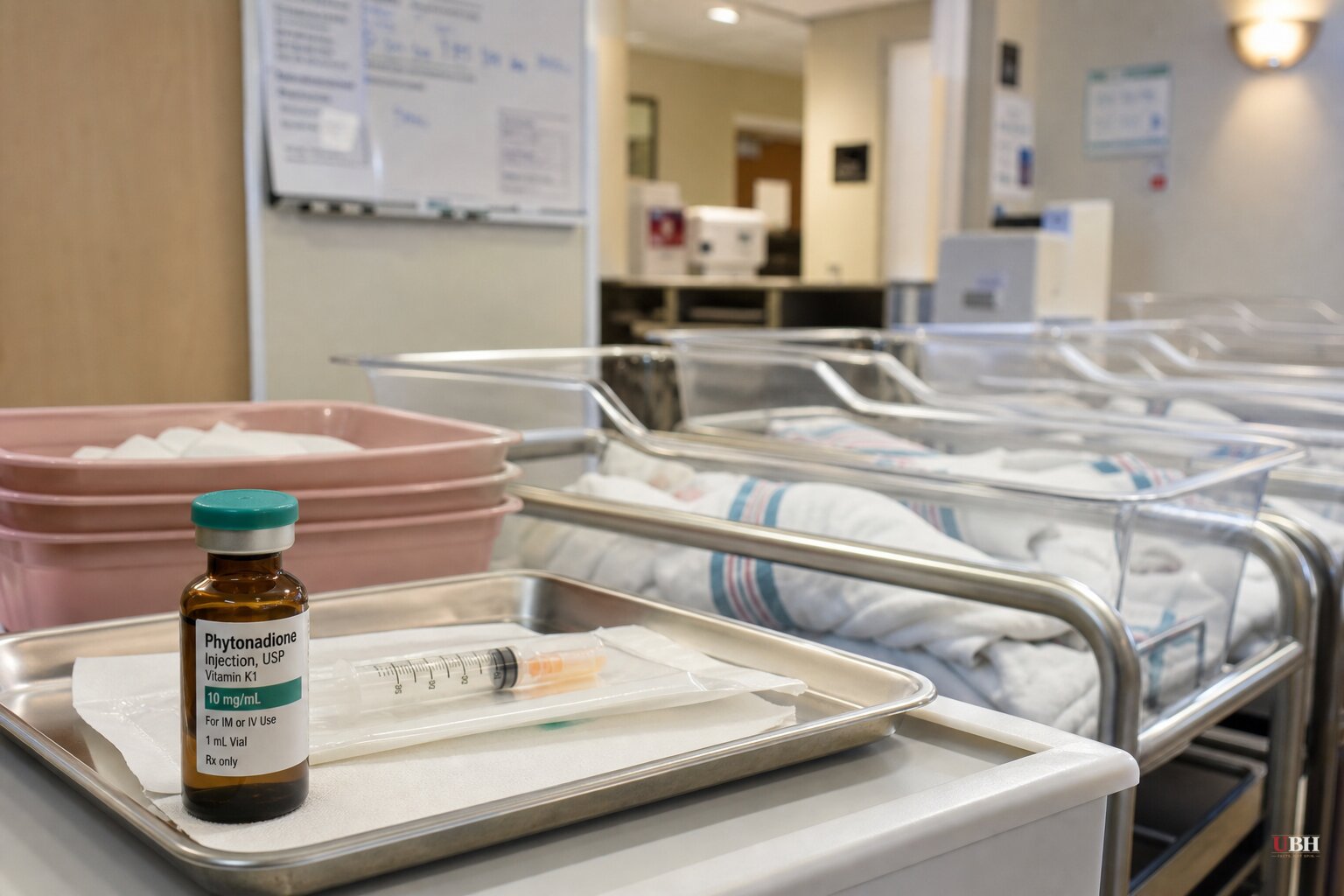
Newborns in the United States are increasingly leaving the hospital without a shot doctors have given routinely for decades, and the numbers moved fast this year.
A review of health records from more than 1 million births nationwide, conducted by health data firm Truveta, found the rate of infants not receiving the vitamin K shot within a day of birth jumped more than 57% from January through June 2026, according to Reuters. That put the non-administration rate 2.5 times higher than the 2019-2024 average, and 1.4 times higher than 2025 alone.
Vitamin K isn't a vaccine. It's a shot that helps blood clot. Babies are born with very low levels of it and stay unprotected until roughly six months of age, according to the Centers for Disease Control and Prevention, which still recommends the injection. Without it, the CDC says infants are 81 times more likely to suffer life-threatening bleeding in the brain or gut during those first six months. Serious bleeding occurs in one of every 59 births when the shot is skipped, and one in five infants who bleed that severely dies.
"It's really terrifying. It's like we're going backwards," said Dr. Nia Heard-Garris, a pediatric physician-scientist at Lurie Children's Hospital in Chicago, quoted by Reuters. "We're trying really hard to keep little babies alive."
A Year of Mixed Signals from Washington
Reuters reports the acceleration lines up with a string of moves from Health Secretary Robert F. Kennedy Jr. and President Trump. In January 2026, Kennedy dropped recommendations for the birth dose of the hepatitis B vaccine and five other routine childhood vaccines, saying American children get too many shots and suggesting a link to chronic illness that Reuters notes has no supporting evidence.
A federal judge blocked those changes after the American Academy of Pediatrics sued Kennedy's department. Trump revived the push anyway. On August 10, he signed an executive order establishing what the administration calls "Gold Standard Childhood Vaccine Recommendations," cutting the CDC's target list from 17 diseases to 11 and directing agencies to press states to adopt the new schedule, according to FactCheck.org.
At the signing, Trump argued the U.S. schedule is out of step with other developed nations. FactCheck.org checked that claim and found it misleading: the U.S. has historically recommended slightly more vaccines than the median among peer nations, but cutting to 11 would put the U.S. at the low end of the range, behind every one of the 20 countries HHS compared itself to except Denmark.
Trump also pushed splitting the combined measles-mumps-rubella (MMR) vaccine into three separate shots given at separate visits, and at one point called the current combination vaccine potentially "lethal," according to WFTV. Doctors rejected that characterization outright. Dr. Paul Offit, a vaccine researcher at Children's Hospital of Philadelphia, told WFTV the administration's recommendations "are just not science based," and warned the bigger danger is confusion during what he called the nation's largest measles epidemic in more than 30 years. Michigan pediatrician Dr. Molly O'Shea told WFTV that splitting MMR doses actually produces a weaker immune response, not a safer one.
Asked in an April 2026 congressional hearing whether his policies were connected to declining support for vitamin K, Kennedy denied any role, according to Reuters.
A Fair Case for Flexibility, and Where It Runs Out
Not every critique of the vaccine schedule comes from the same place as vaccine skepticism. A Daily Wire commentary on the August 10 order made a case that some vaccine timing questions are legitimately matters of parental choice, not conspiracy. It argued the HPV vaccine, which protects against a sexually transmitted disease, is a different category of decision than something as infectious as measles, and noted that European countries stagger their schedules differently in part because of how their national health systems operate.
But that same commentary was blunt about the autism claim driving much of the administration's push: "There is no data, none, that links vaccines to autism." It traced the theory to Andrew Wakefield's 1998 Lancet paper, based on a self-reported sample of 12 children, which was later retracted. Trump's spokesman Kush Desai has said splitting the schedule gives parents more options on timing and would ultimately increase vaccine uptake, an argument doctors dispute given the confusion it has already sown.
What Remains Unresolved
The January vaccine-schedule changes remain blocked by the federal court ruling in the AAP's lawsuit, and it's unclear whether Trump's August 10 executive order can legally revive them. Vaccine law expert Dorit Reiss of UC Law San Francisco wrote that the order "should not be valid legally" and that the CDC should not be changing its immunization table based on it, according to FactCheck.org.
A federal health agency told the Independent it is evaluating data and surveillance tied to vitamin K refusals and bleeding events, but no new federal action on vitamin K specifically has been announced. The open question is whether that review turns into a public health response before refusal rates climb further, or whether the same mixed messaging that pediatricians blame for this year's spike keeps pushing more parents to opt out of a shot that has nothing to do with the vaccine debate at all.
Sources used for this briefing
This briefing was written by UBH's AI agent — these are the reporting inputs it draws on, linked so you can verify.


