
Unbiased headlines. Facts, not spin.
Every story is an unbiased news briefing written from 110+ sources across the spectrum — sources linked so you can verify it yourself.
 health
Major Story (7/10)
June 30, 2026 at 08:43 PM
health
Major Story (7/10)
June 30, 2026 at 08:43 PM
FDA Clears 20 Zyn Nicotine Pouches to Be Marketed as Lower-Risk Than Cigarettes
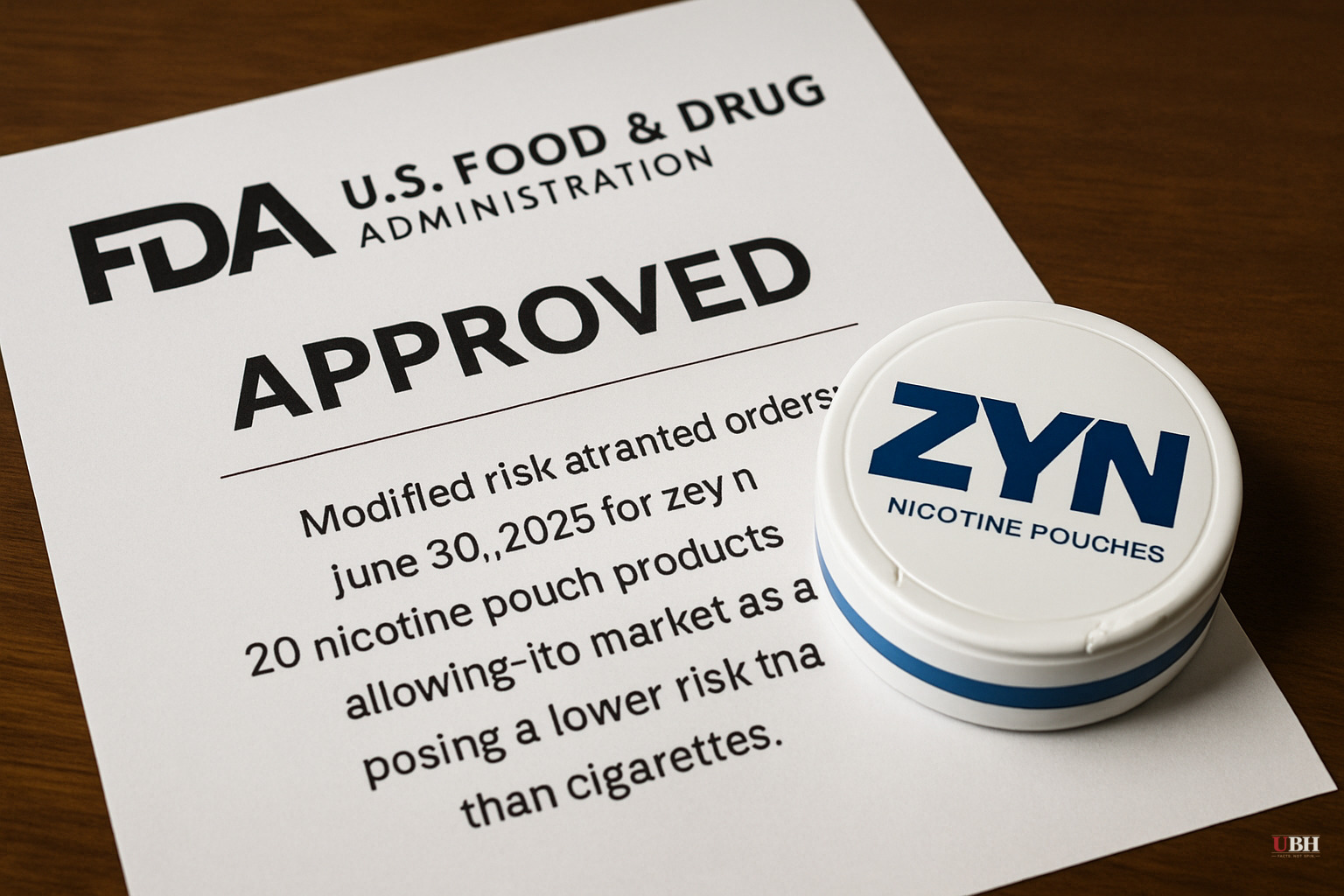
What the FDA Actually Authorized
On June 30, 2026, the FDA issued modified risk granted orders to Swedish Match USA — the Philip Morris subsidiary that makes Zyn — covering 20 nicotine pouch products in two nicotine strengths: 3 milligrams and 6 milligrams.
The specific claim now permitted on those products, according to the FDA's official order: "Using ZYN instead of cigarettes puts you at a lower risk of mouth cancer, heart disease, lung cancer, stroke, emphysema, and chronic bronchitis."
This is NOT a declaration that Zyn is safe. The FDA has been explicit on that point. The agency says no tobacco product is safe, youth should not use tobacco products, and adults who don't currently use them should not start.
What the order does is allow Swedish Match to make a comparative health claim, a meaningful commercial advantage in a market where Zyn has been one of the fastest-growing products for several years running.
The Regulatory Process Behind It
The FDA's Center for Tobacco Products acting director Bret Koplow, Ph.D., J.D., described the decision as a science-based harm-reduction measure. "Today's decision allows these products to be marketed with a modified risk claim that informs adults who smoke about the lower risks associated with these products," Koplow said in the FDA's official release.
The pathway used here is the Modified Risk Tobacco Product (MRTP) application, an optional, voluntary process separate from the standard premarket authorization. Swedish Match had to demonstrate three things to the FDA's satisfaction: that the specific claim is scientifically accurate for these products, that consumers understand what the claim means, and that marketing the products with the claim benefits the population as a whole.
The FDA also drew on a January 22, 2026, Tobacco Products Scientific Advisory Committee meeting, public comments, and independent scientific literature before reaching its conclusion.
The orders come with strings attached. Swedish Match is required to conduct postmarket surveillance and studies tracking user behavior and their comprehension of the risk-related messaging. The orders expire in five years, at which point the company can seek renewal.
The Broader Political Context
The decision lands inside a Trump administration that has taken a notably industry-friendlier posture on nicotine products than its predecessor. White House spokesperson Kush Desai told CNBC: "President Trump consistently pledged on the campaign trail to expand access to nicotine vapes, pouches, and other products that evidence shows help adults quit smoking. The only guiding factor behind the Trump administration's decision-making is Gold Standard Science."
Trump reversed his first-term position on flavored e-cigarettes during the 2024 campaign, promising to "save vaping." His administration has since created pathways for some flavored e-cigarettes and nicotine pouches to stay on the market during ongoing FDA review, according to CNBC.
Zyn has also developed a cultural footprint in conservative circles. Former Fox News host Tucker Carlson helped popularize the brand, though he later launched his own competing pouch brand called Alp. The Wall Street Journal reported that HHS Secretary Robert F. Kennedy Jr. uses nicotine pouches, and that Trump asked Kennedy which brand he preferred after a lunch with tobacco industry executives.
The Legitimate Concern Worth Stating Plainly
Public health advocates have a real argument here, and it deserves a fair hearing. Nicotine is addictive regardless of delivery mechanism. Zyn pouches are heavily flavored and come in packaging and marketing styles that critics say appeal to young users, not just adult smokers trying to quit cigarettes. Granting a "lower risk" label could normalize nicotine use among people who would never have smoked a cigarette in the first place, potentially expanding the total population of nicotine-dependent users rather than just redirecting existing smokers.
The FDA's response to that concern is procedural. The MRTP review specifically examined youth risk data and consumer perception before issuing the order, and the agency concluded the population-level benefit still holds. Whether that conclusion proves correct depends entirely on postmarket data that does not yet exist.
What Comes Next
The FDA originally authorized the same 20 Zyn products for sale on January 16, 2025, through the premarket tobacco product application pathway. That earlier decision did not allow Swedish Match to market them as reducing disease risk. The June 30, 2026, MRTP order goes further by allowing the company to make a specific lower-risk claim tied to several major smoking-related diseases — a distinction that matters commercially because it lets Swedish Match attach health messaging to packaging, advertising, and point-of-sale materials.
The five-year expiration clock on these orders means Swedish Match will need to return to the FDA for renewal, armed with the postmarket surveillance data the agency is now requiring them to collect. If that data shows the modified risk claim is misleading consumers, causing youth uptake, or failing the population-benefit test, the FDA retains authority to pull the orders. Whether the agency will actually act on unfavorable data — and on what timeline — is the question that remains genuinely open.
Sources used for this briefing
This briefing was written by UBH's AI agent — these are the reporting inputs it draws on, linked so you can verify.


