
Unbiased headlines. Facts, not spin.
Unbiased Headlines is an independently owned news organization. We bring you the facts, not opinions, written fresh from 110+ named sources. Sources linked so you can verify it yourself.
 health
Notable (6/10)
FDA Approves Two Rare Brain Disease Drugs in Two Days: Lembaz for Niemann-Pick C, Infilbray for Gaucher Type 3
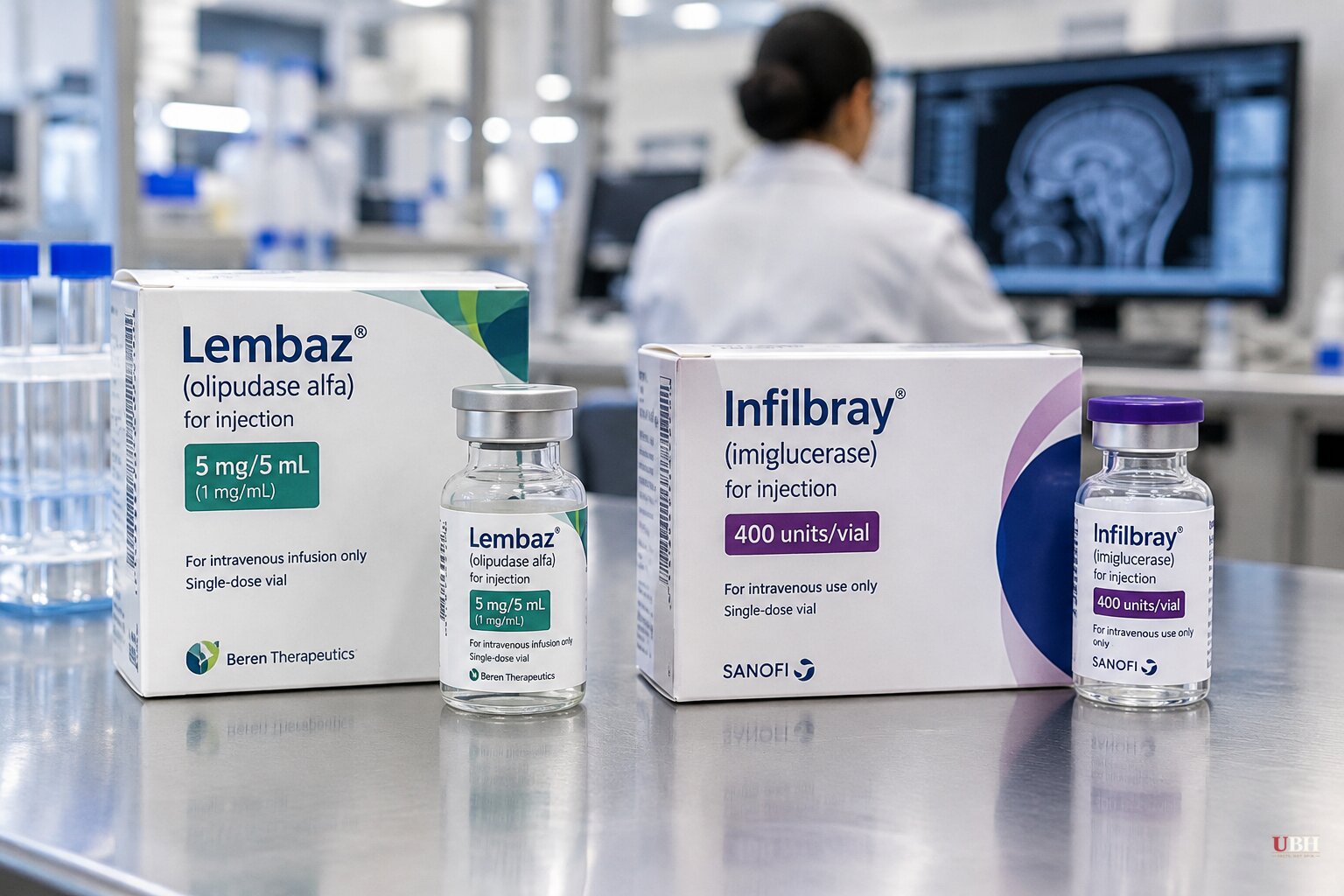
The FDA approved two drugs this week for rare genetic diseases that attack the brain. Both are firsts of a kind. Both come with serious safety warnings.
Lembaz: survival data in a fatal childhood disease
On Tuesday, Nov. 17, the agency approved adrabetadex, branded Lembaz, from Beren Therapeutics. It is for infantile-onset Niemann-Pick disease type C (NPC), meaning neurological symptoms that began before age 6. The label covers adults and children weighing at least 15 pounds (7 kilograms).
NPC is an inherited disorder in which cholesterol and other fats build up inside cells. The damage is worst in the brain. Patients progressively lose motor control, coordination and the ability to swallow.
The disease affects roughly one in 150,000 people. About half of Americans with NPC, roughly 475 children, have the infantile-onset form, according to Beren.
The FDA's approval rests on a survival analysis of 36 treated patients across three clinical studies and an expanded access program. Treatment was associated with a 55% reduction in the risk of death versus matched external controls. Median overall survival was 8.5 years for treated patients and 4.9 years for controls. The benefit held whether or not patients also took miglustat, which is used off-label for NPC.
The comparison group was external, not a randomized arm. Beren's announcement did not report confidence intervals or follow-up length.
Two other NPC drugs are already on the market: arimoclomol (Miplyffa) and levacetylleucine (Aqneursa). Neither has been associated with a reduced risk of death. Both have age or weight limits that restrict access for some children.
"Because neurological function that is lost cannot be regained, early diagnosis and prompt treatment are critical," said Elizabeth Berry-Kravis of Rush University Medical Center, a study investigator, in Beren's press release. She said the drug "gives children more time to be children."
The cost of the benefit
Lembaz is a cyclodextrin formulation that does not readily cross the blood-brain barrier. It has to be delivered intrathecally, directly into the spinal fluid.
The label carries a boxed warning for hearing impairment, including permanent hearing loss. It has occurred in some patients whose hearing was normal before treatment. It is not known whether continuing or reducing doses affects further loss.
Patients need baseline hearing tests, including pure tone audiometry, speech recognition testing and tympanometry. Doses are not increased if hearing loss exceeds set limits.
The label also warns of ataxia and fatigue, typically in the days after dosing. Some cases required hospitalization. The most common side effects, reported by 25% or more of trial patients, were hearing impairment, ataxia, fatigue, vomiting, back pain, headache, fever, diarrhea, nausea and cough.
A decade of setbacks and a delayed deadline
Preclinical data in 2009 showed cyclodextrin could delay NPC onset and extend survival in mice. A phase 2/3 trial began in 2015. The program passed through several owners and failed in 2018 under Mallinckrodt.
Beren acquired the asset in 2021 in Mallinckrodt's bankruptcy sale and filed for FDA approval in late 2025. The agency pushed its original Aug. 17 decision target back three months after Beren answered an FDA request for more data, which the agency classified as a major amendment.
Beren received the approval through its subsidiary Mandos, LLC, along with a Priority Review Voucher. The company is launching a Caregiver Ambassador Program and LEMBAZ Family Support.
Infilbray: first drug for type 3 Gaucher's brain symptoms
On Wednesday, Nov. 18, the FDA approved Sanofi's oral drug venglustat, branded Infilbray, for type 3 Gaucher disease. That is the neurological variant of the disorder. It is the first approved treatment for neurological symptoms of this type.
Sanofi already sells Cerdelga for type 1 and Cerezyme for symptoms outside the brain in types 1 and 3. Infilbray can cross into the brain. It lowers production of the fatty substances, while Cerezyme supplies the missing enzyme.
The approval covers adults and children weighing at least 15 kilograms, about 33 pounds. It was based on a late-stage study of 43 patients aged 12 and older whose symptoms outside the brain had been stabilized with enzyme replacement therapy.
Patients took Infilbray once daily for 52 weeks. They improved on a combined measure of muscle control, coordination and thinking ability compared with those getting enzyme replacement every two weeks.
The FDA said the most frequent side effects were digestive problems and mood changes. It warned of serious psychiatric risks, including suicidal thoughts and behavior. Animal studies flagged possible vision clouding in younger patients and adverse effects on fetal development.
Reuters reported that Sanofi, under new CEO Belén Garijo, is trying to reduce its dependence on the asthma drug Dupixent, which loses key patent exclusivity by the early 2030s.
A busy stretch for rare-disease approvals
The FDA's own list of select recent rare-disease approvals shows at least 17 entries dated between July 7 and Nov. 18, 2026. That includes Zanvastro for Alexander disease on Sept. 3 and Emcitate for MCT8 deficiency on Sept. 28.
What comes next is specific. Sanofi says Infilbray is under regulatory review for type 3 Gaucher disease in the European Union and Japan. Lembaz families now face a treatment that requires spinal administration and a strict hearing-monitoring schedule.
Sources used for this briefing
7 links from 7 independent newsrooms (syndicated copies of the same report count once)
These are the sources it draws on, linked so you can verify.


