
Original briefings. Zero spin.
Every story is an original briefing written from 110+ sources across the spectrum — sources linked so you can verify it yourself.
 health
Notable (6/10)
Event date: September 7, 2026
health
Notable (6/10)
Event date: September 7, 2026
FDA Approves AstraZeneca's Etcamah for Breast Cancer After Its Own Advisers Voted Against It
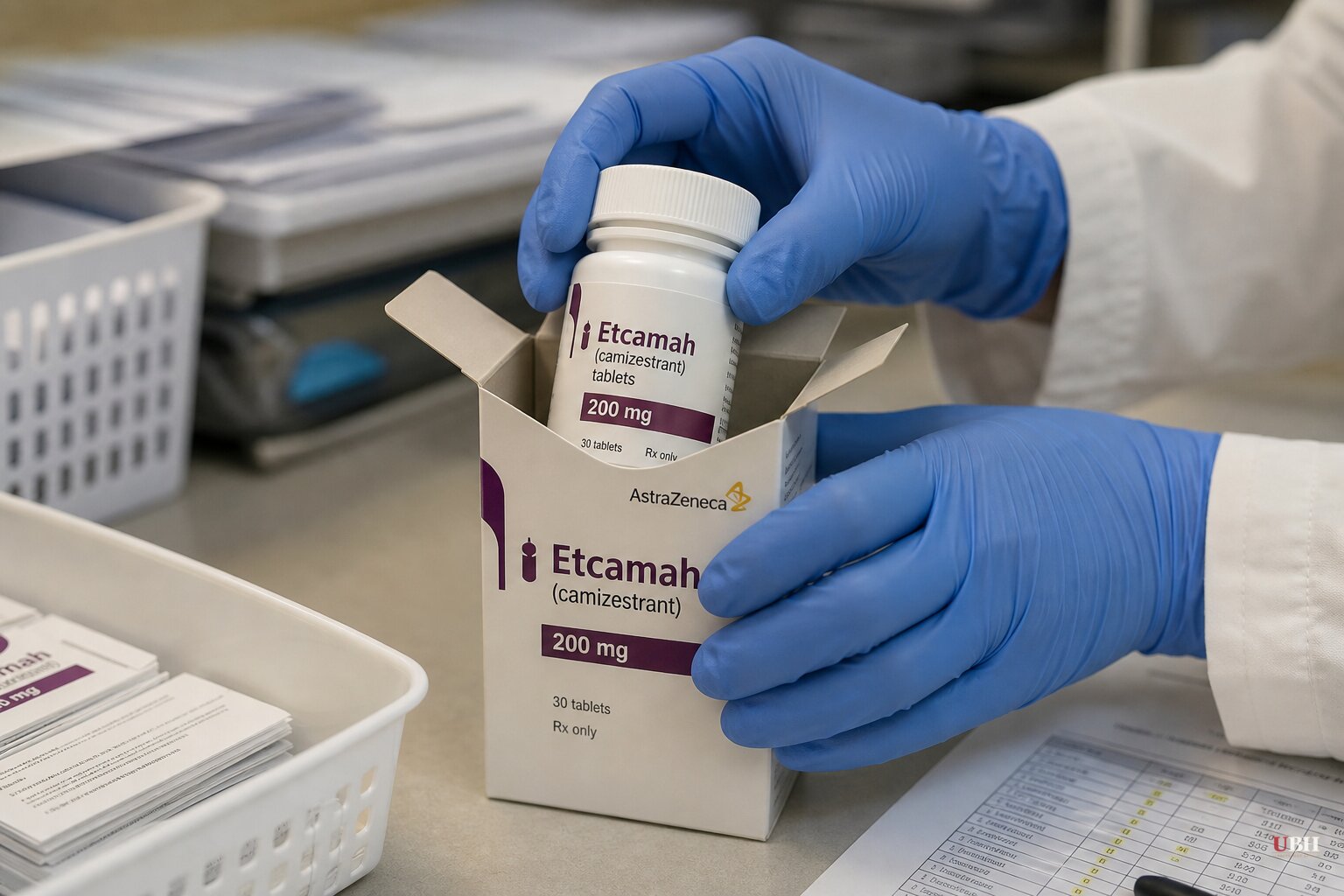
The FDA approved a new breast cancer drug on Friday, September 4, that its own expert panel had already told it not to approve.
The drug is camizestrant, sold under the brand name Etcamah, made by AstraZeneca. It's an oral pill for adults with hormone receptor-positive, HER2-negative advanced breast cancer whose tumors develop an ESR1 gene mutation while on first-line treatment with an aromatase inhibitor and a CDK4/6 inhibitor. Patients need an FDA-authorized blood test, Guardant Health's Guardant360 CDx, to confirm the mutation before starting it.
What the Trial Actually Showed
The approval rests on the SERENA-6 trial. Patients whose tumors developed the ESR1 mutation, detected through circulating tumor DNA in a blood draw rather than a scan, were switched from the aromatase inhibitor to camizestrant while staying on their CDK4/6 inhibitor.
Median progression-free survival jumped from 9.2 months on the old regimen to 16 months on the new one, a statistically significant result according to MedPage Today. AstraZeneca says that translates to a 56% reduction in the risk of disease progression or death, according to Pharmaphorum.
According to the FDA's own statement, this is not proof that patients live longer. Overall survival data were immature at the time of the agency's review, and the FDA said plainly it "is not yet confirmed whether intervening at this point, rather than at the time of confirmed disease progression, translates into a clinically meaningful benefit."
The Panel Said No
In a vote earlier this year, the FDA's Oncologic Drugs Advisory Committee rejected the application 6 to 3, according to oncozine. Most of the panelists concluded the trial hadn't clearly established that switching therapy based on a blood test, before a scan showed the cancer was actually getting worse, produced a meaningful benefit for patients.
Progression-free survival is a surrogate endpoint. It measures whether cancer growth is delayed, not whether someone lives longer or lives better. A panel of oncologists looked at the same data AstraZeneca presented and said it wasn't enough. According to Pharmaphorum, the FDA responded by extending its review by three months rather than accepting the committee's no.
The FDA's counterargument, laid out by Acting Commissioner Kyle Diamantas in the agency's own release, is that women with metastatic breast cancer "face an uphill battle as their tumors continuously evolve to escape treatment" and deserve "every weapon in our arsenal." Angelo de Claro, who heads the FDA's Oncology Center of Excellence, called it the first cancer therapy approved based on a resistance mutation detected in blood before a scan shows progression, while acknowledging "additional evidence is needed to confirm clinical benefit."
The FDA approved a drug its own scientific advisors said wasn't proven to help, and the FDA required AstraZeneca to run confirmatory trials to prove it does. That's what accelerated approval is designed to do, but it remains the agency overruling the people it pays to give it independent advice.
The Money and the Side Effects
AstraZeneca says Etcamah could eventually bring in more than $5 billion a year. Wall Street isn't buying that number. Analysts surveyed by Bloomberg, cited by both the LA Times and Briefs.co, peg 2032 sales at closer to $2.3 billion, less than half of AstraZeneca's own projection. The company, under CEO Pascal Soriot, is counting on Etcamah as part of a 20-drug pipeline it hopes pushes total sales past $80 billion by decade's end.
The drug carries a boxed warning for arrhythmia from QTc interval prolongation, a risk that compounds when combined with the CDK4/6 inhibitor ribociclib, according to MedPage Today. Additional warnings cover bradycardia and harm to a developing fetus. More than 20% of patients on the combination experienced visual disturbances, fatigue, and drops in neutrophils, white blood cells, hemoglobin, lymphocytes, or platelets.
Investigator Kevin Kalinsky of Emory University's Winship Cancer Institute, quoted in an AstraZeneca press release, said the approval lets doctors "promptly intervene and change therapeutic strategy at an earlier opportunity ahead of disease progression, rather than waiting until the cancer becomes harder to treat."
The FDA bet that earlier intervention based on a blood test will translate to better outcomes. Whether it pays off in actual survival, not just a delayed scan result, depends on confirmatory trials the agency itself says haven't yet delivered an answer. Etcamah has already cleared regulators in Europe, Canada, and Japan, according to Pharmaphorum, meaning the U.S. market decision now determines how many American patients get switched onto it before that answer arrives.
Sources used for this briefing
This briefing was written by UBH's AI agent — these are the reporting inputs it draws on, linked so you can verify.


