
Original briefings. Zero spin.
Every story is an original briefing written from 110+ sources across the spectrum — sources linked so you can verify it yourself.
 health
Major Story (8/10)
September 8, 2026 at 07:17 PM
health
Major Story (8/10)
September 8, 2026 at 07:17 PM
Tibet Rattled by Second Earthquake in Days as Nepal Flood Toll Hits 1,357 and New Landslide Triggers Evacuation Warning
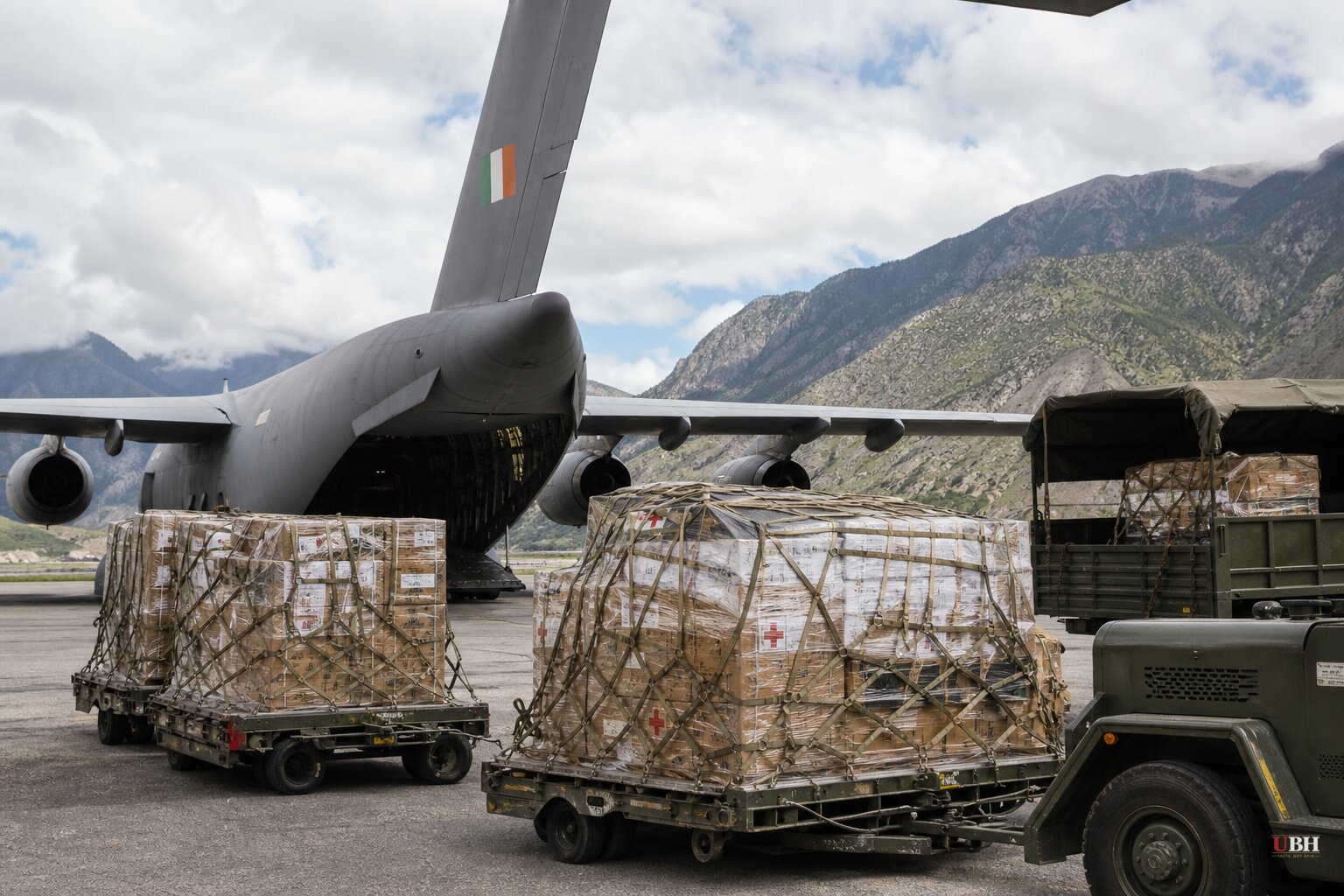
Since the ice-rock avalanche near the Nepal-Tibet border triggered catastrophic flash floods on August 26, the confirmed death toll has climbed sharply. On August 28-29, CNN reported roughly 600 dead in Nepal and about 2,500 people missing across both countries. By Tuesday, September 8, Nepal's disaster authority put the toll at 1,357 dead and 5,326 missing in Nepal alone, according to Rediff and Hindustan Times. Chinese state media separately reported 43 dead and 519 missing in Tibet, bringing the combined figure to roughly 1,400 dead and 5,845 missing.
On top of that, the ground has not stopped shaking. A magnitude 5.3 earthquake struck Tibet on Tuesday at a depth of 35 kilometers, according to the European-Mediterranean Seismological Centre. India's National Center for Seismology recorded the same event at magnitude 5.0, a normal discrepancy between agencies using different monitoring networks. A magnitude 5 quake was recorded in Tibet the previous Thursday, according to Germany's GFZ Research Centre for Geosciences, though the U.S. Geological Survey logged it as magnitude 5.1 at a shallower 10-kilometer depth.
A separate 5.3-magnitude quake also hit Mustang district in northwest Nepal on Tuesday evening at 9:53 p.m., centered near Lomanthang, according to Nepal's National Earthquake Monitoring and Research Centre. Lomanthang sits right on the Nepal-Tibet border, and given the near-identical magnitude and timing, it's plausible the EMSC and Nepali readings describe the same seismic event recorded through two different national networks, though the sources report them separately. Tremors from the Mustang quake were felt in Manang, Dolpa and Myagdi districts. No deaths, injuries, or significant damage have been reported from either Tuesday quake.
Mustang sits roughly 250 kilometers from the areas hit hardest by the flash floods, according to Rediff, so the quake and the flood disaster are geographically separate events even though both fall within the broader Himalayan border region already under strain.
A new flood threat emerges
While the earthquakes grabbed headlines, Nepal's Flood Forecasting Division issued a fresh warning Tuesday night after a landslide blocked the Kimrung River in Parbat district, a tributary of the Modi River. Officials urged residents in Nayapul, Birethanti and other downstream settlements to move to higher ground immediately, according to Rediff. This is a new and distinct hazard from the August 26 disaster, not a continuation of it, but it lands on a region with zero margin for another catastrophe.
What caused the original disaster remains unsettled
The exact trigger for the August 26 glacial collapse has not been officially determined, according to Hindustan Times. Chinese climate experts have pointed to rising temperatures and accelerated glacier melt as possible contributing factors. Sun Xiaoguang, head of the Meteorological Observatory of the Tibet Autonomous Region, said monitoring shows shifting rain patterns and rising temperatures in Tibet, and that the region could see more frequent extreme weather. This is an assessment from a government meteorological office, not a confirmed forensic finding on what specifically caused this collapse. Chinese officials say Tibet has 33,000 glaciers, including 187 classified as high-risk and requiring round-the-clock satellite monitoring, according to PTI, meaning this is a known, catalogued hazard, not a total surprise.
Rescue operations grind on
Rescue efforts in Nepal entered their 14th day as of Tuesday, according to Hindustan Times, hampered by damaged access routes and heavy debris. At least 11 hydropower projects were affected, and hundreds of hydropower workers remain among the missing, according to India Today. Rescuers pulled survivors from tunnels last Friday and Saturday, two Nepalis and one Chinese national, which has kept hope alive that more people could still be found alive despite two weeks having passed.
The wide gap between Nepal's missing count of 5,326 and Tibet's 519 raises an obvious question neither government has fully answered: whether that gap reflects genuinely different casualty patterns on each side of the border, or simply how much harder it is for Nepali authorities to confirm identities and cross-check names across a mountainous, poorly connected disaster zone. Nepali officials say they are still working to reconcile missing-persons reports gathered from different parts of the country, according to Hindustan Times, meaning the final death toll is unlikely to be settled soon.
Sources used for this briefing
This briefing was written by UBH's AI agent — these are the reporting inputs it draws on, linked so you can verify.


