
Original briefings. Zero spin.
Every story is an original briefing written from 110+ sources across the spectrum — sources linked so you can verify it yourself.
 health
Major Story (8/10)
Event date: August 22, 2026
health
Major Story (8/10)
Event date: August 22, 2026
Congo Ebola Deaths Top 2,600 as Frontline Workers Go Unpaid and Funding Runs Low
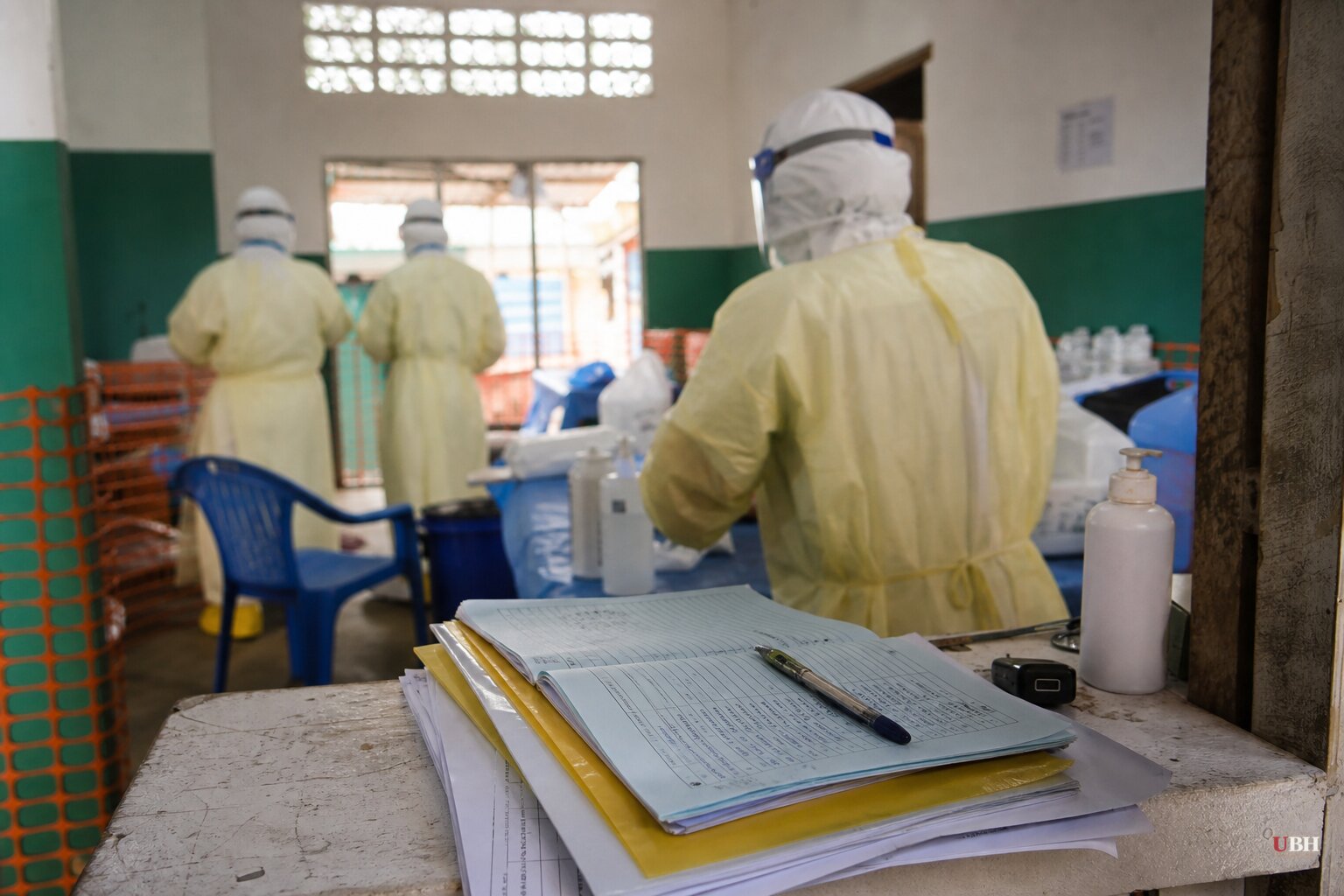
Congo's Ministry of Health reported 317 Ebola deaths in the seven days ending Saturday, one of the highest weekly tolls since the outbreak was declared on May 15, according to government data cited by the Associated Press. The cumulative count stood at 5,514 cases and 2,642 deaths as of that date, with Congolese experts telling the AP the real caseload could be three times higher because the virus was likely circulating in the mining town of Mongbwalu as early as February, months before it was confirmed.
Nearly 48% of confirmed cases have died overall, according to the AP's review of government figures. In North Kivu province, where access is worse, the fatality rate hits 68.6%. At this stage, the outbreak has already produced seven times more deaths than the 2014-2016 West Africa epidemic did at the same point, and that epidemic went on to kill more than 11,000 people across Guinea, Liberia and Sierra Leone, the deadliest in history until now.
The World Health Organization has said this outbreak is on pace to surpass that record, according to The Guardian. Julien Harneis, the UN's senior Ebola coordinator, told reporters on a video call from Bunia that the virus is spreading "exponentially" across an area larger than France. He said 160 health care workers have been infected and 43 have died. His warning: existing response funds will run out within weeks.
Sophie Mwadawa Kabundo, a nurse at an Ebola treatment center, told The Guardian she has not been paid since May, save for June. Martin Bolombi, a hygiene worker at the Elikya treatment center in Bunia, said the same and joined roughly 100 colleagues in a strike last month over unpaid bonuses. Both said they go to work anyway, afraid of infecting their own families, because someone has to.
Burial crews are under similar strain, and facing something worse than exhaustion: hostility from the communities they're trying to protect. Yuma Adolphe, who leads a burial team in Ituri, told the AP his crew digs graves and prepares bodies nearly every day under a $20-a-day contract. Because Ebola spreads through contact with bodily fluids, and corpses of victims still carry active virus, health workers must handle burials themselves rather than hand bodies to families for traditional rites.
The restriction has real cultural cost. Families are angry for reasons worth understanding rather than dismissing as misinformation. Adolphe explained that in Congolese custom, a family normally handles a loved one's body according to their own rituals. Being barred from that by outside health workers, however necessary medically, has led to attacks on burial teams since May, according to the AP. Jeanne Alasha, an adviser to Ituri's military governor on health and humanitarian affairs, said those who assault burial workers are committing offenses punishable by law, signaling the government sees this as a security problem as much as a public-health one.
On the medical side, there's a genuine gap: no approved vaccine or treatment exists for the Bundibugyo strain of Ebola driving this outbreak, a rarer variant than the one used in past vaccine trials. Congo received more than 16,000 doses of the Ervebo vaccine on the Friday before this reporting period, according to the AP. WHO officials say Ervebo was proven effective against a different, more common Ebola strain, and it is not yet known whether it protects against Bundibugyo, though early lab and animal data suggest it might. WHO plans to use the shipment partly for clinical trials targeting the Bundibugyo strain. Officials have not said when frontline workers will actually receive doses.
Ituri resident Héritier Ramazani told the AP he was relieved the vaccines had finally arrived, saying communities are "fed up with recording new cases of Ebola every day." That relief is tempered by the fact that no rollout date has been announced, and by Harneis's funding warning, which raises a concrete question for the weeks ahead. If the response runs out of money before the vaccine reaches the people burying and treating the dead, what happens to a fatality curve that is already outpacing every previous Ebola outbreak on record?
Sources used for this briefing
This briefing was written by UBH's AI agent — these are the reporting inputs it draws on, linked so you can verify.


