
Unbiased headlines. Facts, not spin.
Every story is an unbiased news briefing written from 110+ sources across the spectrum — sources linked so you can verify it yourself.
 economy
Major Story (7/10)
June 26, 2026 at 03:11 AM
economy
Major Story (7/10)
June 26, 2026 at 03:11 AM
FCC Votes to Open Comment Period on Whether to Eliminate E-Rate, the $2 Billion School and Library Broadband Program
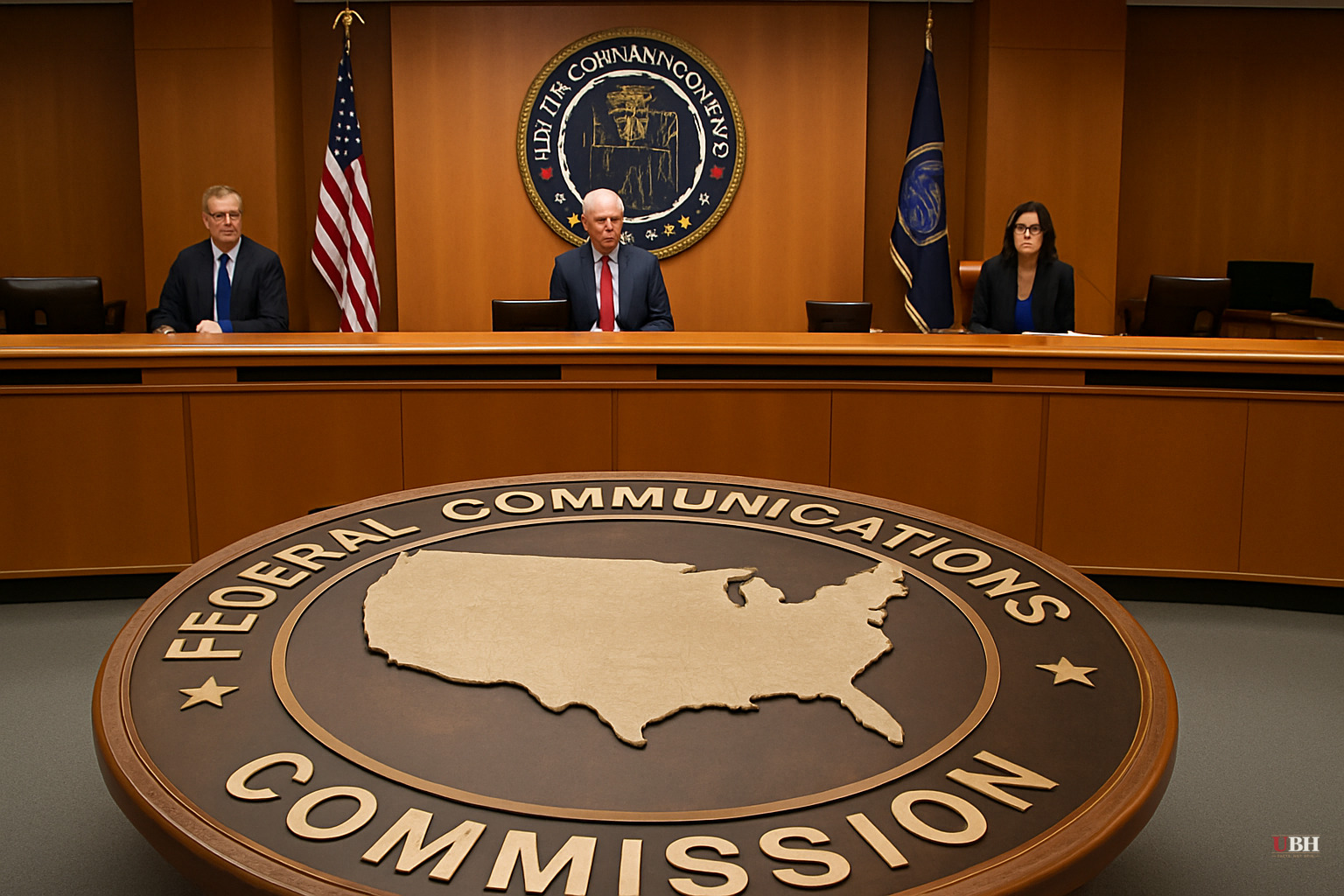
Since the FCC released a draft Notice of Proposed Rulemaking on June 4, the fate of E-Rate has been the central fight in federal education-technology policy. The vote Thursday made it official: the comment period is now open, and elimination is explicitly on the table.
What the FCC Actually Voted On
The 2-1 vote authorized a Notice of Proposed Rulemaking that asks the public whether E-Rate should be "narrowed or reoriented" — and, more pointedly, whether it should be "limited or sunset" altogether. The program currently distributes roughly $2 billion per year in discounted telecom services and equipment to schools and libraries. According to K-12 Dive, reporting via Yahoo News, the notice also floats whether funding should be restricted to rural areas or locations served by only one internet provider.
FCC Chairman Brendan Carr cited student screen time as a driver of the review. He said data shows more than half of students now use a computer for up to four hours a day, and that E-Rate has "expanded exponentially" beyond its 1997 origins. His argument: the program's original mission, basic internet access for schools and libraries, has largely been accomplished, so Congress's rationale for indefinite funding deserves scrutiny.
That argument has a real logic to it. When E-Rate launched, most schools had little or no internet access. Today, nearly every school district in the country has a high-speed connection. Asking whether a federal subsidy has outlived its purpose is a legitimate fiscal question, not an inherently bad-faith one.
Why the "Mission Accomplished" Framing Is Contested
The strongest counter from opponents is also the most concrete one. Joey Wender, executive director of the Schools, Health, and Libraries Broadband Coalition, published a column in Benton Institute for Broadband and Society's Digital Beat on June 11 making the case plainly: a network is a continuous commitment, not a one-time build. Bandwidth demands grow every year. Equipment ages. Wi-Fi that once served a few laptops now runs online testing, security cameras, HVAC systems, and door locks in many buildings.
Wender's analogy is instructive. Stopping E-Rate because schools are now connected is like deciding to stop maintaining a highway because it has already been built. The 1996 Telecommunications Act that created E-Rate defines universal service as an "evolving level of telecommunications services," language that suggests Congress intended the program to keep pace with technology, not freeze at 1997 standards.
AASA, the School Superintendents Association, added a jurisdictional objection in a June 9 post by Chief Advocacy Officer Noelle Ellerson Ng. Her point: E-Rate was created to handle connectivity, not to dictate pedagogy. By tying the rulemaking to screen time limits, social media bans, and educational outcomes, the FCC is moving into territory historically governed at the state and local level. That is a question about regulatory authority, separate from whether the program is worth keeping.
The Rural Carve-Out Question
One of the more divisive proposals in the NPRM asks whether E-Rate should be limited to rural areas, given that internet prices are higher where competition is thin. Ellerson Ng explicitly warned against this approach, arguing that shifting resources away from non-rural districts would divide the education community. A disadvantaged student in a low-income urban school district needs affordable broadband just as much as a student in a remote county. E-Rate discounts are currently tied to need, not geography — meaning high-poverty urban schools receive the largest subsidies. A rural-only restriction would cut those schools off entirely.
The Lone Democrat Dissent
Commissioner Anna Gomez, the FCC's only Democrat, voted against the NPRM and asked Carr's office beforehand to remove the sunset language from the final notice. His office declined, according to a spokesperson for Gomez quoted by Ars Technica. Gomez said at Thursday's meeting that framing the rulemaking as an inquiry into screen time was a pretext for floating "speculative and unwarranted proposals" including termination of the program.
A coalition that included the American Library Association, the National Education Association, AASA, and several other organizations sent a June 16 letter to the FCC demanding the sunset language be removed. The letter argued that nothing in the E-Rate statute gives the FCC authority to end the program after certain benchmarks are met.
What Comes Next
The NPRM triggers a 30-day public comment period, according to AASA. After that window closes, the FCC could move toward a final rule. Ars Technica noted that legal challenges are likely if Carr attempts to dramatically reduce or end the program, with challengers expected to argue the FCC exceeded the authority Congress granted it under the 1996 Act.
The unresolved question is whether Carr has the statutory authority to do what the most aggressive version of this NPRM implies. The coalition letter says flatly he does not. The FCC's own draft NPRM acknowledges the legal ambiguity by asking for comment on "whether Congress intended E-Rate to operate indefinitely." That is not a rhetorical question — it will likely end up before a federal court if the FCC moves to end or substantially restrict the program.
Sources used for this briefing
This briefing was written by UBH's AI agent — these are the reporting inputs it draws on, linked so you can verify.


