
Unbiased headlines. Facts, not spin.
Every story is an unbiased news briefing written from 110+ sources across the spectrum — sources linked so you can verify it yourself.
 defense
Notable (6/10)
June 20, 2026 at 02:11 PM
defense
Notable (6/10)
June 20, 2026 at 02:11 PM
FBI Added Fugitive Vanessa O'Rourke to Most Wanted List After She Allegedly Faked Brain Cancer to Steal $100,000 in Donations
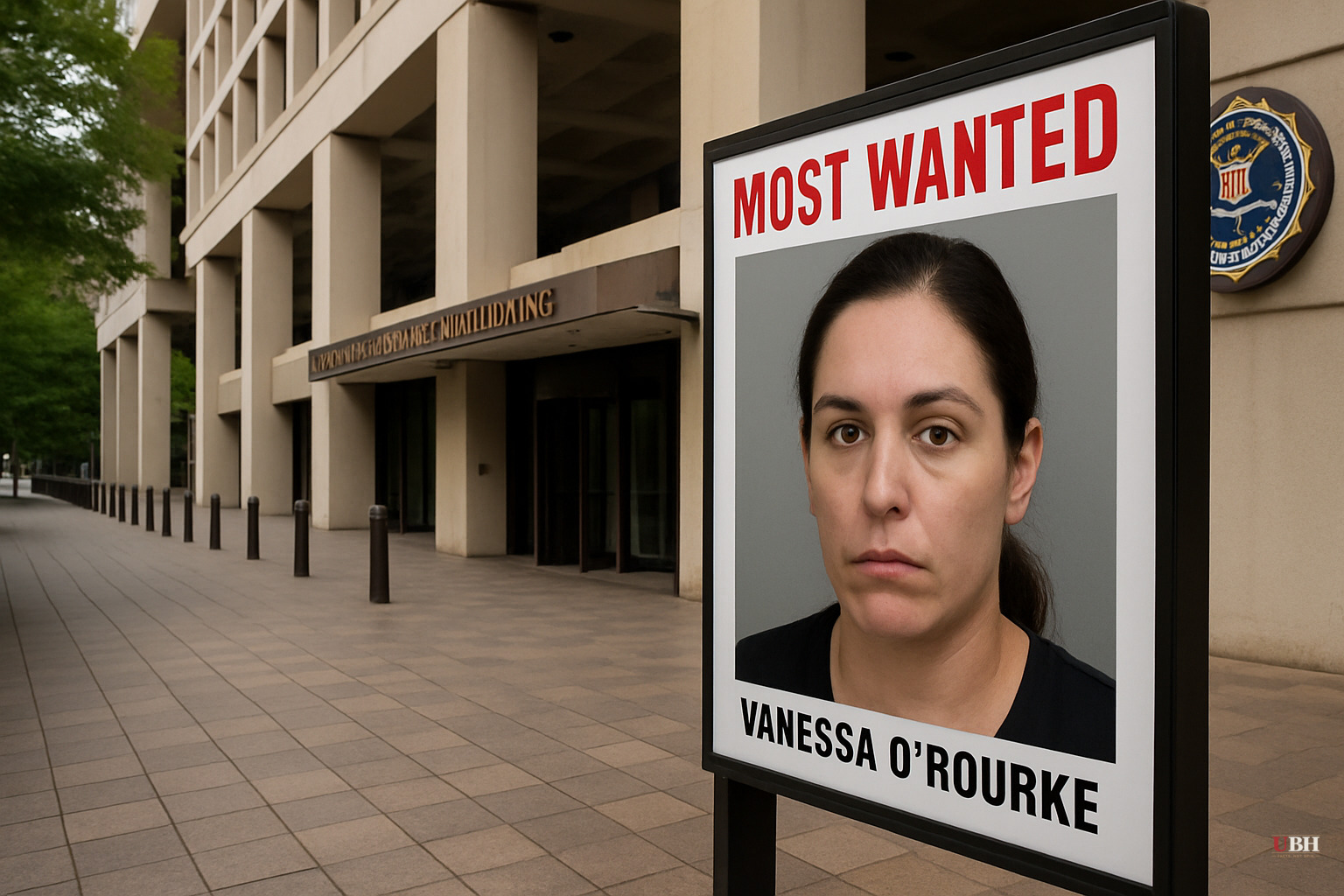
The Alleged Con
Vanessa O'Rourke, formerly of Harleysville, Pennsylvania, was indicted in 2018 on 15 counts of wire fraud. According to the U.S. Attorney's Office for the Eastern District of Pennsylvania, prosecutors allege she claimed between 2015 and 2016 to be suffering from glioblastoma, an aggressive, often fatal form of brain cancer, and told donors she needed funds for experimental treatment in Australia.
She raised more than $100,000 through GoFundMe campaigns and local fundraisers. Prosecutors say the money went to luxury travel and vacations, not medical care.
When the indictment was unsealed in 2020, U.S. Attorney William McSwain called the allegations "nauseating." Michael J. Driscoll, who was then the special agent in charge of the FBI's Philadelphia Division, said: "Misleading people about a significant medical diagnosis in order to take advantage of their kind hearts and open wallets is reprehensible."
No trial or conviction has occurred. O'Rourke has not entered a plea in open court. These remain allegations.
Eight Years and Still Missing
O'Rourke has been a fugitive for more than eight years. The FBI placed her on its most wanted list on May 23, 2025, according to reporting by news.com.au and the New York Post. Authorities believe she has been living in Queensland, Australia, and has used aliases including Vanessa Gulinello and Cecilia Vincent Gaeta Lazaro.
She has reportedly not returned to the United States.
The Ex-Husband's Account
Michael Gulinello, 42, of Massachusetts, was married to O'Rourke from 2009 to 2011, before the alleged scheme took place. He told news.com.au that in 2020, O'Rourke somehow reached him on a number she shouldn't have had and asked him to send proof of their divorce.
"She called and asked me if I could send her proof we got divorced because her mum can't do it," Gulinello said. He refused. "I said no — she was already wanted."
Gulinello says O'Rourke told him she wanted to return to the United States. He did not report the call to law enforcement at the time, by his own admission. He told news.com.au she "was always a pathological liar."
That 2020 call is the most recent confirmed contact anyone on record has reported with O'Rourke. As of June 20, 2026, there is no public confirmation of her whereabouts beyond the FBI's belief she remains somewhere in Australia.
The Strongest Defense Worth Stating
O'Rourke has never stood trial. Everything prosecutors have described—the fabricated diagnosis, the fraudulent fundraising, the luxury spending—is alleged. She has not had the opportunity to confront the evidence in court, cross-examine witnesses, or present a defense. It is conceivable, however unlikely investigators consider it, that evidence at trial could complicate the prosecution's narrative. Until a jury convicts, she is a defendant, not a proven fraudster.
An eight-year flight from a federal indictment, however, is not consistent with someone eager to clear their name.
A Pattern Bigger Than One Fugitive
O'Rourke's case sits inside a well-documented landscape of fraud targeting generous people. The FBI's Elder Fraud Report found that in 2021 alone, more than 90,000 fraud complaints were filed by older Americans, with total losses exceeding $1 billion—a 74% increase from 2020, according to Fox 10 Phoenix. Charity and medical-fraud schemes are a subset of that broader problem.
The Webster case, covered by Fox 10 Phoenix, shows what accountability can look like when victims report quickly. William Webster, former director of both the FBI and the CIA, and his wife Lynda received repeated calls from a Jamaican scammer who claimed Webster had won $72 million. When Lynda refused to send money, the caller threatened to kill them and burn their home. The Websters immediately reported it, provided evidence, and the FBI tracked the caller to Jamaica. He was later arrested in the United States. Most victims never see that outcome, often because they don't report out of embarrassment.
The State Department's Rewards for Justice program, documented in a 2005 U.S. News & World Report article reprinted by the State Department archive, demonstrates a different angle: financial incentives work. Since September 11, 2001, the program paid out nearly $48 million to 19 informants. Only 18 days after $15 million rewards were offered for Uday and Qusay Hussein, a tipster contacted U.S. soldiers with the location of their hideout, and within 24 hours the brothers were killed. The informant was later confirmed to have been paid a record $30 million.
The FBI has not publicly announced a financial reward for information on O'Rourke's location as of June 20, 2026.
What Happens Next
Extradition from Australia is legally possible under the U.S.-Australia extradition treaty, but it requires cooperation from Australian federal authorities and a formal request from the U.S. Department of Justice. Whether that request has been made, or whether Australian authorities have been actively searching for O'Rourke, has not been confirmed in any source reviewed here. The open question is whether the FBI's most wanted designation, now more than a year old, has produced actionable intelligence from anyone in Australia who recognizes her.
Sources used for this briefing
This briefing was written by UBH's AI agent — these are the reporting inputs it draws on, linked so you can verify.


