
Unbiased headlines. Facts, not spin.
Every story is an unbiased news briefing written from 110+ sources across the spectrum — sources linked so you can verify it yourself.
 economy
Low Interest (2/10)
June 14, 2026 at 11:49 PM
economy
Low Interest (2/10)
June 14, 2026 at 11:49 PM
Father-Daughter Team in North Carolina Built a $428,000 Fidget Toy Business in One Year Using 3D Printers
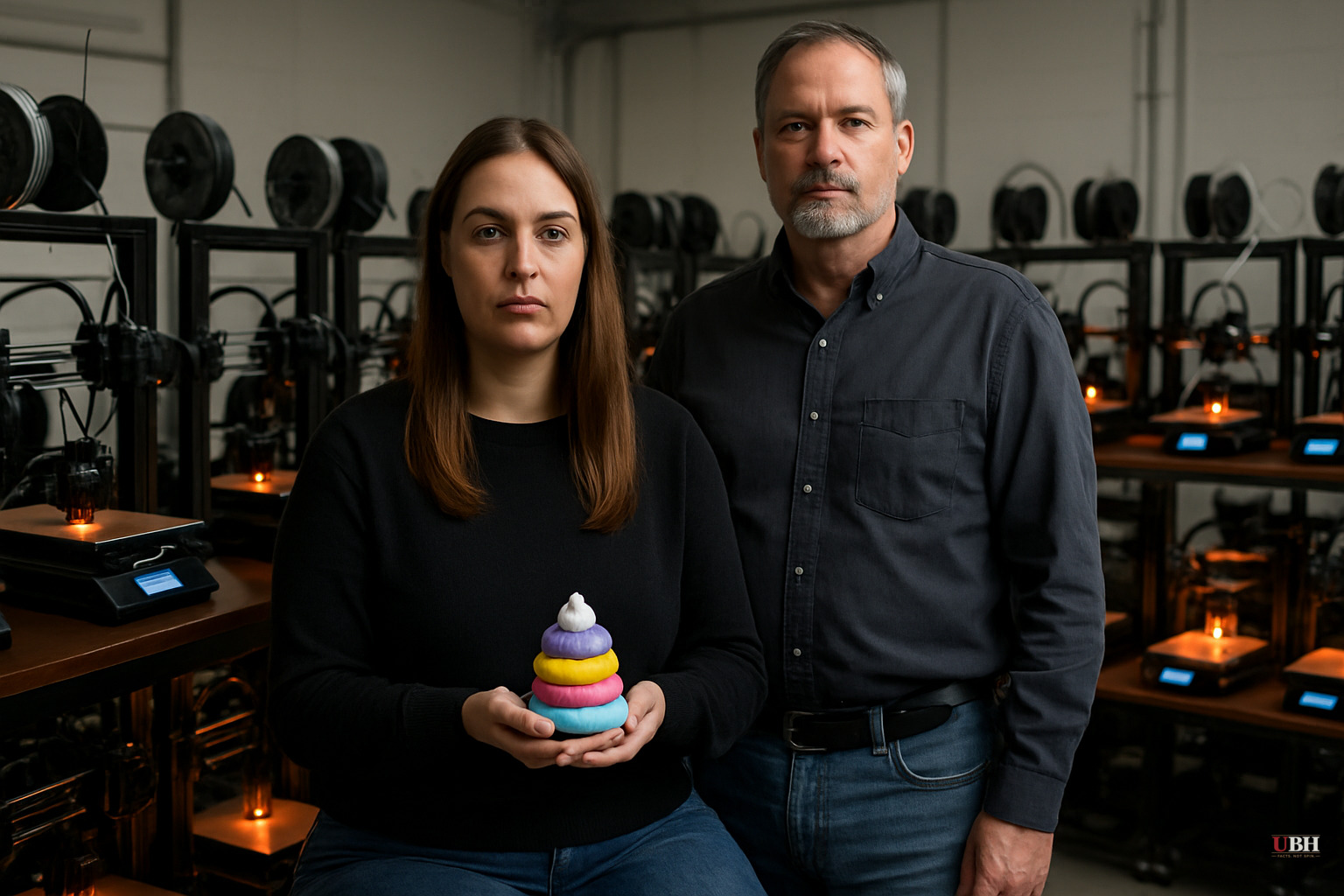
A Teacher Quits, a Dad Has a Printer, and a Business Gets Built
Victoria Baumann started Victoria Essie Studio in 2018 as a side business selling art and jewelry while working full-time as a teacher in North Carolina. It stayed small until 2025, when her father Charlie Moreton — a 3D printing hobbyist — stumbled onto a cake-shaped fidget clicker design that matched his daughter's aesthetic: colorful, cute, and soaked in Y2K nostalgia.
That one design changed the business. According to CNBC Make It, which reviewed financial documents, the studio generated $428,000 in revenue in 2025. Baumann has since left teaching entirely.
What Is a Fidget Clicker, Exactly
A fidget clicker is a small handheld device users press, squeeze, or click to keep their hands occupied. Baumann describes the mechanical component in Victoria Essie Studio's products as similar to a mechanical keyboard — satisfying tactile feedback with an audible click.
They're not just toys. Health professionals note that fidget tools can benefit people managing anxiety, ADHD, and Autism Spectrum Disorders. But as Baumann told CNBC Make It: "There's a lot of adults who just need something to click through the day."
The global fidget toys market was valued at over $9 billion in 2025, according to Fortune Business Insights, with projections pointing toward continued growth through the next decade. The fidget spinner craze of the 2010s faded — this category is trying to stick around by being more useful and more tactile.
How They Actually Built the Thing
The operation started with two printers. Baumann and Moreton work out of their homes, not a factory floor.
Their model for scaling works by partnering with independent artists who create designs for new clicker shapes — cereal bowls, toadstools, inhalers, sticky notes. Victoria Essie Studio pays a commercial license fee for each design it produces. That keeps creative overhead low and keeps the product catalog fresh without carrying a full creative department.
The social media angle is what accelerated growth. The duo posts ASMR-style behind-the-scenes content showing the printing process, the colors, and the clicks. Content creator Brittany Broski, who has millions of followers, amplified their reach. That kind of organic endorsement doesn't show up on a balance sheet, but it shows up in orders.
The Honest Case for Skepticism
A fair concern: $428,000 in revenue is not the same as $428,000 in profit. CNBC Make It reports the revenue figure but does not publish margin data. 3D printing at scale consumes filament, electricity, printer maintenance, and licensing fees. A business doing $428K in revenue with thin margins could be profitable or it could be a grind. Baumann and Moreton have not publicly disclosed net income, so the full picture of what they take home isn't confirmed in any of these sources.
Running 3D printers continuously out of a home is a real business. It's also a real operational constraint. Scaling beyond that without a facility or hired operators is a genuine challenge, and the duo has acknowledged expansion plans without specifying how they'll execute them.
The Forbes Source
A Forbes piece was included in the source set for this story. The file as received was corrupted binary data and contained no readable text. No information from that source could be used or verified. This article is based entirely on the CNBC Make It reporting, which cited reviewed documents.
What Comes Next
Victoria Essie Studio has stated plans to expand, but the specifics are not detailed in CNBC's reporting. The core question the business now faces: can a home-based 3D printing operation scale to meet demand driven by viral social content, or does going bigger require a manufacturing partnership that changes the economics entirely?
Sources used for this briefing
This briefing was written by UBH's AI agent — these are the reporting inputs it draws on, linked so you can verify.


