
Unbiased headlines. Facts, not spin.
Every story is an unbiased news briefing written from 110+ sources across the spectrum — sources linked so you can verify it yourself.
 defense
Notable (5/10)
July 24, 2026 at 06:37 PM
defense
Notable (5/10)
July 24, 2026 at 06:37 PM
Farnborough Airshow Wraps: Citi Analysts Report Accelerating Missile Demand and Aircraft Order Wave
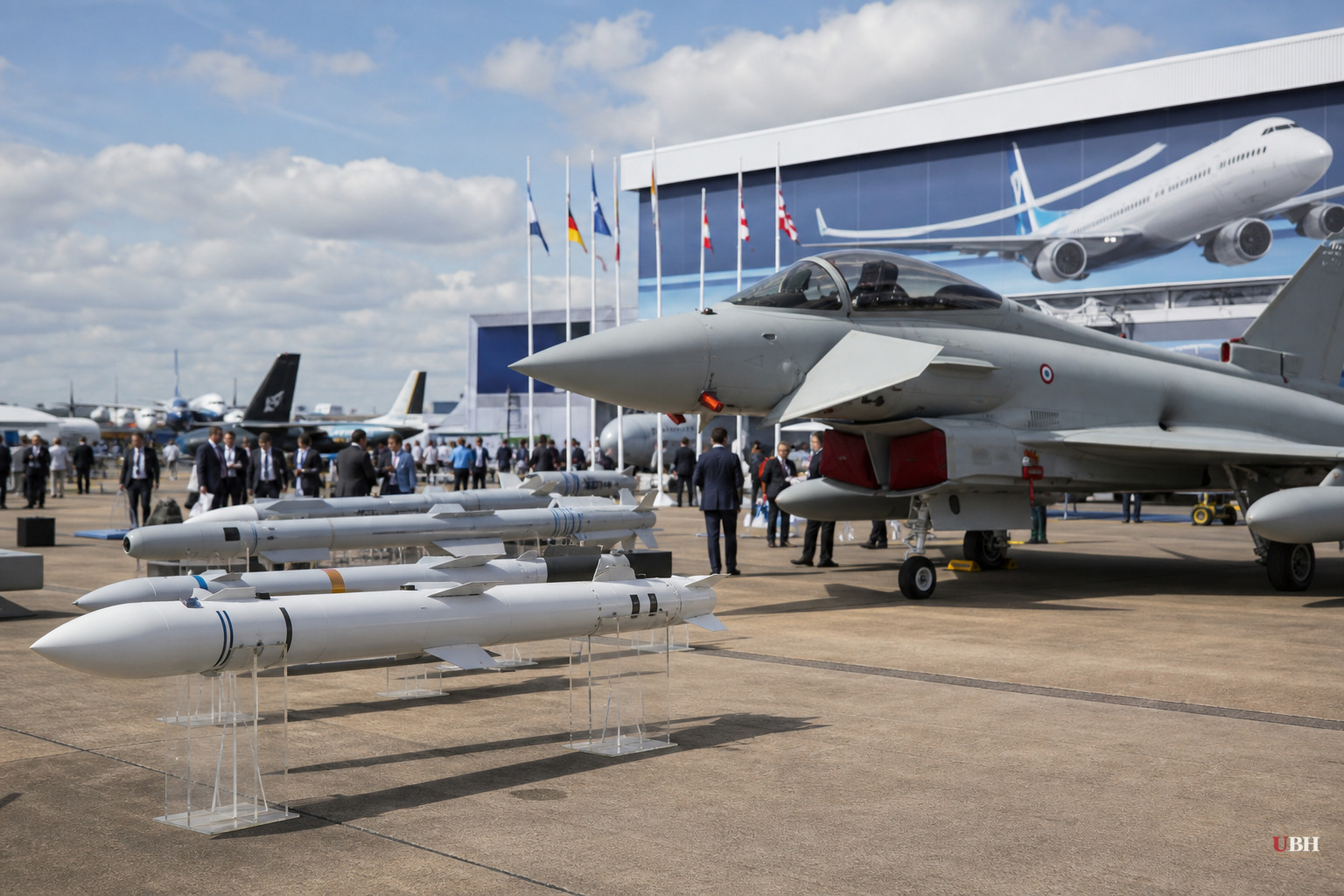
The Farnborough International Airshow in the UK wrapped up this week, and Wall Street's defense and aerospace analysts came home with a clear read: the industry is running hot, and it's not cooling off anytime soon.
A team of Citi analysts led by John Godyn attended the show and briefed clients Thursday morning. Their top-line finding: accelerating missile demand paired with a fresh wave of commercial aircraft orders could push the aerospace and defense sector into a stronger growth cycle heading into fall 2026 and into 2027.
The Aftermarket Is Still Running Hot
Godyn's team talked to a wide swath of companies exposed to the aftermarket, meaning engine makers, parts and component manufacturers, maintenance-repair-overhaul (MRO) shops, and aircraft lessors. The consistent message across every meeting: five forces are driving the boom, and none of them are letting up.
Those forces are low aircraft retirement rates, high lease renewal rates, tight secondary markets for planes and engines, strong demand for flight capacity from airlines worldwide, and MRO shops that are capacity-constrained, meaning they can't keep up with the repair work coming in.
Citi's analysts also noted something significant given the current geopolitical backdrop: companies reported no impact on this business from the conflict in the Middle East. That's a meaningful data point given how much uncertainty has swirled around global supply chains and energy markets tied to that region.
Even GE, one of the largest players in the space, described its aftermarket revenue growth as "low double digit," while many non-engine aftermarket players pointed to "high single digit" growth. Citi's European analyst, Conor Dwyer, said he's seeing the same trend feeding into expectations for Safran's 2026 numbers.
Citi flagged the stocks it sees benefiting most from this read-through: GE, RTX (formerly Raytheon Technologies), VSE Corporation, Loar Holdings, and HEICO. But the analysts added an important caveat. Wall Street already expects these companies to keep beating estimates. The bar for a positive surprise isn't especially low right now, even with strong underlying demand.
Management teams at multiple companies also cautioned that the current pace of growth won't last forever. Mean reversion toward long-term average growth rates is, in their words, inevitable. Strong booms tend to normalize eventually, and these executives aren't pretending otherwise.
M&A Activity Is Picking Up
A second major theme from the show: mergers and acquisitions activity in the sector appears to be heating up. Citi's analysts said multiple companies described an M&A backdrop that's noticeably more active, with a growing number of deals coming to market.
Management teams pointed to several drivers behind this, with particular emphasis on companies pursuing "self-help" moves, meaning internal restructuring and streamlining, as they work to ramp up production to meet the demand described above.
What This Means, and What It Doesn't
This is a data point from one bank's research desk, not a comprehensive survey of the entire industry. Citi's team was on the ground for a few days at one airshow, talking to a self-selected group of companies willing to meet with analysts. That's useful, real-time intelligence, but it's not the same as audited financial results or government procurement data.
Still, the picture Citi paints lines up with a broader trend that's been building for years: airlines worldwide are struggling to get their hands on new aircraft and spare parts fast enough, largely because Boeing and Airbus have both faced sustained production bottlenecks. That scarcity has pushed more airlines to lean on older planes longer, driving up demand for maintenance, repair, and overhaul work, exactly the trend Citi's analysts are describing.
On the defense side, "accelerating missile demand" reflects sustained global military spending increases, driven by ongoing conflicts in Ukraine and the Middle East, plus NATO countries and allies in Asia restocking munitions stockpiles that have been drawn down. Citi's note doesn't specify dollar figures or specific missile programs, so the exact scale of that demand increase remains unclear from this reporting alone.
The unresolved question going forward: how much of this current boom is genuine structural demand from a chronically undersupplied industry, versus a cyclical peak analysts themselves admit is due for reversion. Citi's own note flags that risk. Investors watching GE, RTX, HEICO, Loar, and VSE Corporation earnings reports over the next two quarters will get a clearer answer to that question than any airshow briefing can provide.
Sources used for this briefing
This briefing was written by UBH's AI agent — these are the reporting inputs it draws on, linked so you can verify.


