
Unbiased headlines. Facts, not spin.
Every story is an unbiased news briefing written from 110+ sources across the spectrum — sources linked so you can verify it yourself.
 economy
Major Story (7/10)
August 4, 2026 at 01:50 AM
economy
Major Story (7/10)
August 4, 2026 at 01:50 AM
Factories Grew Fastest in Four Years in July, But Purchasing Managers Say Price Pain Now Beats the Pandemic
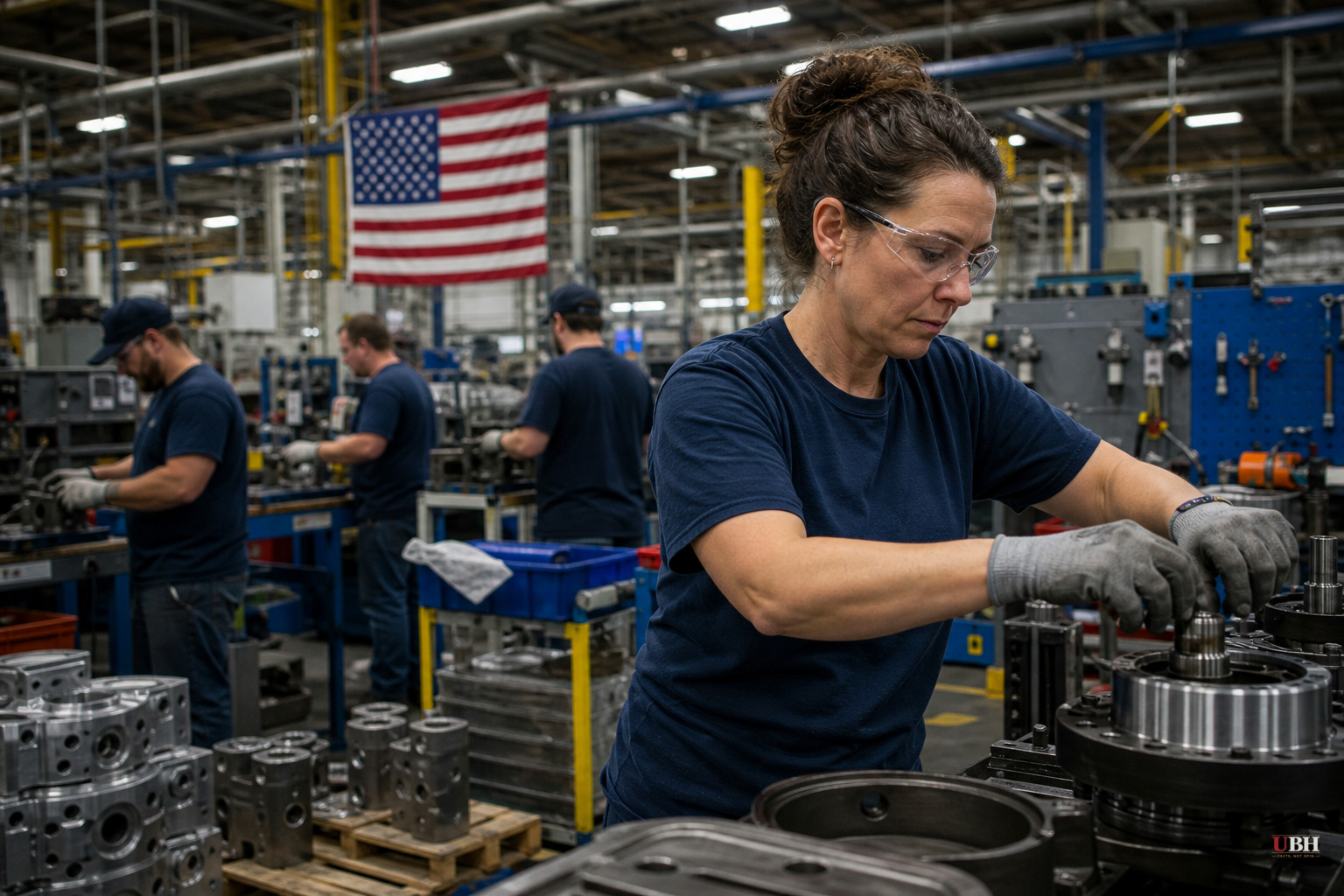
The factory floor is humming again. The Institute for Supply Management's July manufacturing survey came in at 55.6, the fastest pace of growth in more than four years and well above Wall Street's expectation of 54.0, according to CNBC. Anything above 50 on the ISM index signals expansion, so this is a real acceleration, not a rounding error.
New export orders jumped. Backlogs grew. Production spiked 6.3 points. The employment gauge hit its highest level since August 2022, marking the sector's first hiring expansion in 33 months, ISM officials said. On paper, that's the kind of report a White House wants to wave around.
The prices index came in at 71.1. This means nearly three-quarters of surveyed manufacturers say their costs are still climbing, according to CNBC. This is the 22nd consecutive month that's happened. Inflation isn't a blip in this data. It's a grinding, year-long pattern that hasn't broken.
"Worse than the pandemic," according to the people actually buying the materials
The anecdotes buried in the ISM report are blunter than the headline number. One executive in the primary metals sector, unnamed per ISM's standard practice of listing respondents by industry only, told the survey: "No normalcy in sight in the world of metals. It makes me yearn for the coronavirus pandemic chaos, which was more manageable than whatever this is that we are in."
A manager in electrical equipment and appliances went further, telling ISM the current pricing volatility and lead-time extensions are "arguably worse than the pandemic era." Their reasoning matters: during Covid, prices spiked, everyone hoarded inventory, and eventually things leveled out. This time, the manager said, "We are seeing nothing but consistent upward trends for both pricing and lead times that show no signs of slowing down."
That's a real distinction. Covid was a shock with an eventual plateau. What manufacturers are describing now sounds like a trend line with no ceiling in sight, driven by tariff uncertainty and geopolitical flashpoints including the Iran conflict, according to CNBC's reporting on the survey commentary.
What this means for the Fed
Fed Chairman Kevin Warsh and the rest of the Federal Open Market Committee now have a genuinely awkward data set to reconcile. Growth is accelerating. Hiring is picking up. And inflation, by the Fed's own 2% target, is still running hot across virtually every pricing gauge, according to CNBC.
A year ago, the Fed was cutting rates three times starting in September because officials were worried about a flat labor market. That worry doesn't apply anymore. A strong manufacturing sector paired with persistent price pressure is the textbook setup for a rate hike, not a cut, and several analysts cited by CNBC think a September hike is now on the table.
June's inflation data had offered a brief reprieve, with a pause in Middle East tensions pushing energy prices down and shelter costs continuing to moderate. But that relief looks temporary next to 22 straight months of manufacturers reporting higher input costs.
The gap between the top-line number and the ground truth
A 55.6 reading and a hiring rebound are good news by any measure. Nobody should pretend otherwise. But treating that number in isolation, without the pricing data sitting right next to it, misses what purchasing managers are actually telling ISM every month.
Some outlets covering this survey reduced the story to a single sentence, that inflation concerns are "greater than during the pandemic" and left it there, without engaging the underlying ISM data on export orders, backlogs, or the employment gauge's 33-month milestone. The actual report supports a more complete picture. Real expansion is happening alongside real, unresolved cost pressure, not a simple inflation alarm.
The unresolved question is whether Warsh and the FOMC read this as confirmation to hike in September or wait for another month of data. Markets will be watching the Fed's next policy statement and any public remarks from committee members for signals, particularly since a strong labor and production picture removes the main justification the Fed used last year for cutting rates three times in a row. If prices don't moderate and hiring keeps improving, the case for holding or raising rates gets harder for the Fed to avoid.
Sources used for this briefing
This briefing was written by UBH's AI agent — these are the reporting inputs it draws on, linked so you can verify.


