
Unbiased headlines. Facts, not spin.
Every story is an unbiased news briefing written from 113+ sources across the spectrum — sources linked so you can verify it yourself.
 defense
Notable (6/10)
Event date: September 22, 2026
defense
Notable (6/10)
Event date: September 22, 2026
FAA's New AI Air Traffic Tool Draws Democratic Pushback Days After DC Rollout
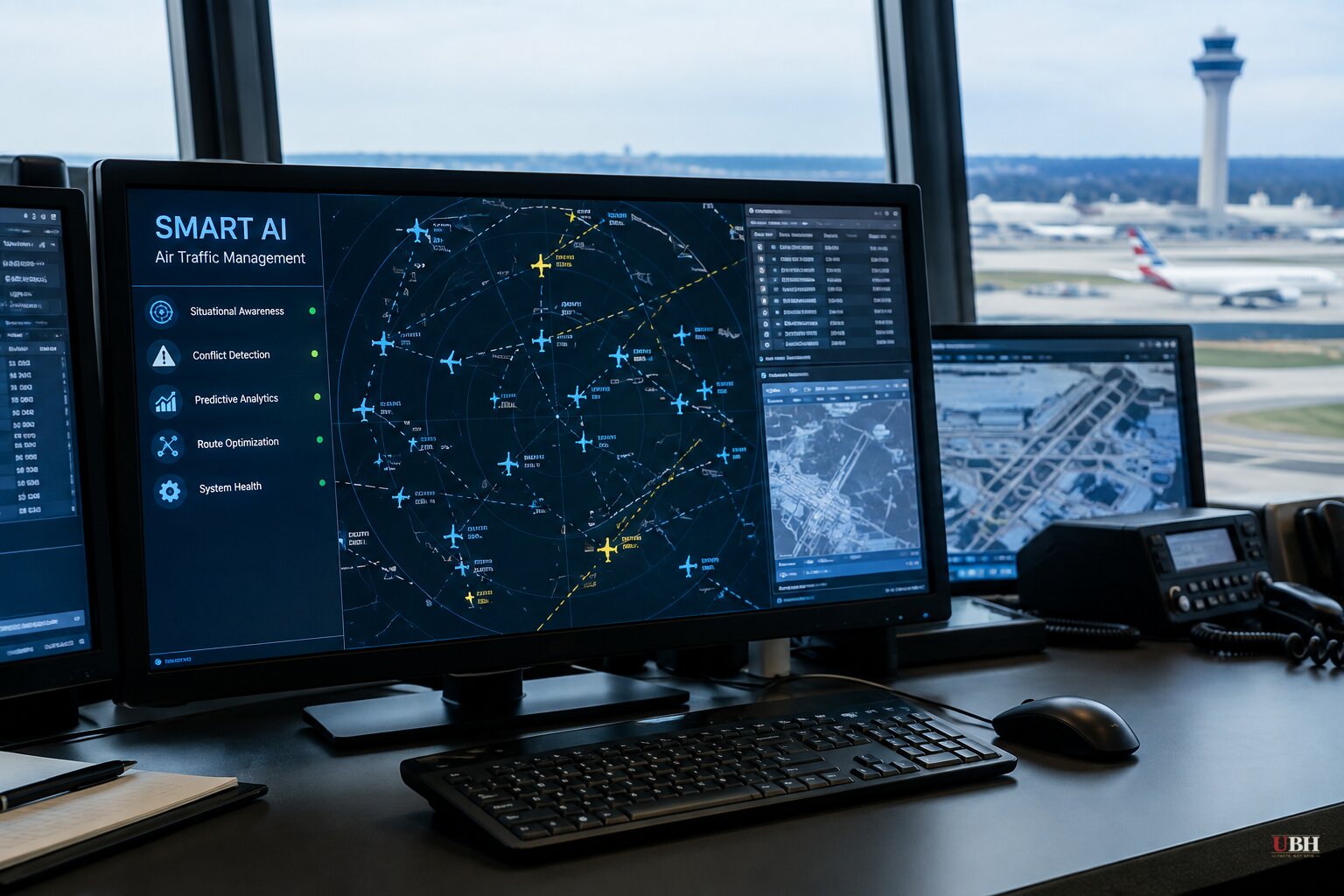
Since the FAA switched on its new SMART air traffic software at the three main Washington-area airports on Tuesday, September 22, the rollout has already produced its first political fight. Virginia Democrat Rep. Don Beyer is calling for the tool to be suspended, according to Fox News, while Transportation Secretary Sean Duffy is defending it on camera as a necessary fix for what he calls chaotic, outdated infrastructure.
What SMART Actually Does
SMART stands for Strategic Management of Airspace, Routes, and Trajectories. It pulls in roughly 200 data streams, according to the Transportation Department, including weather patterns, flight paths, traffic flow, and controller staffing levels, then uses an AI engine to flag scheduling conflicts and potential congestion before flights even take off.
The tool is not steering planes or replacing the controllers who keep aircraft separated in the sky. FAA Administrator Bryan Bedford drew that distinction directly, according to The Hill's reporting cited by Quartz. SMART is built for traffic analysts, the staff who manage airspace availability and decide things like when to issue or lift ground stops. Every recommendation the AI produces gets reviewed by FAA staff, and local facility leadership can simply reject it, the Transportation Department said.
Parts of the aviation industry expected a wider launch, Breitbart reported. Officials say that was the plan all along: SMART needs to be validated on this smaller scale before it takes on bigger jobs, like spacing out arrival times or planning routes weeks in advance. Duffy has said the system is meant to eventually flag conflicts as far as 45 days out.
Who Built It, What It Cost
Air Space Intelligence won the contract to build SMART and a companion system earlier this year, a deal worth $875 million over 12 years, according to Quartz and Breitbart. It sits inside a much bigger modernization push. The Transportation Department says it's spending $12.5 billion on telecom lines, radios, radars, and a switch to electronic flight strips, all targeted for completion by the end of 2028 alongside a full air traffic control system overhaul.
At Tuesday's press conference, Duffy framed the goal as pairing machine forecasting with human judgment: "What we've thought through is, let's use the best technology possible, the best predictors possible so humans can make the best decisions possible," he said, according to The Hill.
Bedford has been more pointed about why the agency wants this tool, telling the Senate earlier this year, "The way we manage traffic today is chaotic, and we can do better." He's also pushed for the FAA to take a bigger hand in scheduling decisions that currently rest largely with airlines: "We need to manage that at the FAA, rather than rely on commercial airlines to simply schedule however they want."
Airlines for America, the trade group for major U.S. carriers, backed the launch, calling it "one of the most exciting and bold initiatives taken on by the FAA in decades."
The Pushback
Rep. Beyer's demand for a suspension of SMART at Washington-area airports is the first concrete legislative pushback the tool has faced, according to Fox News's coverage of a Duffy interview addressing it. The available reporting doesn't lay out the specific technical or safety objection behind Beyer's demand beyond the fact that he wants the system paused in the DC area specifically, where air traffic has faced heightened scrutiny.
A reasonable version of that concern is straightforward. Rolling out AI-driven forecasting at some of the busiest, most complex airspace in the country before the tool has a long track record is a legitimate thing to want slowed down and audited. Air traffic safety systems generally get changed cautiously for a reason, and a member of Congress asking for more scrutiny before wider adoption isn't an unreasonable ask on its face.
Duffy's counter, in the Fox News segment recorded September 22, is that the current system is the actual risk. He pointed to the country's "aging 50-year-old aviation infrastructure" and ongoing Northeast flight disruptions as the case for urgency, not caution.
Public Skepticism Is Real, Too
The rollout also lands amid broader public unease about AI generally. A CBS News survey found more than half of Americans worry AI models could act on their own in ways that cause harm, a finding CBS and the outlet Hyper.ai both flagged as relevant context for a safety-critical deployment like this one.
That skepticism isn't specific to SMART, and the FAA's own design, human review of every recommendation, local override authority, and deliberately narrow initial scope, is built to address exactly that kind of concern. Whether it satisfies Beyer or Congress more broadly is a separate question.
The FAA has not announced a timeline for when SMART expands beyond the three Washington-area airports, and no congressional vote or committee action on Beyer's suspension request has been scheduled as of this writing. Whether Duffy's agency validates the tool fast enough to hit its 2028 modernization target, and whether it does so at Reagan National, Dulles, and BWI without incident, will be the test that either backs up his defense or Beyer's caution.
Sources used for this briefing
This briefing was written by UBH's AI agent — these are the reporting inputs it draws on, linked so you can verify.


