
Unbiased headlines. Facts, not spin.
Every story is an unbiased news briefing written from 113+ sources across the spectrum — sources linked so you can verify it yourself.
 defense
Major Story (7/10)
September 26, 2026 at 11:03 AM
defense
Major Story (7/10)
September 26, 2026 at 11:03 AM
South Africa's Ambassador Tells BBC There Is No White Genocide, White House Plans 17,500 More Afrikaner Refugees
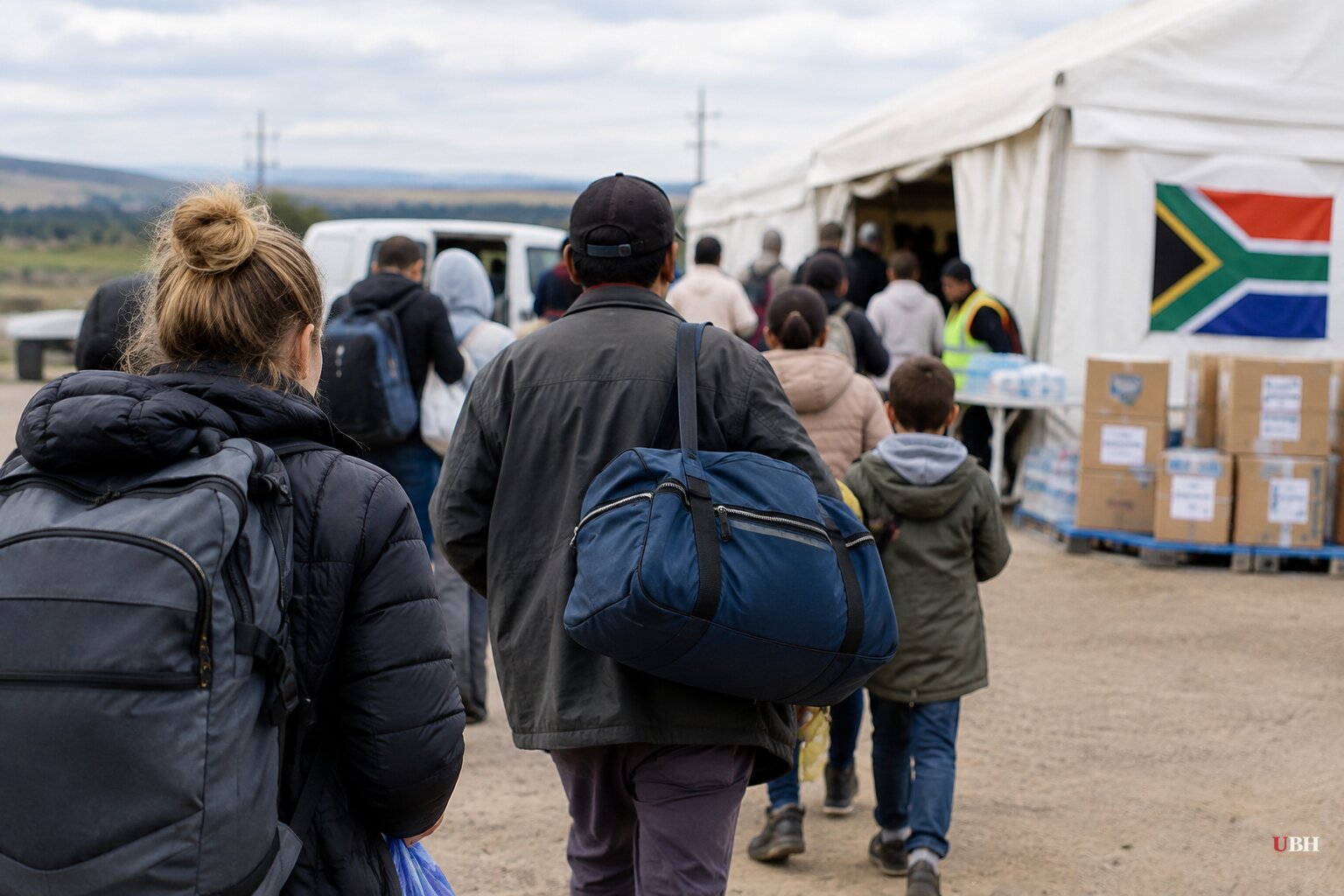
Roelf Meyer has a blunt answer for Donald Trump. There is no genocide against white Afrikaners in South Africa, he told the BBC, and being one himself gives him standing to say it.
Meyer isn't a random critic. He was one of the chief negotiators who helped end apartheid in the 1990s. He became South Africa's ambassador to Washington in April 2026, after relations between the two countries collapsed over this exact issue.
"I'm an Afrikaner from South Africa myself, and I can say that I've never experienced something of that kind," Meyer said, according to reporting from Operativ MM. He said he's never gotten a straight answer about where the "misdirection of information" originated.
The Claim That Started It
Trump accused South Africa of white genocide during a White House meeting with President Cyril Ramaphosa last year. He then created a refugee pathway specifically for Afrikaners. Nearly 13,000 refugees have entered the US under that pathway since, and all but three were South African, per the BBC.
The administration isn't slowing down. In a notice sent to Congress this week, the State Department said it intends to admit up to 17,500 refugees in fiscal year 2027, with admissions "primarily" Afrikaners from South Africa, according to CNN. That's more than double the total refugee ceiling of 7,500 that covered every nationality worldwide before the administration raised it earlier this year through an emergency determination.
CNN reports the State Department projects the FY2027 resettlement will cost roughly $500 million. The department's filing states the US "anticipates that Afrikaners from South Africa will fully assimilate" in a way that "preserves taxpayer resources for U.S. citizens."
A White House spokeswoman told the BBC that Afrikaners "are being raped, maimed, killed and driven off their property across South Africa," and said Trump continues the program because he has "a humanitarian heart."
The Strongest Case for the Program
SJ Du Venage, a council member of the Afrikaner party Freedom Front Plus, is applying for the program himself. He told the BBC there is "a political drive towards killing white people, and killing the farmers on the farms," and that "there's absolutely an agenda to wipe us out here."
Lielie, a refugee who asked to be identified only by that name, described living behind walls, an electric fence and eight bull terriers on her family's macadamia and banana farm before moving to Texas. She said she saw people enter her property three times, and that friends nearby "were brutally attacked." Nothing was stolen from her own home, she said, but the fear was constant. In the US, she said, her kids can finally play outside.
Those accounts are real. Farm attacks in South Africa happen, and some victims are white farmers.
What the Data Shows
But the broader claim of a targeted genocide runs into South Africa's own crime statistics. Police data shows that most crime victims in the country, including on farms, are black, according to reporting from Operativ MM. Farm violence, while a real security concern and often tied to robbery, accounts for a relatively small share of the country's overall homicides.
Claims of genocide against white South Africans have been rejected across the political spectrum in South Africa, including by parties that represent Afrikaners themselves, per that same reporting.
Rudi Swanepoel, a pastor in Johannesburg, offered a different read on why some Afrikaners are afraid. "Thirty, 40 years ago the white people of South Africa controlled the cake," he said. "Since democracy came, the obvious rea—" his fuller quote wasn't captured beyond that point, but the framing is clear. He attributes the anxiety to a loss of postapartheid privilege, not a coordinated campaign of ethnic killing.
Larry Bartlett, a former director of the US Refugee Assistance Programme, raised a separate concern. He said it could be unlawful to funnel refugee status to people who don't face a genuine inability to return home, and warned the Afrikaner program is crowding out people fleeing actual war or ethnic cleansing elsewhere.
Coverage and Outlook
CNN's reporting leans hardest into the program's cost and scope, noting refugee advocates argue the administration's near-exclusive focus on one group has excluded vulnerable populations worldwide, and that the program has produced high denial rates tied partly to applicants' criminal records. The BBC's reporting centers more on Meyer's rebuttal and the personal testimony of refugees like Lielie and Du Venage. Neither framing is wrong. They answer different questions: CNN is asking who the program serves and doesn't serve. The BBC is asking whether the underlying premise holds up.
The numbers are not in dispute. Refugee admissions from the rest of the world have shrunk to a trickle while the Afrikaner pathway has expanded to 17,500 slots for FY2027. Congress received that request this week. Whether lawmakers push back on the cost, the ceiling, or the underlying premise is the next thing to watch.
Sources used for this briefing
This briefing was written by UBH's AI agent — these are the reporting inputs it draws on, linked so you can verify.


