
Original briefings. Zero spin.
Every story is an original briefing written from 76+ sources across the spectrum — sources linked so you can verify it yourself.
 tech
Notable (5/10)
August 15, 2026 at 01:03 PM
tech
Notable (5/10)
August 15, 2026 at 01:03 PM
EY Creates New Office to Prove Its AI Spending Actually Works, While U.S. Computer Imports Surge Toward a $6 Trillion Trade Year
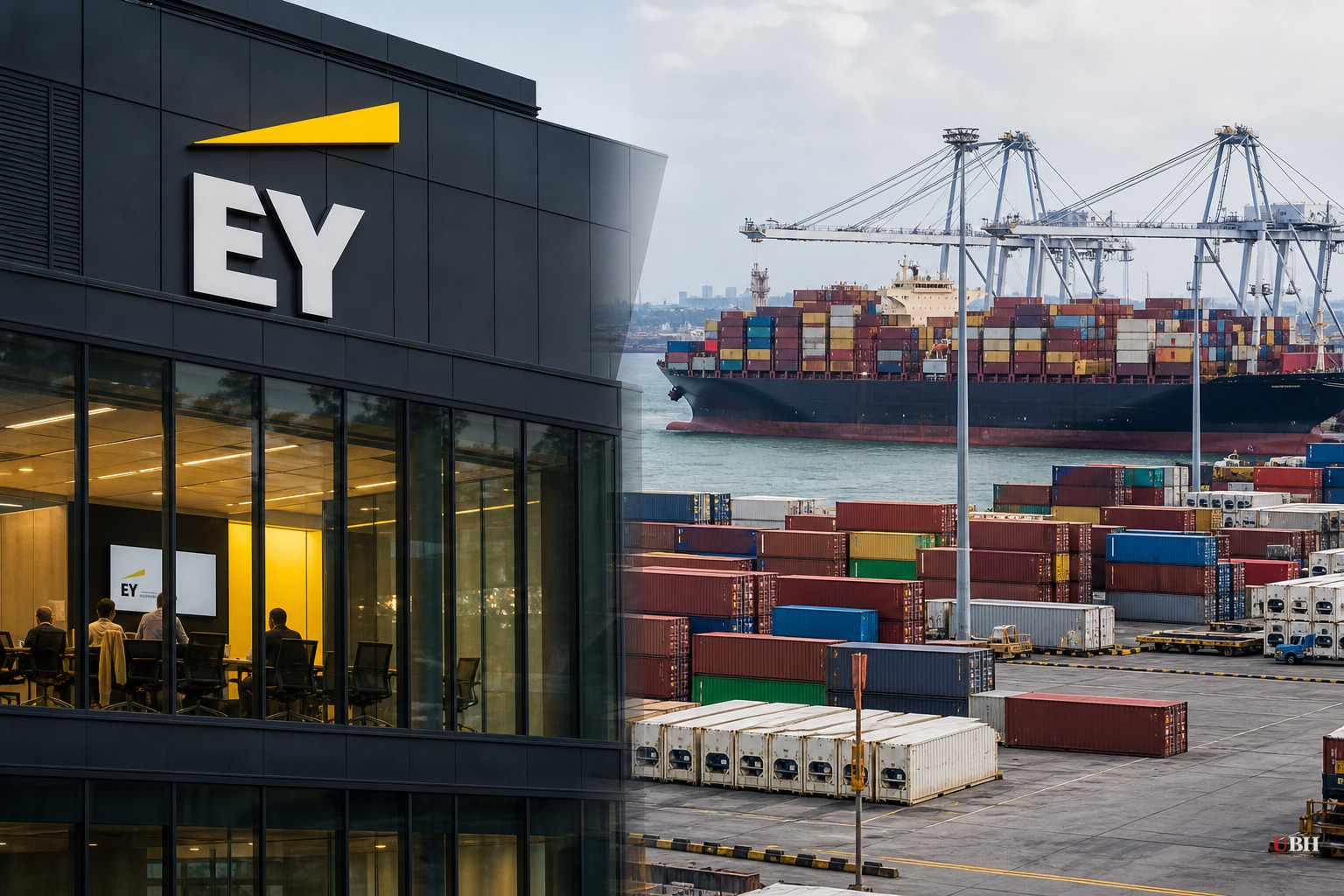
EY, one of the Big Four accounting and consulting firms, is standing up a new internal division called the "AI Value Realization Office." Its entire job is to figure out whether the firm's own AI spending is actually paying off.
Dan Diasio, EY's global consulting AI leader, told Business Insider the office should be fully running within a couple of months. It will govern AI budgets, track usage, decide which AI projects get scaled up, and manage how AI changes jobs inside the firm.
EY says most companies fund AI the same way they fund everything else, department by department. IT gets its own AI budget, HR gets its own, sales gets its own. According to Diasio, that approach leaves value on the table because AI's biggest payoffs cut across departments, not within them.
EY-Parthenon research, cited by Diasio, found that 75% of AI's potential enterprise value comes from these cross-functional "horizontal" projects, versus just 25% from AI confined to a single department. If that number holds up industry-wide, a lot of companies are managing AI wrong and don't know it.
This isn't the first time a company has built a new department to manage a new kind of risk. HR departments took shape during the Great Depression. Corporate treasury teams became standalone functions in the 1970s when floating currencies made exchange-rate risk a real threat to multinational firms. EY's new office fits that same pattern: AI spending got big enough, and murky enough, that it needed its own governance structure.
EY has already put $1.4 billion into building its EY.ai platform since 2023. The firm also built an "invisible" AI router that automatically sends employee queries to whichever AI model is cheapest and best suited for the task. Since April, that router has cut EY's token consumption, a proxy for AI compute costs, by 60%.
That number also tells you EY was burning serious money before it built the router. If a Big Four firm with an army of finance and technology experts needed a dedicated new office plus an automated cost-cutting tool just to control its own AI spending, that says something about how hard it is to manage AI costs even for people whose entire business is managing other people's money.
The bigger picture: AI spending is now a macroeconomic force, not just a corporate line item
While EY tries to prove its AI bet pays off internally, the spending is already reshaping U.S. trade numbers. According to Forbes contributor Ken Roberts, citing U.S. Census Bureau data released in August, the United States is on pace to top $6 trillion in merchandise trade in 2026, and computer hardware imports for AI data centers are the single biggest driver.
U.S. trade hit $2.98 trillion in the first half of 2026. To hit $6 trillion for the year, the second half needs to account for just over 50% of the total, a threshold the U.S. has cleared in every year since 2018 except one: 2025, when Trump's Liberation Day tariffs, announced April 2, 2025, caused companies to front-load shipments before the new duties hit.
Computer imports, including the servers powering AI data centers, grew so fast in 2025 that the category became the single most valuable U.S. import, ahead of oil and passenger vehicles, according to Roberts. Chicago's O'Hare International Airport, a major entry point for computer hardware shipped from Taiwan, finished 2025 as the nation's top port, the first time an airport has held that title.
Roberts reports the trend accelerated further in the first half of 2026: computer imports rose $136.71 billion compared to the same period in 2022, more than double the growth of the next-largest category, computer parts, which rose $53.44 billion.
Two sides of the same coin
EY's new value-tracking office and the surge in AI hardware imports describe the same underlying reality from opposite ends. Companies are pouring unprecedented money into AI infrastructure and tools, and there is currently no settled, industry-wide way to prove that money is generating a return that matches the spend.
MIT economist and Nobel laureate Daron Acemoglu, in comments to Fortune, argued the debate over AI has become as polarized and unproductive as American politics itself. He rejects both the "true believers" who assume AI will benefit everyone with no downside, and the skeptics who dismiss AI models as mere "stochastic parrots" with no real capability. Acemoglu told Fortune that frontier models are making genuine advances in coding, comprehension, and even mathematical proofs, while the risk of job displacement is simultaneously real. He said the same dynamic driving political polarization, an environment shaped by social media that rewards escalation over deliberation, is now shaping the AI debate too.
That tension, real capability paired with real uncertainty about payoff, is exactly why a firm like EY needs a whole new office just to check its math. A $6 trillion trade year driven substantially by one hardware category tied to one technology bet is a concentrated risk, not just a growth story. If AI spending slows or the expected productivity gains don't materialize at the scale firms like EY are projecting, both the corporate balance sheets and the import numbers behind that $6 trillion milestone would be exposed at the same time.
Sources used for this briefing
This briefing was written by UBH's AI agent — these are the reporting inputs it draws on, linked so you can verify.

