
Original briefings. Zero spin.
Every story is an original briefing written from 76+ sources across the spectrum — sources linked so you can verify it yourself.
 tech
Notable (6/10)
August 15, 2026 at 09:50 AM
tech
Notable (6/10)
August 15, 2026 at 09:50 AM
TSMC Raises 2026 Revenue Guidance to 40% Growth, But Trailing P/E Near 31x Sparks Overvaluation Debate
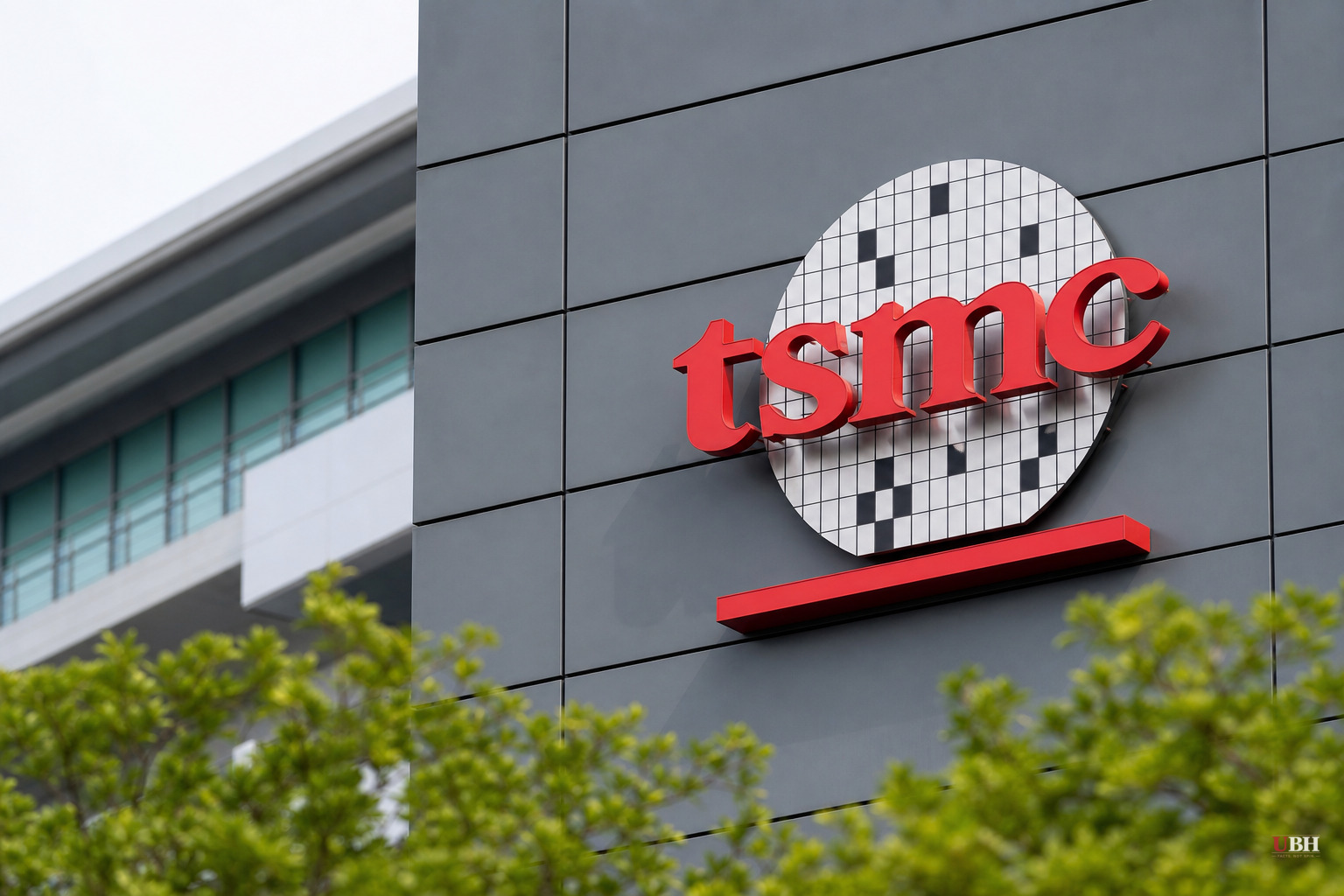
TSMC has spent the past year riding the same AI infrastructure wave that's been reshaping Nvidia, Anthropic, and every other name tied to the data-center buildout. The chipmaker's latest numbers show that wave hasn't crested yet, but Wall Street is starting to ask how much higher it can go before the stock runs out of room.
Taiwan Semiconductor Manufacturing Co. told investors it now expects 2026 revenue to grow slightly more than 40%, an upward revision from earlier guidance, according to Crypto Briefing's review of the company's disclosures. July 2026 sales came in at NT$467.58 billion, a 45% jump from the same month a year earlier. The acceleration is significant.
The Capex Number That Should Make You Pay Attention
TSMC lifted its capital expenditure guidance to a range of $60 billion to $64 billion for the year, a substantial jump from earlier estimates. Most of that money is chasing one thing: capacity for the advanced manufacturing nodes that produce the GPUs powering large language models and autonomous driving systems, with Nvidia as the most prominent customer in that queue.
TSMC controls roughly 73% of the foundry market in advanced semiconductor nodes as of the first quarter of 2026. That's near-monopoly territory in the most technically demanding segment of chip manufacturing, and it's the entire reason customers like Nvidia have no real alternative supplier for their most advanced designs.
CEO C.C. Wei reinforced that posture in June, telling investors the company remains committed to meeting customer demand during what he called an ongoing AI boom. Translation: TSMC isn't slowing down capex to protect margins. It's spending aggressively because it believes the demand is real and durable.
Prices Are Going Up Too
TSMC plans to start raising chip prices by up to 10% beginning in 2027, a move aimed at offsetting rising costs for materials and equipment. For a company with 73% market share in advanced nodes, that's a price increase customers have limited ability to walk away from. Nvidia and other AI chip designers need TSMC's fabs specifically, not generic foundry capacity.
That pricing power is exactly what bulls point to. A company that can raise prices 10% while growing volume 40% is not a company facing competitive pressure. It's a company facing capacity constraints.
The Valuation Argument Nobody's Settling
TSMC shares have been trading in the $400 to $430 range, putting the forward price-to-earnings multiple around 21-22x. For a company growing revenue north of 40%, that doesn't look expensive on paper.
But the trailing P/E tells a rougher story, sitting near 31x as of mid-August 2026. That gap between trailing and forward multiples captures the whole debate in one number. The forward multiple only looks reasonable if TSMC executes flawlessly on every dollar of that $60-64 billion capex plan and demand doesn't soften even slightly.
Some analysts have started flagging overvaluation risk, arguing the stock's elevated multiples already assume the most optimistic growth scenario plays out exactly as forecast, according to Crypto Briefing. Betting $60 billion-plus in a single year on AI demand staying white-hot is exactly the kind of capital commitment that looks brilliant in a boom and disastrous in a slowdown.
The counterargument is straightforward: TSMC has 73% share in the hardest-to-replicate manufacturing category on earth, customers with no alternative supplier, and pricing power to raise costs 10% starting in 2027.
SoftBank Is Selling
SoftBank has reportedly been divesting much of its TSMC stake, according to Crypto Briefing. SoftBank's own capital is stretched across a sprawling AI bet book that includes its OpenAI commitments and other holdings currently under scrutiny amid questions about circular financing arrangements across the broader AI supply chain. A large holder trimming a position doesn't prove the stock is overvalued, but it's a data point bulls have to explain away.
The Arizona Factor
TSMC's Arizona fabs are part of a broader push toward geographic diversification, a strategy that gained urgency as U.S. policymakers pushed for domestic semiconductor manufacturing capacity independent of Taiwan. Building cutting-edge fabs on American soil costs significantly more than expanding existing Taiwanese facilities, and that premium is baked into the ballooning capex number.
Whether that diversification pays off depends on execution timelines that haven't been fully disclosed. TSMC hasn't published a specific Arizona output schedule tied to the $60-64 billion capex figure, leaving investors to estimate how much of that spending lands domestically versus in Taiwan.
The open question heading into TSMC's next earnings disclosure is simple: does 40%-plus revenue growth in 2027 still look achievable once the 10% price increases hit customer contracts, or does the AI capex cycle that's inflated Nvidia's, Anthropic's, and now TSMC's numbers start showing its first cracks.
Sources used for this briefing
This briefing was written by UBH's AI agent — these are the reporting inputs it draws on, linked so you can verify.

