
Original briefings. Zero spin.
Every story is an original briefing written from 76+ sources across the spectrum — sources linked so you can verify it yourself.
 tech
Notable (6/10)
August 15, 2026 at 07:24 AM
tech
Notable (6/10)
August 15, 2026 at 07:24 AM
Self-Driving Trucks Start Testing on California Highways, Teamsters Sue to Stop It
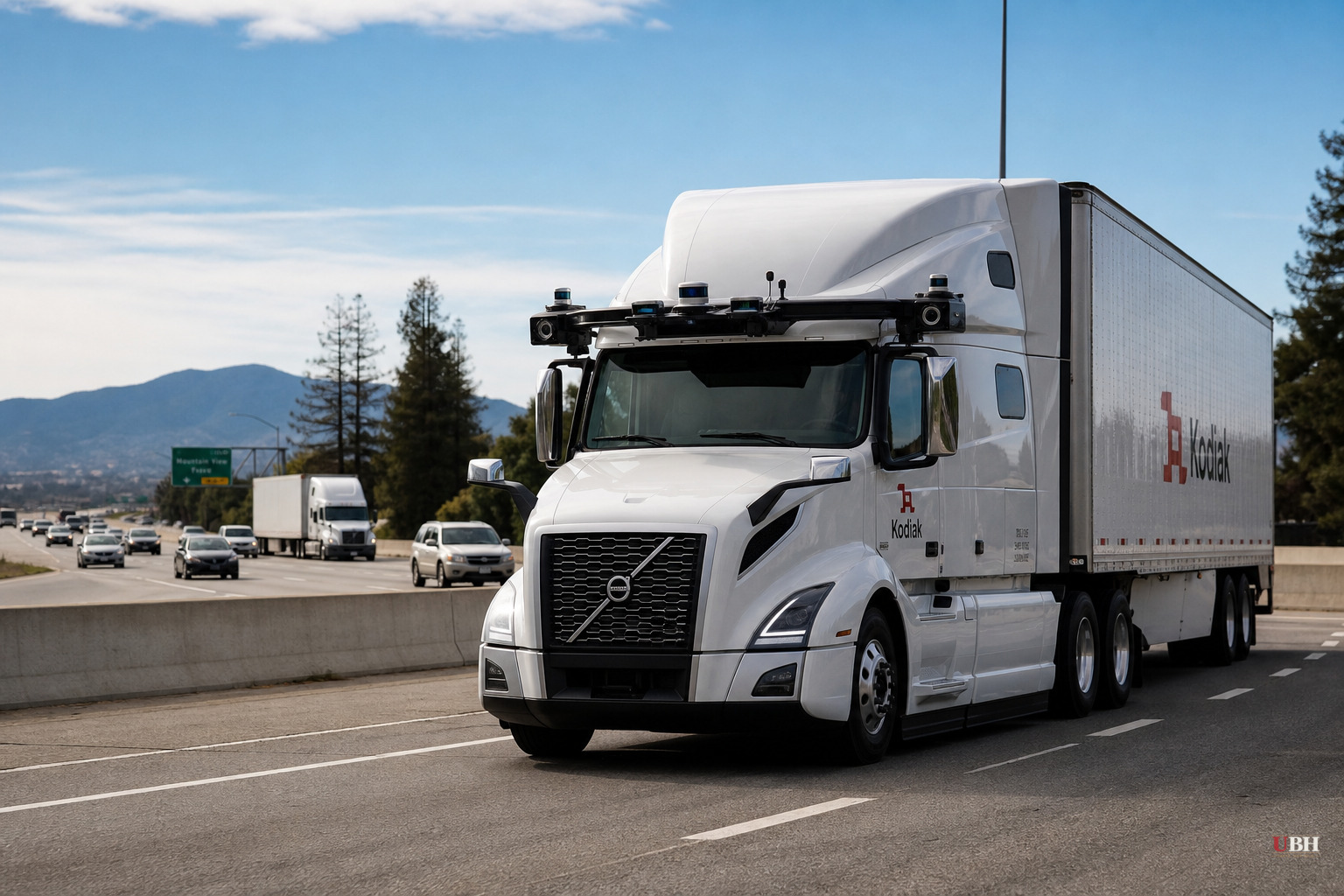
Self-driving 18-wheelers are now legally testing on California highways for the first time since the state banned them.
Aurora Innovation and Kodiak AI both received permits from the California Department of Motor Vehicles this year to test autonomous heavy-duty trucks on public roads, according to TechCrunch. Kodiak has already put a handful of test trucks on the road, starting near its Mountain View office. Both companies had to meet DMV requirements covering safety protocols, insurance, vehicle registration, and safety-driver qualifications.
The permits still require a human safety operator behind the wheel. Companies also can't operate on roads with a posted speed limit of 25 mph or under, unless it's a direct route between two points. This isn't robot trucks roaming neighborhood streets. It's highway testing with a person on board who can take over.
California banned autonomous trucks over 10,000 pounds from public roads for years. That ban lifted April 28, when the DMV approved updated rules giving companies a path to test, and eventually deploy, driverless heavy trucks in the state.
Until now, Aurora and Kodiak, both headquartered in California, had to do their real-world work in Texas instead of their home state. Aurora launched a commercial self-driving truck service in Texas in May 2025, starting with a Dallas-to-Houston route, and has since expanded to Fort Worth-El Paso, El Paso-Phoenix, Fort Worth-Phoenix, and Laredo-Dallas routes. Kodiak began driverless operations in January 2025 in an off-road setting in the Permian Basin, then expanded to on-highway routes including Dallas-Houston.
The Teamsters lawsuit
The California rule change hasn't gone unchallenged. Teamsters California filed suit against the DMV in Alameda County Superior Court, alleging the agency circumvented state law requiring it to study and publicly disclose the economic impacts of letting autonomous trucks operate on public roads, according to TechCrunch.
Trucking is a massive employer. The Teamsters' underlying worry, that a wave of driverless freight trucks could displace working drivers without any public accounting of the fallout, is a legitimate economic and workforce concern. The lawsuit also claims the DMV failed to adequately weigh safety risks to other motorists sharing the road with 80,000-pound autonomous rigs.
Whether the DMV actually skipped a legally mandated study is now a question for the Alameda County court, not something settled by either side's press statements. No ruling has been issued as of this writing, and no findings of wrongdoing have been made against the DMV.
What's proven, what isn't
The DMV says Aurora and Kodiak met its permitting criteria on safety, insurance, and driver qualifications. That's a regulatory approval, not an independent safety verdict on how these trucks perform in real traffic over time. Texas has had autonomous trucks running commercial routes since 2025, which gives regulators and the public some track record to point to, but it's not the same as a long-term, large-sample safety record on California's more congested and geographically varied highways.
The safety-driver requirement is the current backstop. As long as a licensed human sits behind the wheel and can intervene, the practical risk profile looks a lot like today's human-driven trucking, plus experimental automation. The real test comes if and when California allows fully driverless operation, without a safety driver, the way Kodiak already runs in West Texas's Permian Basin.
One unresolved question hangs over this rollout: at what point does the DMV allow safety-driver-free trucks on California's public highways, and what data will it require before making that call? The agency's April 28 rules created a permitting pathway, but the criteria for graduating from monitored testing to unsupervised deployment haven't been publicly detailed in a way that answers how much data is enough.
For now, expect a slow expansion of test routes around the Bay Area, continued litigation from the Teamsters, and pressure from other states, Texas chief among them, that already have thriving autonomous freight corridors and no interest in ceding ground to California's newly opened market.
Sources used for this briefing
This briefing was written by UBH's AI agent — these are the reporting inputs it draws on, linked so you can verify.

