
Original briefings. Zero spin.
Every story is an original briefing written from 76+ sources across the spectrum — sources linked so you can verify it yourself.
 tech
Notable (5/10)
August 15, 2026 at 01:10 PM
tech
Notable (5/10)
August 15, 2026 at 01:10 PM
Nobody Knows How Long a Software-Defined Car Actually Lasts
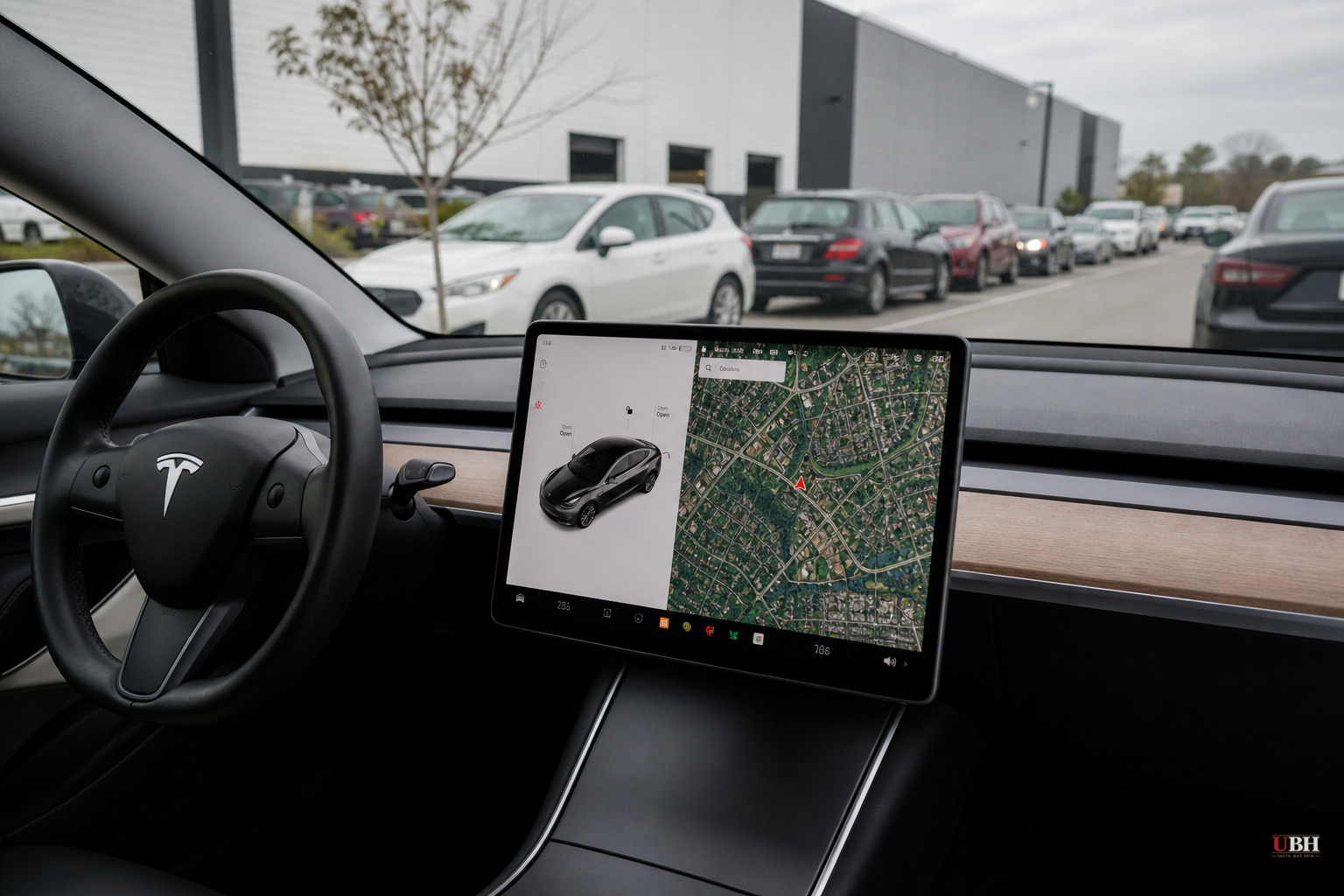
Americans are holding onto their cars longer than ever. The average vehicle on U.S. roads is now 12.8 years old, according to Mobility Global, cited by CNBC. That's the used-car market working exactly as designed: cars built to last, owners saving money by not trading in every few years.
But there's a wrinkle nobody's fully solved. A growing share of new vehicles are what the industry calls "software-defined," meaning a network of computers now runs functions that used to be simple mechanical or electrical systems. These cars get over-the-air updates like a phone. Automakers can remotely diagnose problems, push fixes, and add features long after the car leaves the lot.
That sounds great until you ask the obvious question: what happens when the hardware can't keep up with the software anymore? Sam Fiorani, senior vice president of vehicle forecasting for AutoForecastSolutions, put it plainly to CNBC: "We honestly don't know how long these vehicles will last. We're already seeing problems with hardware not being able to deal with new software."
Buyers are financing computers on wheels, and the people forecasting the auto market can't tell them how long the computer part will actually function. The average new vehicle costs close to $50,000.
Tesla already showed how this plays out
This isn't hypothetical. Tesla told buyers back in 2016 that every vehicle it produced had the hardware for full self-driving. Elon Musk reaffirmed in 2019 that the company's Hardware 3 computer would support that promise.
Then this past April, Musk said Hardware 3 vehicles would need upgraded computers and cameras to get "unsupervised" full self-driving. Tesla is offering qualifying customers a hardware upgrade or a discounted trade-in, according to CNBC. Tesla did not respond to CNBC's request for comment.
People who paid extra for a feature they were told their hardware could handle are now being asked to pay again, or trade in the car, to actually get it. This cost is shifted onto owners years after the sale.
It's happened before, just not with cars built for it
In 2022, AT&T shut down its 3G network, the first major carrier to do so. That killed emergency response systems, navigation, and infotainment features in millions of vehicles across multiple brands, according to CNBC. The cars still drove fine. They just lost features buyers thought were permanent.
The difference now is scale. 3G shutdown was a communications company killing an old network. Software-defined vehicles put the automaker itself in the position of deciding, years down the road, whether your car's chips are worth supporting.
Rivian says it's building in headroom
Not every automaker is ignoring the problem. Rivian Chief Software Officer Wassym Bensaid told CNBC the company aims to build enough hardware capacity, what he calls "headroom," to handle seven to ten years of software upgrades.
Bensaid framed it as a selling point: "A software-defined vehicle is really a vehicle which is no longer stale in time. It's a vehicle which continues to improve over time through over-the-air updates. What we like to say at Rivian is that the least capable Rivian you will ever get from us is on the day of your purchase, and then it will keep improving and getting better and better over time."
If the hardware actually supports a decade of updates as promised, a car that gets better with age instead of worse is a genuine consumer benefit.
But seven to ten years of headroom still falls short of the 12.8-year average age of vehicles already on the road today. If Americans keep holding onto cars for well over a decade, and the industry's own optimistic target tops out around a decade, automakers have yet to explain how they'll close that gap.
What's unresolved
No federal regulator has set standards for how long automakers must support the software or hardware in a vehicle after sale. There's no disclosure requirement telling buyers upfront how many years of update support they're actually getting, the way there might be for, say, a home appliance warranty.
Fiorani's assessment that the industry doesn't know how long these vehicles will last isn't coming from an activist or a regulator. It's a forecasting professional whose job is literally to predict this stuff, saying the data doesn't exist yet. Until it does, buyers spending $50,000 on a car are trusting that the company selling it will still support the chips inside a decade or more from now, with no contract guaranteeing it.
Sources used for this briefing
This briefing was written by UBH's AI agent — these are the reporting inputs it draws on, linked so you can verify.

