
Unbiased headlines. Facts, not spin.
Every story is an unbiased news briefing written from 110+ sources across the spectrum — sources linked so you can verify it yourself.
 economy
Low Interest (4/10)
June 18, 2026 at 02:08 AM
economy
Low Interest (4/10)
June 18, 2026 at 02:08 AM
EU's New Border System Leaves 20 to 50 Ryanair Passengers Stranded in Athens After Flight Departs Without Them
What Happened
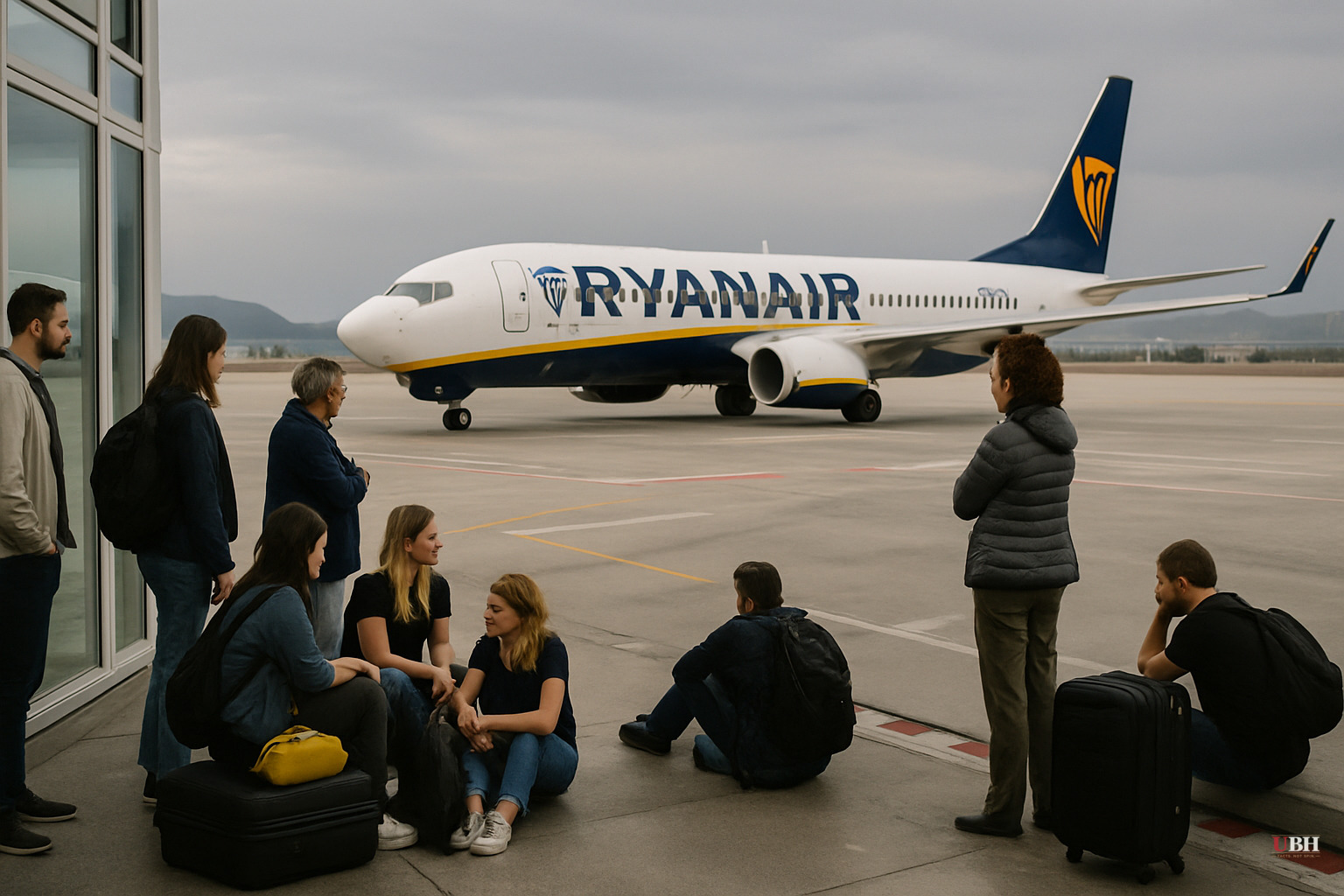
On Sunday, a Ryanair flight from Athens International Airport to London Luton departed with a significant portion of its ticketed passengers still stuck in line. According to BBC News, between 20 and 50 travelers missed the flight after failing to clear passport control in time. Airport authorities reportedly stepped in to manage tensions as some passengers became visibly upset.
Milo Boyd, a travel writer for the Daily Mirror who was on the same flight, described the scene to the BBC: a "mega queue" of several hundred people at both security and passport control, stifling heat, and passengers pleading with Ryanair staff at the gate. Boyd and his wife made it through with roughly 10 minutes to spare. Others were not so lucky.
One traveler, Ian Collins, posted on X directly to Ryanair that it was "utterly disgraceful you left my daughter (and half your passengers) at the gate in Athens today," according to the Evening Standard.
What Both Sides Said — and What Neither Said
Ryanair's statement, reported by the BBC, attributed the missed boarding to "delays caused by border control at Athens airport" and confirmed that all passengers already at the gate when boarding began did travel without incident.
Athens International Airport told the BBC there had been "periods of congestion at passport control in the departures area due to high passenger volumes and the additional processing requirements associated with travel to non-Schengen destinations." The airport added that, as is "currently the case at many European airports," processing times on certain routes are elevated as new border-control procedures are implemented.
Neither Ryanair nor the airport directly named the EU's Entry/Exit System. The EES is the most plausible structural explanation for the added processing time, and both parties have commercial and diplomatic reasons to be vague.
What the EES Actually Does
The Entry/Exit System replaced manual passport stamping across the Schengen Area. Per the Express, non-EU travelers now register biometrics—fingerprints and a facial photograph—at self-service kiosks or booths on their first entry. The EU framed this as a tool to improve border security and reduce illegal migration by automating overstay enforcement.
The operational reality has been messier. Frontex, the EU border agency, warned that the system may take up to two years to fully stabilize, according to the Evening Standard. Some travelers have reported three-hour queues. In several countries, passengers have missed return flights after failing to clear the digital system in time.
Greece tried to navigate this politically. In April, Greek tourism minister Olga Kefalogianni promised British passengers would not face biometric checks or be "burdened" by bureaucracy traveling to Greece this summer, according to the BBC. The Greek Foreign Ministry subsequently disputed that any exemption existed. That contradiction has not been publicly resolved, with the Express reporting that the Greek Foreign Ministry confirmed Greece is fully implementing the EES system this summer.
The Strongest Case for the System
Defenders of the EES have a legitimate argument. The Schengen Area has long had a structural problem with non-EU visitors overstaying visas, and manual passport stamping was unreliable. A biometric digital system, once functioning, would give border agencies actual data rather than guesswork. The EU is processing hundreds of millions of travelers annually, and teething problems at launch are normal for infrastructure at that scale. Greece is also at peak summer season right now, meaning airports are handling maximum passenger volumes simultaneously with a new system rollout. The congestion may reflect timing and staffing gaps, not a fundamental design failure.
That argument holds more weight if Frontex's two-year stabilization timeline proves accurate and queues normalize. It holds less weight if airports cannot scale up staffing fast enough to prevent missed flights through the summer.
What This Means for Passengers Right Now
According to The Traveler, some stranded Ryanair passengers were advised to seek alternative flights or accommodation independently and then pursue reimbursement under European passenger rights rules. Others were reportedly offered rebooking onto later services, sometimes departing a day or more after the original schedule, given limited spare capacity on popular leisure routes in peak summer.
Point-to-point low-cost routes like Ryanair's leave passengers with fewer options when a flight departs without them. There is no connecting carrier to rebook onto, no hub-based flexibility. When a budget carrier's business model depends on strict on-time departures, passengers caught in a government-mandated queue bear the cost.
Travelers booked on non-Schengen departures from Greek airports this summer face a practical question: how early is early enough? The BBC's account of Sunday's incident suggests arriving at passport control well in advance of the standard two-hour window may not be sufficient. In May, the UK boss of budget airline Wizz Air told the BBC that British holidaymakers should now arrive at European airports three hours in advance. No official guidance from Athens International Airport, Ryanair, or Greek authorities has been published setting out revised minimum processing times for EES-affected departures.
Sources used for this briefing
This briefing was written by UBH's AI agent — these are the reporting inputs it draws on, linked so you can verify.


