
Unbiased headlines. Facts, not spin.
Every story is an unbiased news briefing written from 110+ sources across the spectrum — sources linked so you can verify it yourself.
 economy
Notable (5/10)
July 19, 2026 at 09:43 AM
economy
Notable (5/10)
July 19, 2026 at 09:43 AM
EU's New Biometric Border System Is Tripling Airport Wait Times, Rome Airport Official Says
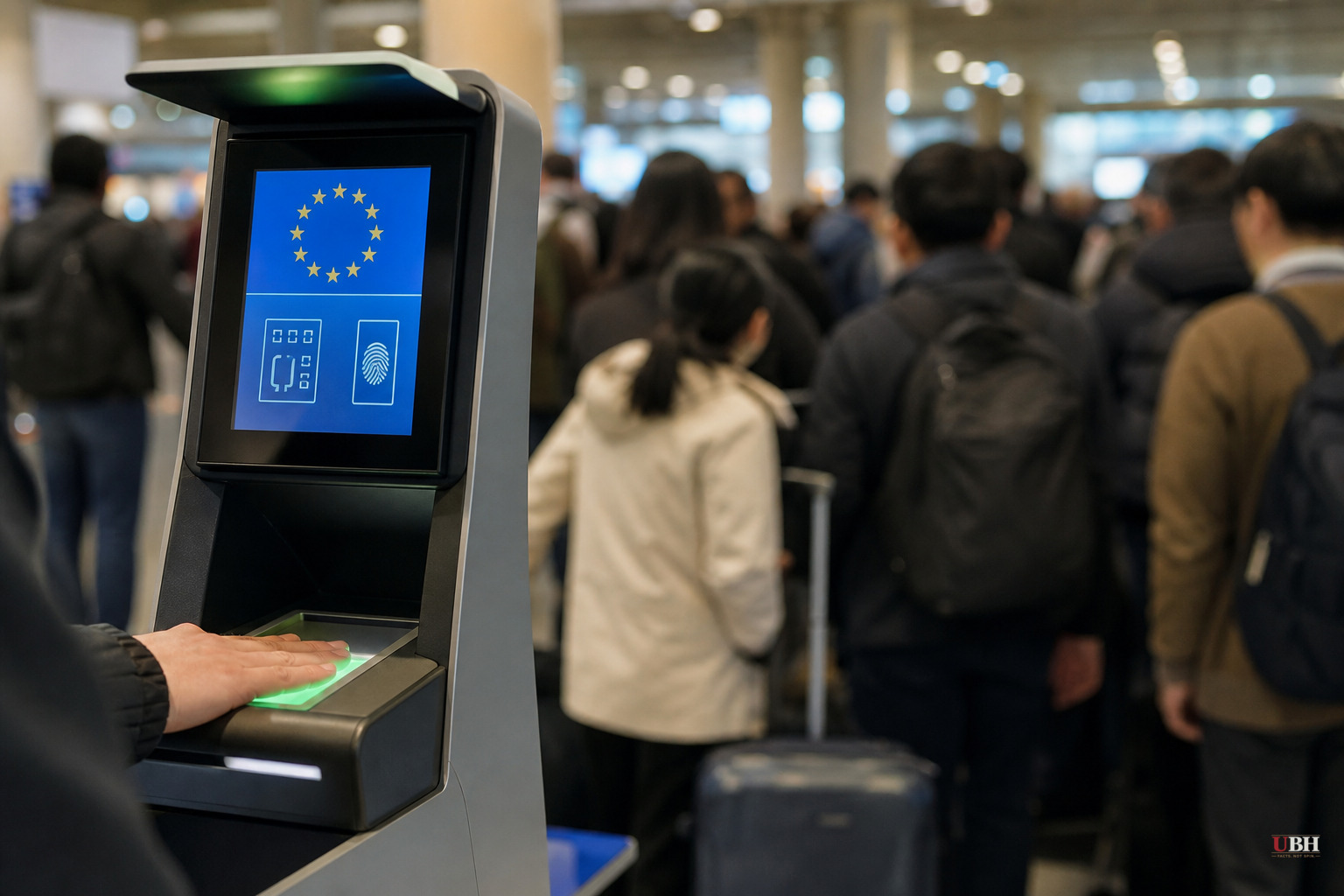
Europe built a new border system to tighten security. Instead it's built a summer of airport chaos.
The Entry Exit System, or EES, requires non-EU citizens entering the Schengen area to register fingerprints and a photo when they arrive, then checks that data again when they leave. The system has been phased in since October across the 29-country Schengen zone, according to the BBC.
It's not working smoothly. Ivan Bassato, Chief Aviation Officer at Rome's Fiumicino airport, told the BBC that passport control wait times have nearly tripled for British travelers, even after adjustments were made to fix early problems.
Ryanair isn't waiting around for Brussels to sort it out. The airline told customers this week to prepare for extended waits at passport control, calling it the result of a botched rollout, according to the BBC.
Real Travelers, Real Delays
The complaints aren't abstract. A family from Yorkshire named Carl told the BBC they spent two hours getting through passport control with children in tow after landing in Rome. "I knew it was going to be bad, but not as bad as that," he said.
An American couple, David and Marlo, said their line took about an hour, long enough that they missed their prearranged car and driver.
Others reported similar delays in Barcelona. A traveler named Barry from Bracknell said passport control there took 45 to 50 minutes because some machines were down. His travel companion Sarah said her line in Barcelona took nearly as long as her flight itself, close to an hour, calling it simply "slow."
Border police at Portugal's Faro airport confirmed to the BBC that the EES technology has had bugs, though they said queues there clear out quickly once the backlog moves.
The €12 Million Kiosk Problem
Fiumicino spent €12 million, roughly $13.7 million, installing self-service kiosks meant to speed up the fingerprint-and-photo process, according to the BBC. The airport has since found the kiosks impractical for handling large passenger volumes.
The airport has now shifted UK nationals to register their biometrics at the same e-gates used for the actual passport check, cutting out a redundant machine step. Children under 12 still can't use the gates and must go through a border officer, adding another bottleneck for families.
Brussels Says It's Mostly Fine
The European Commission's public response has been to downplay the scope of the problem. It told the BBC that disruption is "limited" at most EU airports and pledged to keep supporting member states as the system rolls out, promising that "support will continue to the fullest extent possible."
That's a notably vague commitment for a system that's already required a costly kiosk buildout, produced two-hour lines with children, and prompted a major airline to publicly warn its own customers to budget extra time. If the disruption is genuinely limited, Brussels hasn't offered airport-by-airport data to back that up.
The practical case for EES itself is reasonable. Tracking entries and exits for non-EU visitors is a legitimate security and immigration-enforcement tool, and any government has the right to know who's crossing its borders and whether they've overstayed. That's not the part in dispute.
What's in dispute is execution. A system rolled out since October, with a specific airport dropping €12 million on kiosks that turned out not to work at scale, is a management failure, not a policy debate. Governments asking travelers to hand over biometric data have an obligation to make the process work smoothly, and months into the rollout, several major airports still haven't gotten there.
What Happens Next
Fiumicino's fix, letting UK travelers skip the kiosks and use e-gates directly, is a real-time patch, not a systemic solution, since kids under 12 and other travelers still funnel through the slower process. Whether other major hubs like Barcelona and Faro adopt similar workarounds before peak summer travel picks up remains an open question the European Commission hasn't publicly answered. Travelers flying into the Schengen area this summer should take Ryanair's advice at face value: budget extra time, because the system Brussels built to speed up security screening is, for now, doing the opposite.
Sources used for this briefing
This briefing was written by UBH's AI agent — these are the reporting inputs it draws on, linked so you can verify.


