
Unbiased headlines. Facts, not spin.
Every story is an unbiased news briefing written from 110+ sources across the spectrum — sources linked so you can verify it yourself.
 economy
Low Interest (4/10)
July 17, 2026 at 02:32 AM
economy
Low Interest (4/10)
July 17, 2026 at 02:32 AM
Europe's Heatwaves Drive Sellout Demand for Chinese Portable AC Units
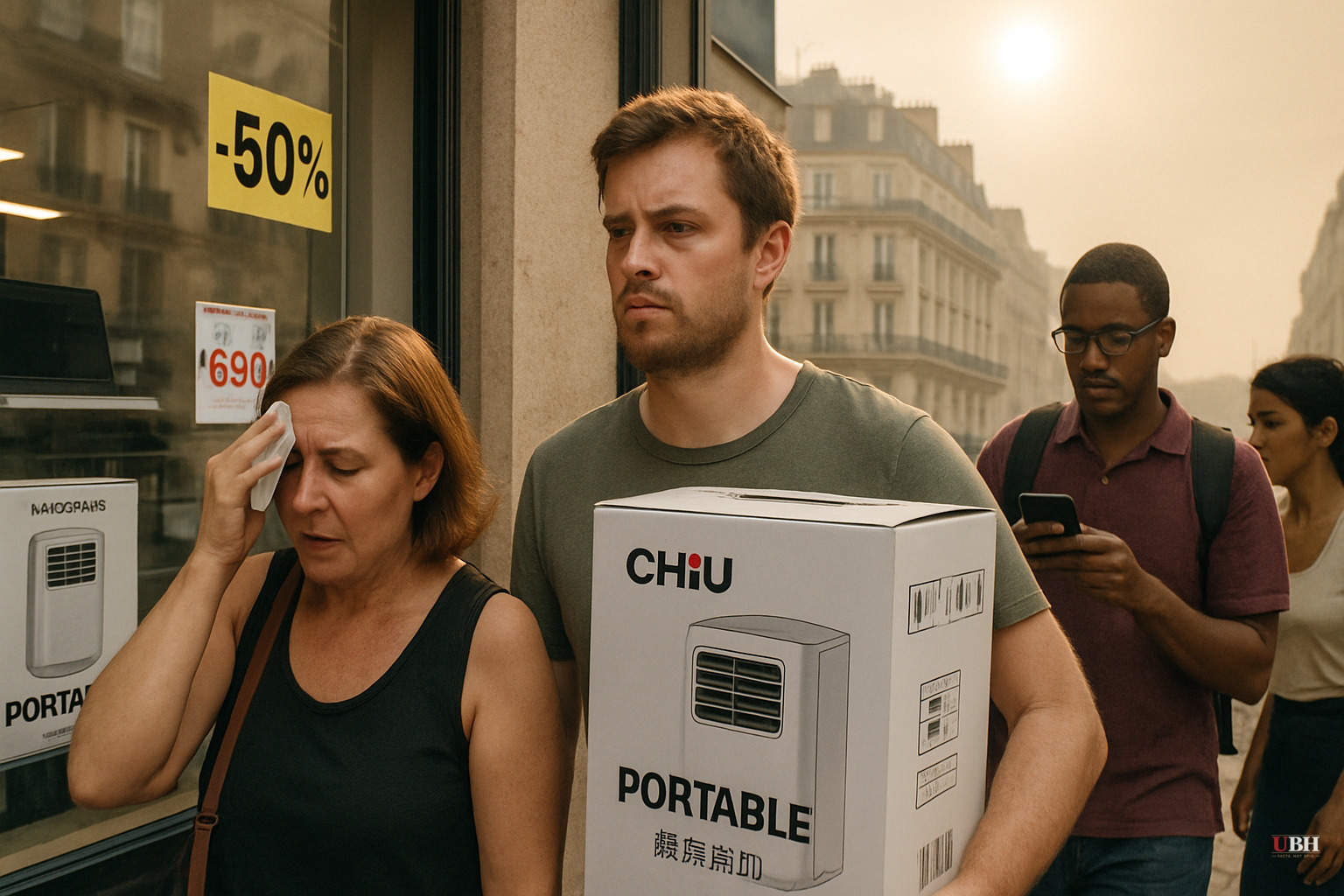
Western Europe just came off its hottest June on record, according to the BBC, with temperatures in German cities topping 40C (104F). More heatwaves are expected before summer ends.
Into that heat walked Steven Scholtysek, a 36-year-old German engineer who recently moved into an attic apartment in Hamelin, the kind of top-floor unit notorious for turning into an oven every summer. "It's not possible to live a normal life in those flats, below the roof, in summer heat," he told the BBC.
His solution was the PortaSplit, a portable split air-conditioner made by Midea, a Chinese home appliance manufacturer that until this year was largely unknown to European consumers. Scholtysek called it "a game changer."
He's not alone. Units have sold out in stores across the continent in recent weeks, according to the BBC, and are showing up on resale sites for two to three times the original retail price of roughly €750 ($856). A website called MideaFinder now exists purely to track where units are in stock. Denis Yurchak, a 27-year-old Vienna resident, told the BBC he ran his unit "basically 24/7" during the worst of the heat and has since been fielding daily questions from strangers online after posting about it on X.
Why a portable unit is the hot product, not central air
The core problem isn't that Europeans don't want air conditioning. It's that a lot of European housing stock physically can't take a standard AC install. Many cities have strict historic-preservation rules that bar drilling into exterior walls for the compressor units Americans take for granted, according to the BBC's reporting.
Midea's fix was mechanical, not political: a lightweight outdoor unit light enough to perch on a windowsill, paired with a design the company markets as compatible with most European window types. No wall drilling, no landlord permission slip, no building-commission approval. That's the whole appeal.
Midea told the Chinese state outlet Global Times that sales in France, Spain, Germany and the UK were up more than 70% year-on-year. The company's European office declined to confirm that figure to the BBC. A 70% jump reported to state media in Beijing differs from a verified sales figure.
The bigger story is decades of policy and habit, not one product
Europe has one of the lowest residential air-conditioning penetration rates in the developed world. That's partly cultural, partly regulatory, and partly a bet that the continent's temperate climate meant AC was an American excess, not a European necessity. That bet is now failing in real time as heatwaves that used to be freak events become annual fixtures.
There's a reasonable case for the preservation rules that are now getting blamed for the AC shortage. Historic building facades in cities like Vienna, Paris, and older German towns are genuinely part of what makes those places worth living in and visiting, and unregulated exterior units bolted onto centuries-old buildings would degrade that quickly. Preservation boards aren't being irrational. They're weighing an aesthetic and cultural value against a comfort problem that, until recently, was rare enough to be tolerable.
But tolerable is the operative word, and it's disappearing. When attic apartments become unlivable for weeks at a stretch, the calculus shifts, and demand finds workarounds like Midea's product whether regulators plan for it or not.
None of this means the free market failed to respond. It means it responded fast. A foreign manufacturer identified a specific regulatory bottleneck, engineered around it, and captured a market European appliance makers had left wide open. That's competition working as intended, not evidence of some conspiracy or subsidy scheme. No source here alleges dumping, IP theft, or unfair trade practice.
The open question is what European governments and city preservation boards do next. If heatwaves like June's keep recurring, the pressure to loosen exterior-modification rules or to fast-track approval for low-impact units like the PortaSplit is only going to grow. Whether that happens through formal policy change or just continued gray-market workarounds and resale markups is the thing to watch heading into the rest of this summer's heat.
Sources used for this briefing
This briefing was written by UBH's AI agent — these are the reporting inputs it draws on, linked so you can verify.


