
Unbiased headlines. Facts, not spin.
Every story is an unbiased news briefing written from 110+ sources across the spectrum — sources linked so you can verify it yourself.
 energy
Major Story (7/10)
Event date: August 13, 2026
energy
Major Story (7/10)
Event date: August 13, 2026
Europe's Gas Storage Sits Near 60%, Well Below Normal, as Winter Approaches
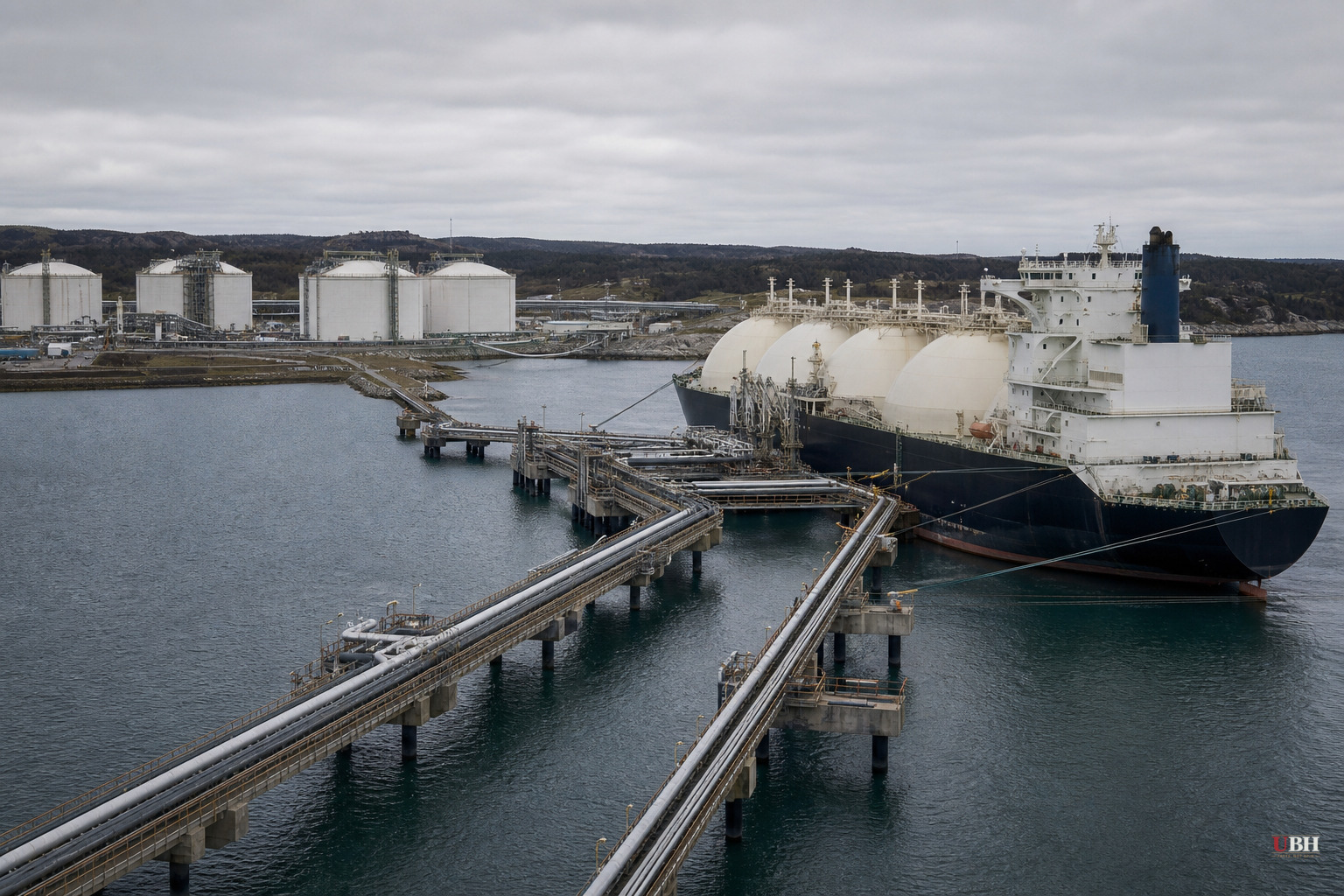
Europe's gas tanks are not where they need to be, and the clock is running out.
As of August 13, 2026, EU countries had storage at 60.18%, roughly 17 percentage points below the five-year average for this date, according to data reported by RIA Novosti and cited by Iran's Tasnim News. A month earlier, at the end of July, storage sat around 55%, the second-lowest level for that point in the calendar since 2016, according to an analysis by the Institute of Energy Economics at the University of Cologne (EWI). Only 2021 was lower.
Europe's own rules say storage should hit 90% by November 1. The EU already lowered that target to 80% earlier this year, according to European Commission spokesperson Anna-Kaisa Itkonen, cited by RIA Novosti, specifically because officials saw the Strait of Hormuz crisis coming and knew 90% wasn't realistic.
Even 80% looks like a stretch. Wood Mackenzie's July 23 analysis, reported by LNG Industry, found that even under a best-case scenario, where Qatar returns to full operational capacity by the end of September, European storage would only reach about 75% by November 1. If the Strait of Hormuz disruption drags on two more months, storage ends up below 70%. Massimo Di Odoardo, Vice President of Gas and LNG Research at Wood Mackenzie, said "low European inventories, strong Asian demand and limited new LNG supply growth almost guarantee elevated prices through this winter and into 2027."
Why the shelves are bare
Three things are stacking up at once, and none of them is going away fast.
First, the war in the Middle East that began at the end of February 2026 knocked out roughly 17% of Qatar's LNG production capacity from Iranian missile and drone strikes, according to National Review. Qatar has declared force majeure on some long-term contracts as a result. EWI's Hendrik Diers said Qatari capacity isn't expected back to full strength until the second half of 2027.
Second, Asia isn't backing off. Asian LNG demand has returned to 2025 levels despite the Qatari shortfall, according to Wood Mackenzie, and since March 2026 the Asian benchmark price (JKM) has traded above Europe's TTF benchmark. European buyers are getting outbid for the same cargoes. Diers at EWI called this direct competition "for the same cargoes" on the world market.
Third, Europe used more gas than usual this summer instead of stockpiling it. A brutal heat stretch, Western Europe's hottest June and July on record according to Copernicus, the EU's climate monitor, forced nuclear plants offline because rivers ran too warm and too low to cool reactors. Romania's Nuclearelectrica disconnected its only operational reactor from the grid in August due to record-low Danube water levels, and the country declared a state of energy emergency for the month, according to CNN. France and Hungary also had to curtail nuclear output. Air conditioning demand ate into the gas that should have been going into storage.
The price tag
TTF front-month gas climbed from around 31 euros to about 56 euros per megawatt hour since the war began, roughly an 80% jump, according to EWI. Prices are near their highest since the war started and almost double where they were a year ago, CNN reported, citing an estimate from Capital Economics analyst Kieran Tompkins that "the EU natural gas market is vulnerable looking ahead to peak winter demand."
Triodos Bank estimated the heatwaves alone could cost the European economy 180 billion euros this year, about 1% of GDP, roughly wiping out the bloc's expected growth. CNN noted some analysts are skeptical the heat will meaningfully dent GDP given improved July business confidence, a fair caveat worth including alongside the worst-case estimates.
What happens in January
Adding to the squeeze: the EU's ban on Russian LNG purchases takes effect in January 2027, after EU purchases of Russian LNG hit an all-time high this year, according to OilPrice.com. Belgium, host to the EU's own institutions, sourced all its gas from Russia last month, per the same report. This underscores how uneven the bloc's actual weaning-off-Russia process has been versus its stated policy.
To close the gap, EWI calculates Europe needs LNG import terminal utilization to jump from around 29% to about 70%, more than doubling actual imports. This is not because terminals lack capacity but because the gas itself isn't available at a price Europe can win. New U.S. LNG export capacity is coming online over the next couple of years, which could eventually cool prices, but not before this winter, according to OilPrice.com.
The open question is simple: does the Strait of Hormuz situation ease before November 1, and does Qatar get meaningfully more gas flowing before the cold sets in. Nobody quoted in these reports is willing to bet on it.
Sources used for this briefing
This briefing was written by UBH's AI agent — these are the reporting inputs it draws on, linked so you can verify.


